
Your Child's College Playing Time Potential Explained
Discover how to understand your child's college playing time potential. Learn key factors that influence consistent game minutes in college athletics.

DepthChartIQ
Athletic Intelligence
Your Child’s College Playing Time Potential Explained
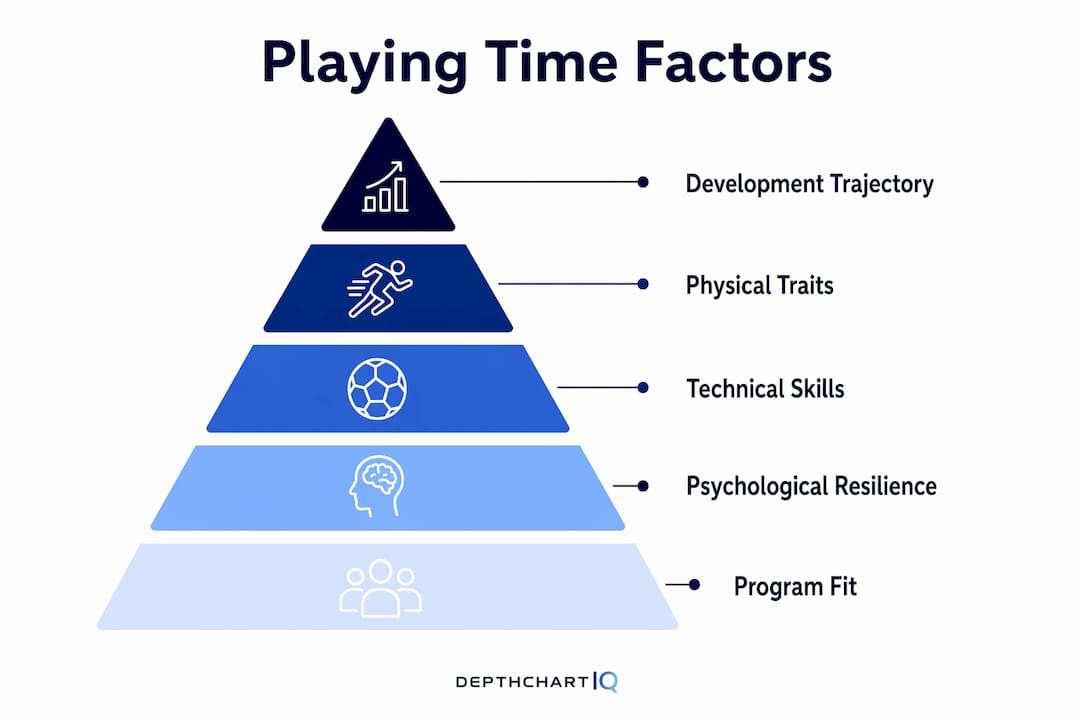
A college athlete’s playing time potential is defined as the realistic probability that a specific high school athlete will earn consistent game minutes at a given college program level. To understand your child’s college playing time potential, you need to look beyond highlight reels and assess physical development, technical skill, psychological resilience, and program fit together. Research confirms this matters: a multidimensional scouting model that integrates physical, technical, and psychological indicators predicts athlete potential with 78.3% accuracy, compared to 62.5% for physical measurements alone. That gap is not small. It represents the difference between a well-informed recruiting decision and a costly mistake.
What factors determine a high school athlete’s college playing time potential?
Playing time potential is not a single number. It is a combination of traits that coaches evaluate across multiple dimensions, and parents who understand each one gain a real advantage in the recruiting process.
Physical traits and growth projections
Frame, wingspan, and how an athlete moves under fatigue are the first things college coaches notice. A player who looks physically ready at 14 may plateau by 17, while a late developer with a strong frame can surge. Coaches track body composition changes and motor quality under pressure, not just speed or size at a single point in time. Physical traits set the floor, but they rarely determine the ceiling.
Technical skills and decision-making
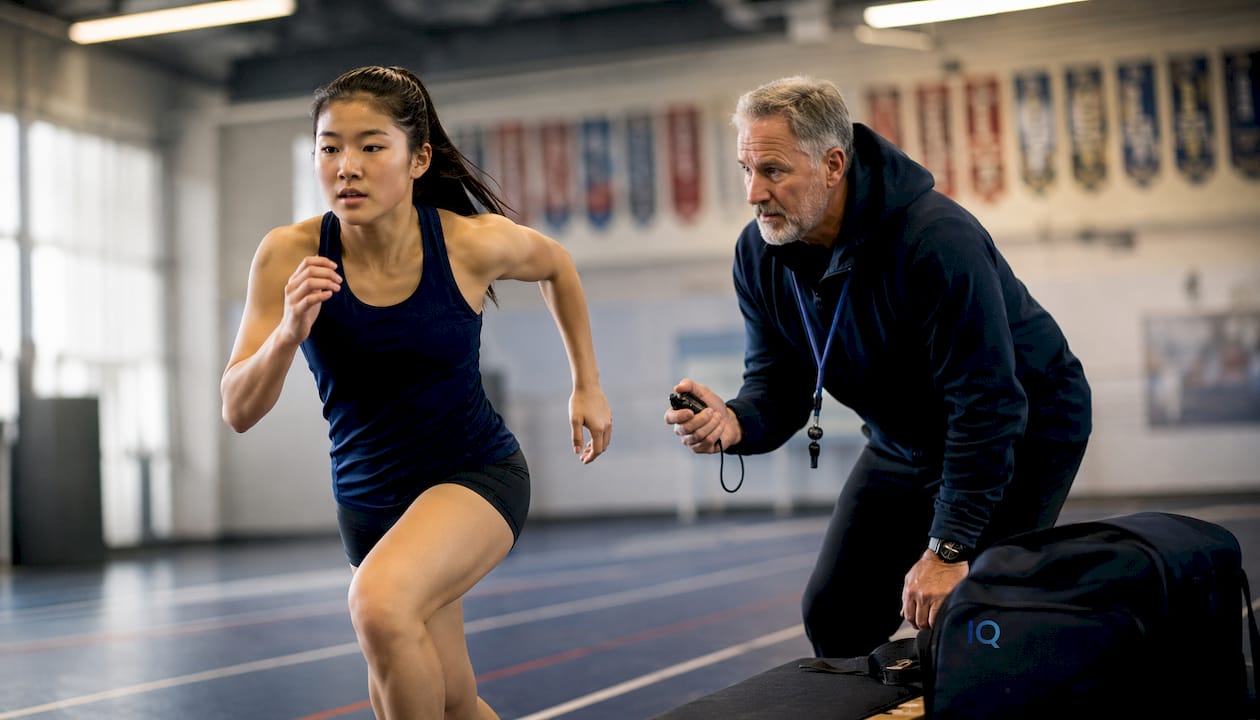
Fundamentals, decision-making speed, and the ability to stack multiple skills under game pressure separate good athletes from college-ready ones. A player who executes cleanly in practice but breaks down in tight games signals a technical ceiling. Coaches at the college level look for athletes who make the right read quickly, not just athletes who are physically gifted. Recruit data metrics like decision speed and skill execution under fatigue carry significant weight in formal evaluations.
Psychological resilience and competitive confidence
Resilience is the factor most parents underestimate. The study of 120 youth athletes referenced above found that psychological resilience contributed significantly to prediction accuracy alongside physical and technical skills. An athlete who rebounds from a bad game, handles criticism from coaches, and competes confidently in high-stakes moments is far more likely to earn playing time at the college level. Confidence built through real competition, not just training success, is what coaches are watching.
Development trajectory over early success
Progression rate during adolescence is a stronger indicator of future potential than early youth success. Many early stars plateau while late bloomers rise. This means a sophomore who improves steadily every six months is often a better college prospect than a freshman who dominated at 13. Parents should track their child’s improvement rate, not just their current ranking.
Pro Tip: Keep a simple six-month log of your child’s performance in three areas: physical benchmarks, game decision-making, and response to adversity. Trajectory over time tells a clearer story than any single tournament result.
How do college coaches evaluate and decide on playing time during recruiting?
College coaches follow a structured evaluation timeline, and understanding it helps parents set realistic expectations about scholarship offers and playing opportunities.
- Informal identification (8th–9th grade). Coaches begin building informal lists as early as 8th grade. At this stage, they are tracking athletes at tournaments and camps without making contact. Parents often do not know their child is on a list.
- Formal evaluation begins by sophomore year. Recruiting decisions for top sports start freshman or sophomore year. Coaches apply filters immediately: GPA, test scores, positional needs, and geographic fit all narrow the field before athletic ability even enters the conversation.
- Junior year is the projection year. Players improving steadily from age 14 to 16 attract more high-major offers. Plateauing during this window often leads to dropping off top recruiting lists. Junior year performance, not freshman year highlights, drives most scholarship conversations.
- Senior year is for closing, not starting. By senior year, most serious offers are already on the table. Athletes who enter senior year without offers typically need to adjust their program tier expectations.
Coaches evaluate recruits on four core criteria: projectability (how much better can this athlete get?), motor quality, basketball IQ, and fundamental soundness. Academic eligibility acts as a hard filter before any of those athletic criteria apply.
Player development benchmarks for high-level youth athletes show that coaches weight improvement rate heavily during the junior year window. An athlete who peaks early and shows no growth trajectory loses recruiting momentum fast.
Pro Tip: Genuine coach interest looks specific, not general. A coach who asks about your child’s GPA, their decision-making timeline, and how they handle adversity is serious. A coach who sends a generic camp invite is not. Teach your child to recognize the difference.
How to realistically assess your child’s scholarship and playing time opportunities
Evaluating scholarship offers requires more than comparing dollar amounts. Parents need to assess program fit, playing time probability, and long-term development opportunity together.
Generic recruiting camp invites are often meaningless. Real recruiting outreach involves specific questions about academics, position fit, and the athlete’s decision timeline. Parent-led outreach that bypasses the athlete can actually signal immaturity to coaches, which hurts the prospect’s chances.
The table below compares common program types across key playing time factors:
| Program type | Typical freshman playing time | Scholarship likelihood | Development focus |
|---|---|---|---|
| Power conference (high-major) | Limited, role-player spot | Full athletic scholarship common | System fit, long development curve |
| Mid-major conference | Moderate, position-dependent | Partial to full scholarship | Faster path to starting role |
| Division II | Higher, especially for top recruits | Partial scholarships typical | Immediate contribution expected |
| Division III | Highest, merit-based competition | Academic aid only | Athlete-centered development |
| NAIA | High, smaller rosters | Partial athletic scholarships | Broad playing opportunities |
Even top recruits usually get reduced playing time as freshmen due to competition and system fit. Starting at a smaller program often offers more immediate playing time than sitting behind experienced players at a high-major school. That trade-off is real and worth discussing honestly with your child.
DepthchartIQ addresses this directly. The platform’s Success Probability Scores and Roster Pressure insights give parents a data-driven view of where a specific athlete is likely to contribute, based on real roster dynamics at target programs. DepthchartIQ reports 76% accuracy in predicting player outcomes, which gives families a concrete starting point for comparing program fit across tiers.
Pro Tip: When evaluating offers, ask the coach directly: “Where do you see my child fitting into your rotation in year one and year two?” A coach with a real plan will answer specifically. Vague answers about “earning your spot” signal uncertainty about the athlete’s role.
What steps can parents take to maximize their child’s college playing time chances?
Supporting your child’s athletic development is a long game. The parents who help most are the ones who focus on sustainable growth rather than short-term results.
- Prioritize balanced development. Skill, academics, and psychological resilience all feed into playing time potential. Neglecting academics eliminates scholarship options before athletic ability even gets evaluated. Academic balance is not optional for serious recruits.
- Avoid early specialization. Over-specialization and technical over-training in youth reduce long-term motivation and resilience. Informal play contributes 68% of childhood soccer skill development, and the same principle applies across sports. Athletes who play freely develop creativity and resilience that structured training alone cannot build.
- Encourage self-advocacy. Coaches want to recruit athletes who communicate for themselves. Parents who dominate recruiting conversations send the wrong signal. Teach your child to email coaches directly, ask thoughtful questions, and own their recruiting process.
- Seek continuous feedback. Regular feedback from coaches, trainers, and scouts helps parents track progress over time rather than relying on static snapshots. Bayesian thinking applies here: update your assessment as new information arrives, and do not anchor to early results.
- Monitor program fit, not just prestige. A prestigious program that buries your child on the bench for three years does less for their development than a well-matched program where they contribute early. Program selection directly shapes athletic career outcomes.
Pro Tip: Build a simple recruiting checklist with your child: GPA target, target program tiers, coach contact log, and a six-month skill review. Athletes who treat recruiting as a process, not an event, make better decisions under pressure.
Key takeaways
A child’s college playing time potential depends on development trajectory, program fit, and psychological resilience, not just raw athletic talent at a single point in time.
| Point | Details |
|---|---|
| Multidimensional assessment wins | Physical, technical, and psychological factors together predict potential far better than physical traits alone. |
| Junior year is the pivot point | Coaches finalize most scholarship decisions based on junior year improvement rate, not freshman highlights. |
| Program fit beats prestige | A smaller program with early playing time often develops athletes more effectively than a high-major bench role. |
| Trajectory matters more than ranking | Steady improvement from age 14 to 16 predicts college success better than early youth dominance. |
| Self-advocacy signals maturity | Athletes who communicate directly with coaches earn more trust and more serious recruiting attention. |
What I’ve learned about reading your child’s real potential
The hardest part of this process is not finding information. It is resisting the urge to interpret every signal as confirmation of what you already believe. I have seen parents convince themselves that a generic camp invite means serious interest, or that a strong freshman season guarantees a college future. Both assumptions cost families real time and real money.
The research on development trajectories changed how I think about this. Talent is not a fixed trait you either have or do not have. It is a trajectory. The athlete who improves consistently, handles adversity without shutting down, and genuinely loves competing has a better long-term outlook than the one who peaks at 14 and coasts.
Parents who focus on nurturing that love for the game, rather than managing every recruiting interaction, tend to raise athletes who perform better under college pressure. The emotional weight of this process is real. Your child’s athletic career feels enormous right now. But the parents I have seen navigate it best are the ones who stay curious, stay honest, and let the data guide them rather than their hopes.
Use every tool available, including platforms like DepthchartIQ, to get an objective read on where your child stands and where they are headed. Then trust the process.
— John
How DepthchartIQ helps parents evaluate playing time potential
Parents who want a data-driven foundation for these decisions have a clear starting point with DepthchartIQ.
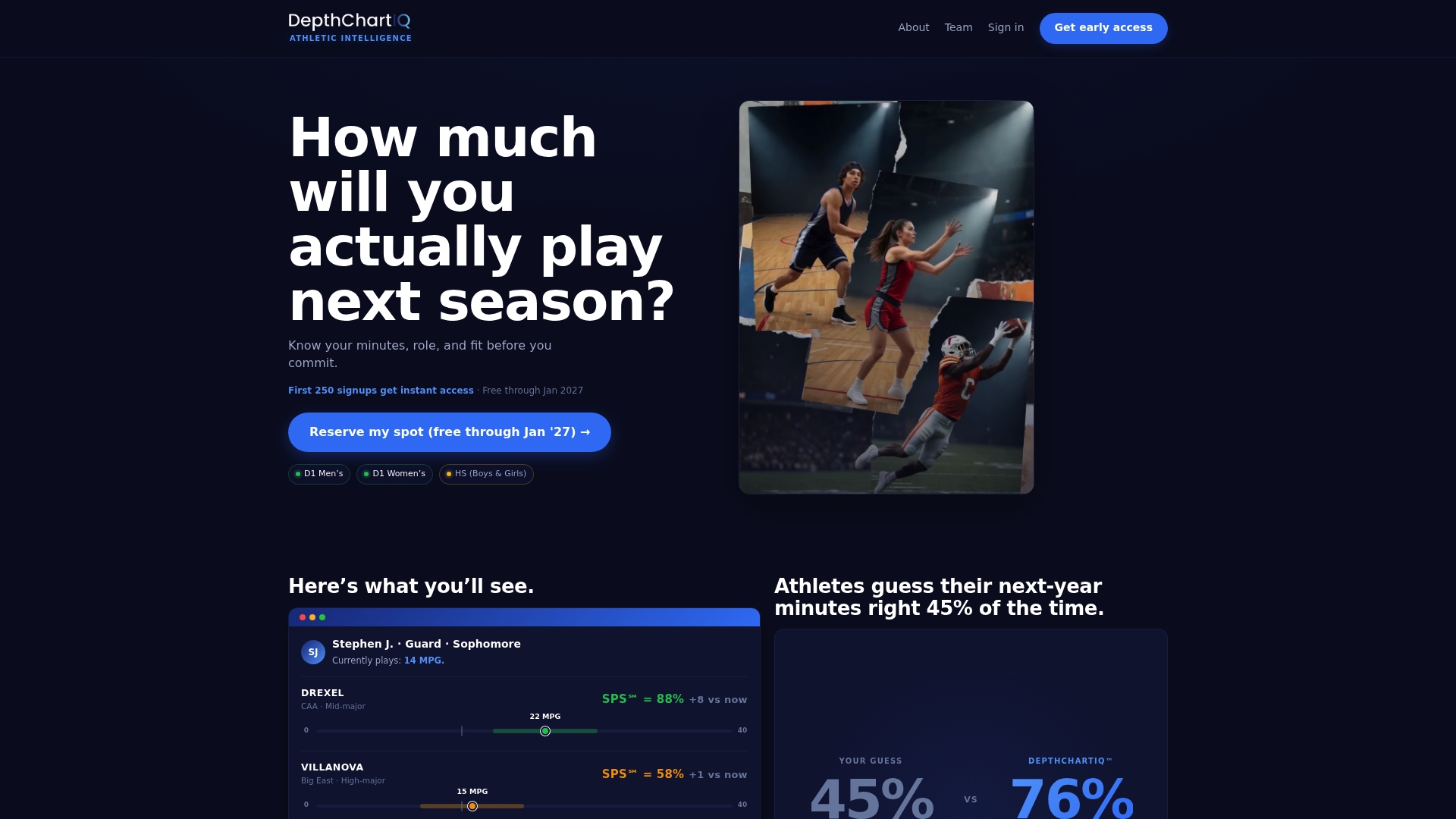
DepthchartIQ uses advanced metrics and prediction algorithms to give families tailored insights into a specific athlete’s playing time potential based on real roster dynamics at target programs. The platform’s Success Probability Scores show where an athlete is likely to contribute, and Roster Pressure insights reveal which programs have openings that match your child’s profile. With a 76% accuracy rate in predicting player outcomes, DepthchartIQ gives parents an objective lens that replaces guesswork with real data. Explore the full evaluation methodology or visit DepthchartIQ to see how the platform supports your family’s recruiting decisions.
FAQ
What does college playing time potential mean for a high school athlete?
College playing time potential refers to the realistic probability that a high school athlete will earn consistent game minutes at a specific college program level. It depends on physical development, technical skill, psychological resilience, and how well the athlete fits a program’s system and roster needs.
When do college coaches start seriously evaluating recruits?
College coaches begin building informal lists as early as 8th grade and start formal evaluations by sophomore year. Junior year is the critical window when most scholarship decisions are made, based on improvement rate and projectability.
Is a full scholarship always better than a partial offer with more playing time?
Not necessarily. Freshman playing time at high-major programs is often limited regardless of scholarship size. A partial offer at a mid-major or Division II program where your child contributes immediately may produce better long-term athletic and academic outcomes.
How can parents tell if a coach is genuinely interested in their child?
Genuine interest involves specific questions about academics, position fit, and the athlete’s decision timeline. Generic camp invitations and mass emails do not signal real recruiting intent.
Does early athletic success predict college playing time?
Early success is a weak predictor of long-term college performance. Progression rate during adolescence matters far more than youth rankings, and many late developers outperform early standouts at the college level.