
Academic Balance College Athlete Checklist for 2026
Master the academic balance college athlete checklist for 2026! Stay NCAA compliant and improve your GPA with our effective strategies.

DepthChartIQ
Athletic Intelligence
Academic Balance College Athlete Checklist for 2026
An effective academic balance college athlete checklist is a dual-framework tool that separates NCAA compliance milestones from daily study routines, because missing either one can end your eligibility or your GPA. Most athletes focus only on practice and games, then scramble when a missed core course or a skipped professor email creates a crisis. The NCAA Eligibility Center, the 10/7 core course rule, and structured planning methods like the 40-10 focused work cycle are the building blocks of a system that actually holds up across a full season. This checklist covers every layer, from pre-arrival paperwork to weekly time-blocking, so you stay eligible and perform in the classroom.
1. The academic balance college athlete checklist: two tracks, one system
The most common mistake athletes make is treating academics as one undivided task. A practical checklist splits into two distinct tracks: compliance deadlines and daily operating routines. Failing a compliance item like NCAA core course verification can cause ineligibility even when your GPA looks fine. That distinction is the foundation of everything else on this list.
Track one covers eligibility requirements, transcript submissions, and certification steps. Track two covers weekly planning, study blocks, and professor communication. Both tracks must run simultaneously. Letting one slide while focusing on the other is the fastest path to an academic crisis mid-season.
2. What the NCAA 10/7 rule means for your eligibility
The NCAA 10/7 core course rule requires that 10 of your 16 required core courses be completed before your senior year begins, with 7 of those 10 coming from English, math, or natural science. The grades from those first 10 courses are locked in permanently. You cannot retake them to improve your core GPA after the fact.
This rule has a direct impact on recruiting and scholarship offers. A Division I program cannot certify your eligibility if your locked core GPA falls below the NCAA sliding scale threshold. High school athletes targeting D1 programs need to map their course sequence in 9th or 10th grade, not junior year. The NCAA Eligibility Center is the official registration and certification portal, and you must create an account there early in your high school career.
Pro Tip: Review your core course list with your high school counselor every semester starting in 9th grade. One misclassified course can shift your entire eligibility timeline.
3. Pre-arrival compliance tasks every incoming athlete must complete
Incoming student-athletes should start preparing academic and eligibility documents at least two months before arrival on campus. The task list includes setting up your school ID and email, completing the FAFSA, finishing NCAA amateurism certification, verifying residency, submitting final transcripts, and arranging health insurance. Each item has a hard deadline tied to your eligibility status.
Submitting educational and medical documentation early allows academic coordinators to provide accommodations and shape your schedule before classes start. Athletes who wait until move-in week routinely face delayed financial aid, missing course placements, and eligibility holds that take weeks to clear. Treat pre-arrival paperwork as part of your training camp preparation, not an afterthought.
4. How to structure your weekly planning session
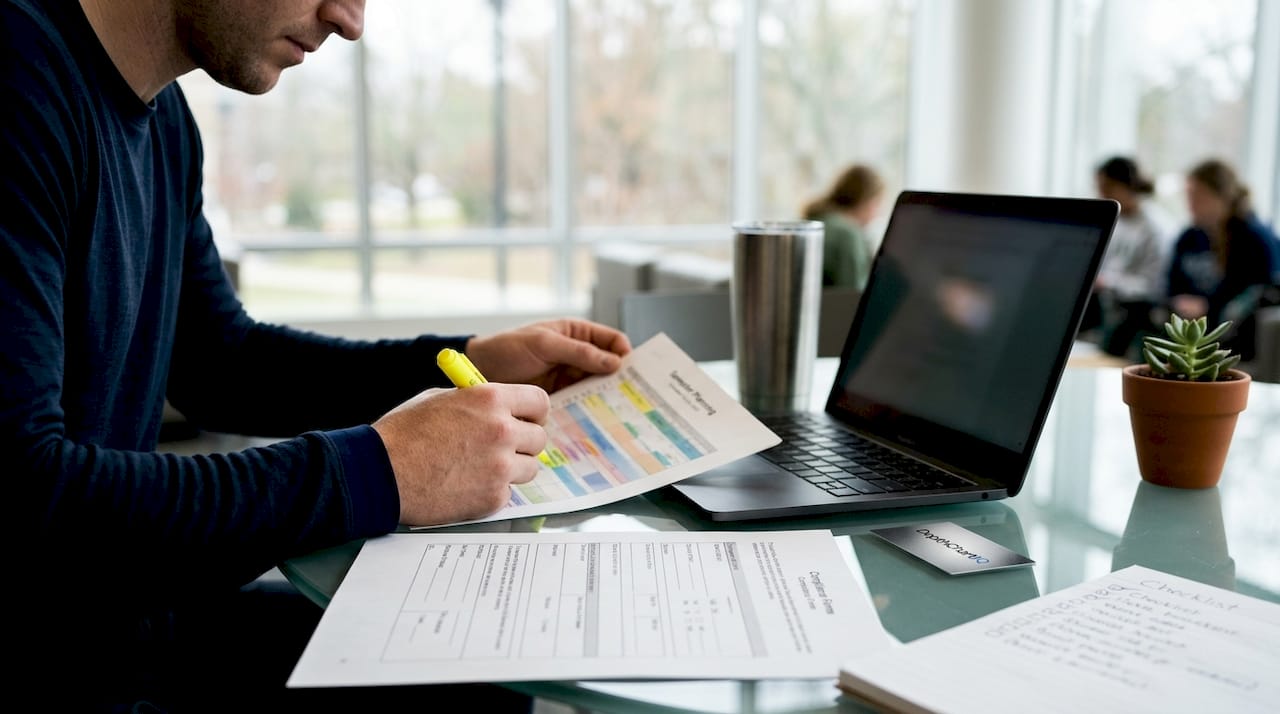
Weekly planning sessions of 15 to 20 minutes help student-athletes align academic deadlines with athletic schedules. Sit down every Sunday evening and map out your practice times, travel dates, test deadlines, and assignment due dates for the coming week. This single habit reduces the decision fatigue that causes athletes to miss assignments during heavy competition weeks.
During that session, identify your “found time” windows. These are the 20 to 30 minute gaps before practice, after lunch, or during team travel that most athletes waste. Assign specific tasks to each window rather than leaving them open-ended. A reading chapter before practice beats a two-hour cramming session at midnight.
The 40-10 method works well for these shorter windows. Study with full focus for 40 minutes, then take a genuine 10-minute break. This cycle fits neatly into the gaps between athletic commitments and produces better retention than marathon study sessions.
Pro Tip: Use Google Calendar or Notion to color-code athletic and academic commitments. When you can see both on one screen, conflicts become obvious before they become emergencies.
5. Using academic support services the right way
Peer academic counseling and mandatory study hall sessions improve academic monitoring and performance for student-athletes. Washington State University’s model includes weekly meetings with peer counselors and up to six hours per week of in-person study time with tutors and writing advisors. The structure removes the burden of self-motivation during the most demanding parts of the season.
Most athletic departments offer some version of this support, but athletes underuse it. Academic counselors track your progress, flag early warning signs, and coordinate with coaches when grades slip. Peer counselors who are also athletes understand the schedule in a way that general campus tutors do not. Use both.
Mandatory study hall requirements exist at many programs precisely because travel weeks delay assignment starts. Required study hall hours with academic support staff keep your workflow steady even when your schedule is disrupted by road trips or tournament play.
6. Communicating with professors before problems start
Early and frequent communication with professors is the single most effective strategy for traveling athletes managing coursework. UConn’s Azzi Fudd has noted that delays in communication are what cause problems, not the travel itself. Reaching out to a professor two weeks before a conflict gives both parties time to arrange alternatives. Waiting until the day before a missed exam creates a crisis that damages your grade and your reputation.
Build a communication workflow into your checklist:
- At the start of each semester, email every professor with your athletic travel schedule.
- Identify tests and major projects that conflict with travel dates within the first two weeks of class.
- Request makeup arrangements in writing and confirm them before you leave.
- Follow up after returning to campus to close the loop.
“The key to academic success for traveling athletes lies in early and frequent communication with professors and dedicated academic navigators.” — UConn Academic Affairs
Coaches and parents also play a role here. A coaching staff that reinforces academic communication as part of team culture makes it easier for athletes to prioritize it without feeling like they are choosing school over sport.
7. Study habits that actually work for athletes
Breaking large projects into daily steps and using peer study groups in similar sports keeps study time efficient during the season. Combining tough subjects during your peak energy hours, typically morning for most athletes, with group accountability produces better results than solo late-night studying.
Four habits that consistently work for college athletes:
- Tackle your hardest subject first when your mind is freshest, usually within two hours of waking.
- Study with teammates in the same major or similar courses. Shared accountability reduces skipped sessions.
- Use campus writing centers and math tutoring labs proactively, not just before finals.
- Review notes within 24 hours of a lecture. This single habit cuts re-study time before exams by a significant margin.
Cal State Fullerton student-athletes recently raised their semester GPA to 3.13 through a combination of math and writing tutoring, mentoring programs, and direct collaboration between academic services and coaches on grading concerns. The result proves that institutional support combined with personal discipline produces measurable outcomes.
Pro Tip: If you are traveling for three or more days, pre-read the material for classes you will miss before you leave. Catching up is always harder than staying ahead.
8. Managing health, burnout, and mental load
Burnout signs include persistent exhaustion, declining grades, loss of joy in your sport, and social isolation. Recognizing these symptoms early is the difference between a course correction and a semester-ending collapse. Asking for help is not a weakness in this context. It is the same instinct that makes you watch film to fix a technical flaw.
Sleep, nutrition, and hydration are not soft topics. They are performance variables that directly affect memory consolidation, reaction time, and decision-making. An athlete sleeping fewer than seven hours per night is operating at a measurable cognitive deficit in both the classroom and competition. Treat your sleep schedule with the same discipline you apply to your training schedule.
Mindset and spiritual rest also matter. Athletes who build in genuine downtime, whether through faith practices, meditation, or simply unplugged social time, report better resilience during high-pressure academic and athletic periods. The goal is not to maximize every hour. It is to sustain performance across a full academic year.
Key takeaways
A student-athlete who separates NCAA compliance milestones from daily study routines, communicates early with professors, and uses institutional support consistently will maintain both eligibility and academic standing across a full season.
| Point | Details |
|---|---|
| Separate compliance from routines | Track NCAA eligibility deadlines and daily study habits as two distinct systems to avoid gaps. |
| Know the 10/7 rule early | Map your core course sequence starting in 9th grade; locked grades cannot be improved after the fact. |
| Plan weekly in 15 to 20 minutes | A Sunday planning session aligns athletic and academic deadlines before conflicts become crises. |
| Communicate with professors first | Reach out two weeks before travel conflicts; written confirmation protects your grade and your standing. |
| Use support services proactively | Peer counselors, tutoring labs, and study hall hours exist specifically for your schedule. |
What I have learned from watching athletes manage this wrong
The athletes who struggle most with academic balance are not the ones who lack discipline. They are the ones who treat compliance and daily academics as the same problem. They study hard, maintain decent grades, and then discover in March that a core course from sophomore year of high school was never certified by the NCAA Eligibility Center. The eligibility hold hits right before the postseason. That scenario is preventable, and it happens every year.
The other pattern I see consistently is athletes who wait for problems to find them. They do not email professors until after a missed exam. They do not meet with their academic counselor until their GPA drops below the scholarship threshold. The athletes who thrive are the ones who treat academic management the same way they treat film study. They do it before the game, not after the loss.
Small weekly rhythms matter more than heroic cramming sessions. A 15-minute Sunday planning review, a quick email to a professor on Monday morning, and a 40-minute study block before Tuesday practice add up to a semester where nothing falls through the cracks. That is not talent. It is a system. Build the system in week one, and it carries you through finals week and the championship run at the same time.
The support network piece is also underrated. Academic counselors, peer tutors, and coaches who communicate with each other create an environment where academic balance is maintainable without relying on raw willpower. Use every resource your program offers. The athletes who do are the ones still playing in March.
— John
How Depthchartiq helps you stay ahead on and off the court
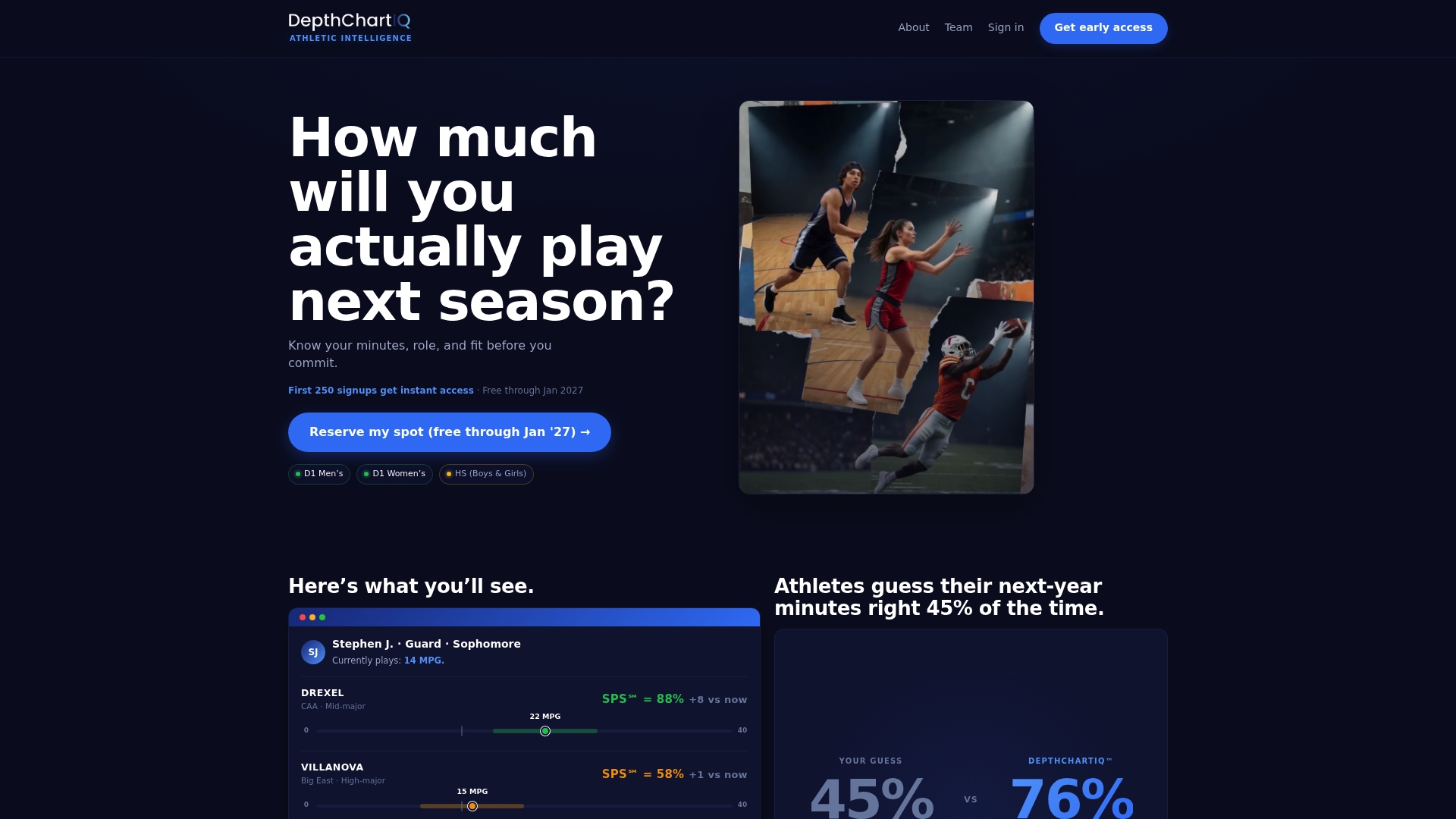
Depthchartiq gives college basketball players a data-driven view of their playing time potential based on real roster changes and program dynamics. The platform’s prediction algorithms process live roster data to show you where you stand, which matters whether you are managing a transfer decision or trying to stay focused on your current program. When you know your athletic standing is tracked and clear, you free up mental bandwidth for the academic side of your checklist. Visit Depthchartiq to see how accurate, real-time roster insights can sharpen both your athletic and academic planning for 2026 and beyond.
FAQ
What is the NCAA 10/7 core course rule?
The NCAA 10/7 rule requires that 10 of your 16 core courses be completed before your senior year, with 7 coming from English, math, or natural science. Grades from those courses are locked and cannot be retaken to improve your core GPA.
How far in advance should I contact professors about travel?
Contact professors at least two weeks before any travel conflict, and confirm makeup arrangements in writing before you leave campus. Delayed communication is the primary cause of grade penalties for traveling athletes.
What documents do incoming student-athletes need to submit early?
Incoming athletes must complete FAFSA, NCAA amateurism certification, final transcript submission, residency verification, and health insurance arrangements at least two months before arrival. Late submissions create eligibility holds that can delay your first semester.
How do I recognize burnout as a student-athlete?
Burnout symptoms include persistent exhaustion, declining grades, reduced motivation in your sport, and withdrawal from teammates or friends. Identifying these signs early and reaching out to an academic counselor or sports psychologist prevents longer-term academic and athletic consequences.
What is the best time management method for college athletes?
The 40-10 focused study cycle, combined with a weekly 15 to 20 minute planning session, gives athletes a repeatable structure that fits around practice and travel. Assigning specific tasks to found-time windows before practice or after meals consistently outperforms unstructured study blocks.