
The Role of Parents in College Athletic Decisions
Discover the vital role of parents in college athletic decisions. Learn how to support your student-athlete effectively and avoid common pitfalls.

DepthChartIQ
Athletic Intelligence

The Role of Parents in College Athletic Decisions

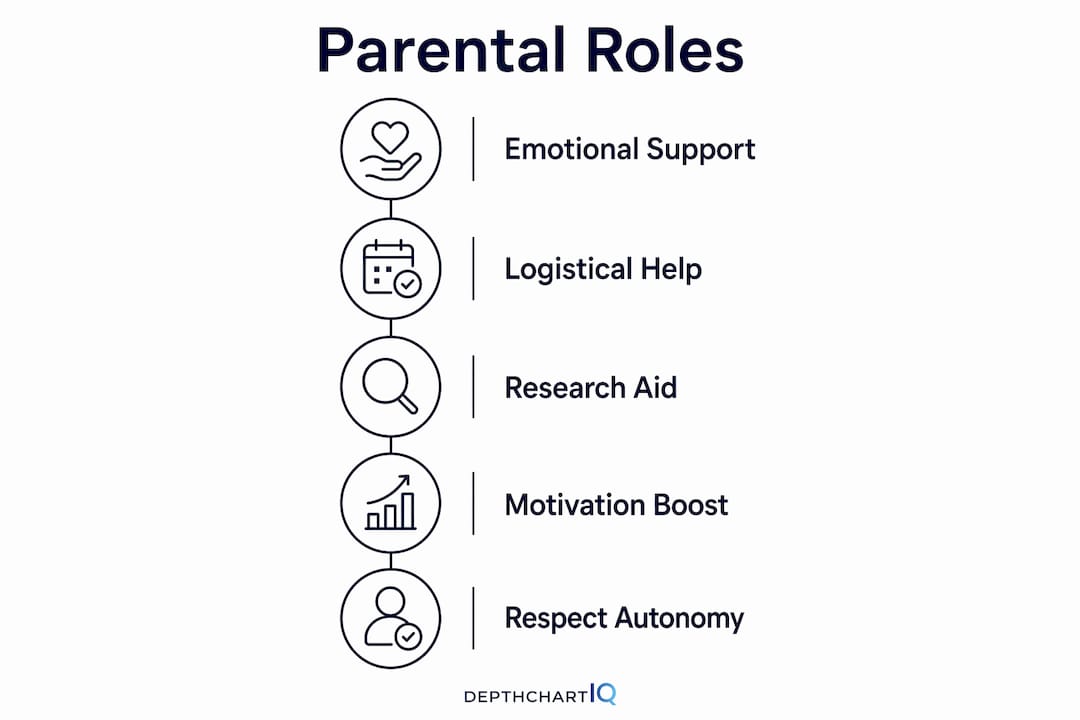
The role of parents in college athletic decisions is to provide emotional and logistical support while letting the student-athlete lead every conversation with coaches and programs. This distinction matters more than most families realize. Parents who cross from support into control create friction with coaches, undermine their child’s confidence, and risk derailing the very opportunities they are trying to secure. The recruiting and transfer process is complex, governed by NCAA rules that change year to year, and loaded with financial misconceptions. Understanding where your influence helps and where it hurts is the foundation of effective parental involvement.
How do parents balance support with athlete autonomy during recruitment?
Coaches prefer direct contact with athletes, not their parents. This is the single most important boundary to understand. When a parent calls a coach on behalf of their child, it signals immaturity and raises doubts about whether the athlete can handle the independence of college life. Your child needs to own this process.
Positive parental behaviors in the recruiting process include:
- Researching programs together and helping your child build a list of target schools
- Reviewing scholarship offer letters and financial aid packages side by side
- Scheduling campus visits and handling travel logistics
- Listening after each coach conversation without immediately offering opinions
- Asking your child what they want, not what you think they should want
Negative behaviors that damage recruiting relationships include:
- Calling or emailing coaches directly to advocate for your child
- Speaking during campus visits when coaches address your athlete
- Pressuring your child toward a school based on your preferences
- Dismissing programs that do not match your expectations
Parental autonomy support links directly to higher athlete motivation. When parents push too hard, athletes shift from intrinsic motivation to controlled motivation, meaning they play to satisfy their parents rather than themselves. That shift accelerates burnout.
Pro Tip: Before each coach call or campus visit, ask your child to set three goals for the conversation. Debrief afterward by asking what they learned, not by telling them what you observed. This builds self-advocacy without removing your presence.
What academic and scholarship realities should parents understand?
Athletic scholarships are often partial, not the full-ride packages families imagine. Division I programs in non-revenue sports frequently split scholarship money across multiple athletes. A basketball program might offer a recruit 40% of a scholarship, with the expectation that academic aid covers the rest. Families who enter the process expecting a full scholarship and receive a partial offer often feel blindsided, and that reaction can damage the relationship with a program.
Academic eligibility is not a formality. The NCAA Eligibility Center requires specific core course completion, minimum GPA thresholds, and standardized test scores for Division I and Division II athletes. A student who misses one core course requirement can lose eligibility entirely, regardless of athletic talent. Parents can prevent this by tracking coursework against NCAA requirements starting in ninth grade, not senior year.
Key academic realities every parent should track:
- Division I requires 16 core courses; Division II requires 16 as well but with different distribution requirements
- NCAA initial eligibility uses a sliding scale between GPA and test scores
- Academic performance in college affects scholarship renewal, since most athletic scholarships are one-year agreements renewed annually
- Coaches evaluate academic records because low-GPA recruits create compliance risk for programs
Balancing sports and school is a shared responsibility. Parents who model good study habits, create structured home environments, and communicate with school counselors give their athletes a measurable advantage. Pressure to prioritize sports over academics is one of the fastest ways to create eligibility problems down the road.
How do NCAA transfer rules and timing impact parental involvement in transfer decisions?
The 2026 NCAA transfer landscape is more structured and more consequential than it was even two years ago. NCAA Division I established 15-day transfer windows for men’s and women’s basketball, beginning the day after the championship game. Missing this window means waiting for the next cycle, which can cost an athlete an entire season of eligibility.
| Sport | Transfer Window | Key Timing Note |
|---|---|---|
| Men’s Basketball | 15 days post-championship | Starts day after NCAA Tournament ends |
| Women’s Basketball | 15 days post-championship | Starts day after NCAA Tournament ends |
| Other DI Sports | Sport-specific windows | Check NCAA portal for exact dates |
The NCAA also began enforcing penalties for “ghost transfers” starting February 25, 2026. Ghost transfer penalties include coach suspensions and program fines when athletes are encouraged to enter the transfer portal without genuine intent to transfer, a practice some programs used to manipulate roster numbers. Parents evaluating transfer offers should ask directly whether a program has received any compliance notices related to transfer portal activity.
Parents also need to understand the NCAA Sports Agent Responsibility and Trust Act, known as SPARTA. Under SPARTA, sports agencies must notify schools within 72 hours of signing any contract with a student-athlete. If an agent approaches your child before eligibility is exhausted, verify their compliance with SPARTA before any agreement is signed.
Pro Tip: Create a transfer decision timeline with your child at least 60 days before the transfer window opens. Map out which programs to contact, what questions to ask coaches, and what your child’s non-negotiables are. Rushed decisions made inside a 15-day window almost always favor the program, not the athlete.
What are common parental pitfalls and how can they be avoided?
Most parents who hurt their child’s recruiting process are not doing it out of selfishness. They are doing it out of love and anxiety. The problem is that anxiety-driven behavior reads as interference to coaches and as pressure to athletes.
The most common pitfalls include:
- Over-managing coach communication. Sending emails to coaches, following up on your child’s behalf, or attending unofficial visits and dominating the conversation signals that the athlete lacks independence.
- Setting unrealistic scholarship expectations. Telling your child they deserve a full scholarship before any offer is made creates resentment when reality falls short.
- Misreading recruiting interest. A coach sending a questionnaire is not an offer. A campus visit invitation is not a commitment. Parents who treat early contact as a guarantee set their child up for disappointment.
- Ignoring emotional signals. Athletes who seem withdrawn, anxious, or disengaged during the recruiting process are often responding to parental pressure. Asking “how are you feeling about this?” matters more than asking “did the coach call back?”
- Prioritizing prestige over fit. A Power Four program with limited playing time is not automatically better than a mid-major where your child will start. Balanced parental involvement that avoids pressure leads to longer sports participation and better outcomes.
The fix for most of these pitfalls is the same: ask more questions and make fewer statements. Your child is the one who will live with this decision for four years.
How can parents best support their student-athlete’s motivation and long-term success?
The data on parental behavior and athlete retention is striking. 86% of current players had parents attending games compared to only 58% of former players who had quit sports. Showing up matters. But how you show up matters just as much.

Instrumental parental support, which includes transportation to practice, help managing academic schedules, and consistent encouragement, builds athlete confidence and persistence. This type of support works because it removes logistical friction without removing the athlete’s sense of ownership over their sport.
Effective support behaviors that research backs include:
- Attending games and tournaments without coaching from the stands
- Helping your child track academic deadlines alongside athletic commitments
- Celebrating effort and improvement, not just wins and statistics
- Connecting your child with mentors, former college athletes, or counselors who can offer perspective you cannot
“The best thing my parents did was ask me what I wanted and then help me get there. They never told me where to go. They just made sure I could get there.” This sentiment, shared by countless college athletes, captures what effective parental guidance actually looks like in practice.
For parents of basketball players specifically, understanding how roster dynamics affect playing time is part of supporting realistic decision-making. A recruit who commits to a program without understanding the depth chart is making a blind bet. Resources that provide roster pressure insights and playing time projections give families a factual foundation for those conversations.
Key takeaways
The most effective parental role in college athletic decisions combines logistical support and emotional presence with a deliberate commitment to letting the athlete lead.
| Point | Details |
|---|---|
| Athletes lead communication | Coaches want to speak with athletes directly; parental interference signals immaturity and reduces recruiting interest. |
| Scholarships are often partial | Most athletic scholarships cover a fraction of costs; families should plan for academic aid to fill the gap. |
| Transfer windows are fixed | NCAA Division I basketball transfer windows last 15 days post-championship; missing them costs a full cycle. |
| Autonomy drives motivation | Athletes whose parents support their independence show higher motivation and longer sports participation. |
| Ghost transfer compliance matters | Programs violating ghost transfer rules face penalties; parents should verify compliance before accepting transfer offers. |
What I’ve learned watching parents get this wrong and right
I have spent years watching families navigate the recruiting process, and the pattern is consistent. The parents who help most are the ones who treat this as their child’s career decision, not a family project. They research quietly, ask good questions, and resist the urge to fill every silence with advice.
The parents who hurt the process are usually the most invested ones. They have attended every game since age seven, sacrificed vacations and weekends, and genuinely believe their involvement entitles them to a seat at the negotiating table. It does not. Coaches recruit athletes, not families. The moment a parent becomes the loudest voice in the room, the athlete becomes a liability.
What I find most underappreciated is the academic side. Families spend enormous energy on highlight reels and showcase tournaments while ignoring whether their child has completed the right core courses for NCAA eligibility. I have seen talented athletes lose Division I opportunities over a single missing course that could have been taken sophomore year. The DepthChartIQ methodology approach of combining data with context is exactly right. Decisions made on incomplete information are the most common source of regret in this process.
The 2026 NCAA transfer rule changes also demand more parental attention than most families are giving them. Ghost transfer penalties are real, the windows are short, and the compliance stakes are higher than they were even two years ago. Parents who educate themselves on these rules before a transfer becomes necessary are the ones who help their children move quickly and correctly when the moment arrives.
— John
Make smarter decisions with Depthchartiq
Navigating recruiting and transfers without data is guesswork. Depthchartiq gives families a factual foundation for every program evaluation.
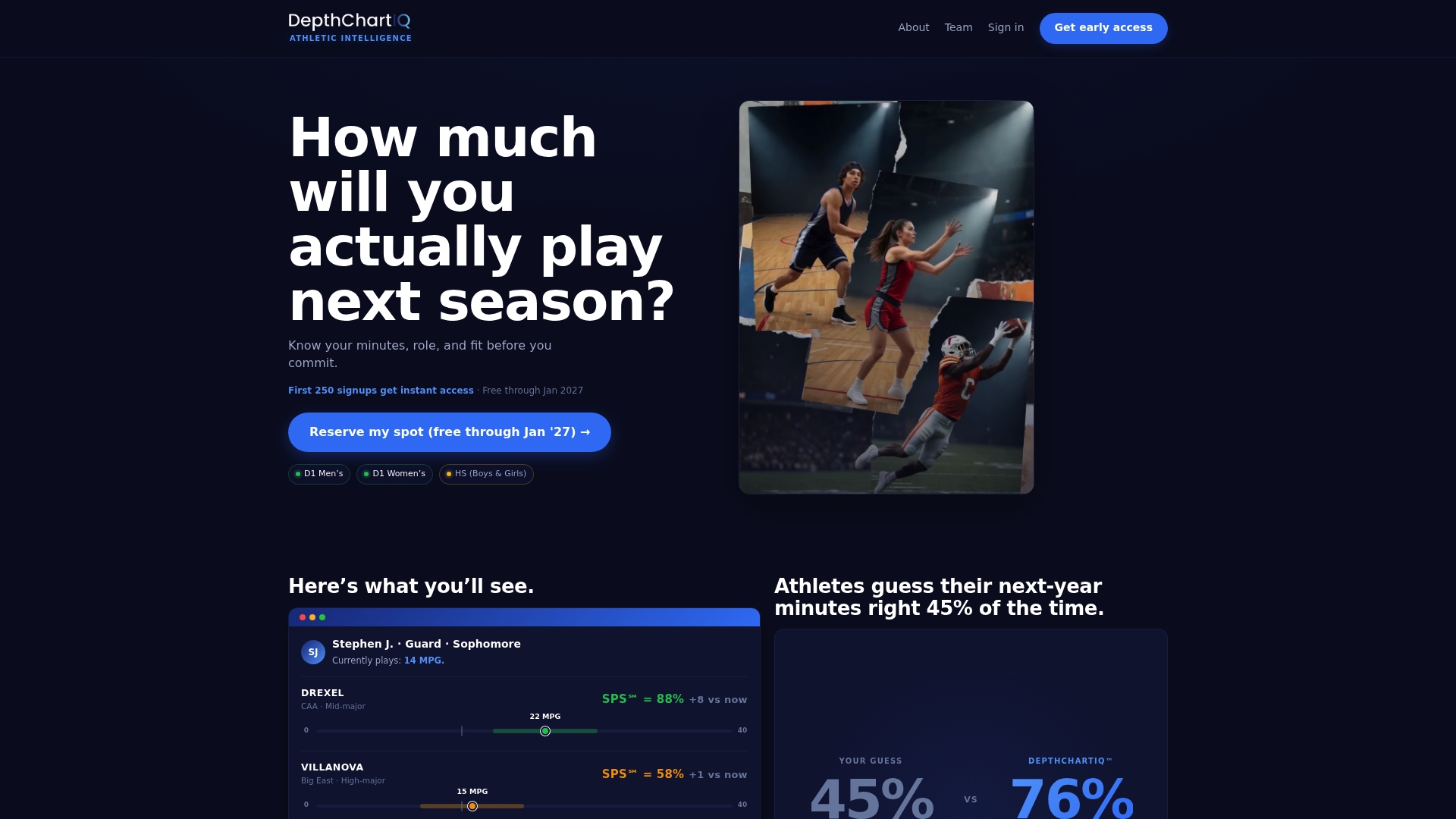
Depthchartiq uses advanced metrics and prediction algorithms to show college basketball players their projected playing time based on real roster dynamics. With a 76% accuracy rate in predicting player outcomes, the platform gives athletes and their families a clear picture of where minutes are available and where roster pressure is highest. Whether your child is evaluating a first commitment or considering a transfer, explore Depthchartiq to see how data-driven insights can replace speculation with strategy.
FAQ
What is the role of parents in college athletic decisions?
Parents provide emotional support, logistical help, and research assistance while letting the student-athlete lead all direct communication with coaches. Coaches prefer to recruit athletes who demonstrate independence, and parental overreach consistently reduces recruiting interest.
How do NCAA transfer windows work in 2026?
NCAA Division I basketball transfer windows open the day after the championship game and last 15 days. Missing this window means waiting for the next cycle, so families should plan the transfer timeline well in advance.
Are athletic scholarships usually full rides?
Most athletic scholarships are partial, covering a percentage of tuition, room, and board. Families should expect to combine athletic aid with academic scholarships, grants, and financial aid to cover the full cost of attendance.
What are ghost transfers and why do they matter?
Ghost transfers occur when programs encourage athletes to enter the transfer portal without genuine intent to transfer, often to manipulate roster numbers. The NCAA began penalizing this practice on February 25, 2026, with coach suspensions and program fines for violations.
How does parental pressure affect athlete motivation?
Research published in Frontiers in Psychology shows that parental pressure shifts athletes from intrinsic motivation to controlled motivation, meaning they perform to satisfy their parents rather than themselves. This pattern accelerates burnout and increases dropout risk.