
Roster Spot Guarantees in College Basketball: What They Cover
A roster spot guarantee is not a scholarship or playing time. Learn what coaches mean, what to get in writing, and how to weigh minutes before you commit.
 DepthChartIQ11 min read
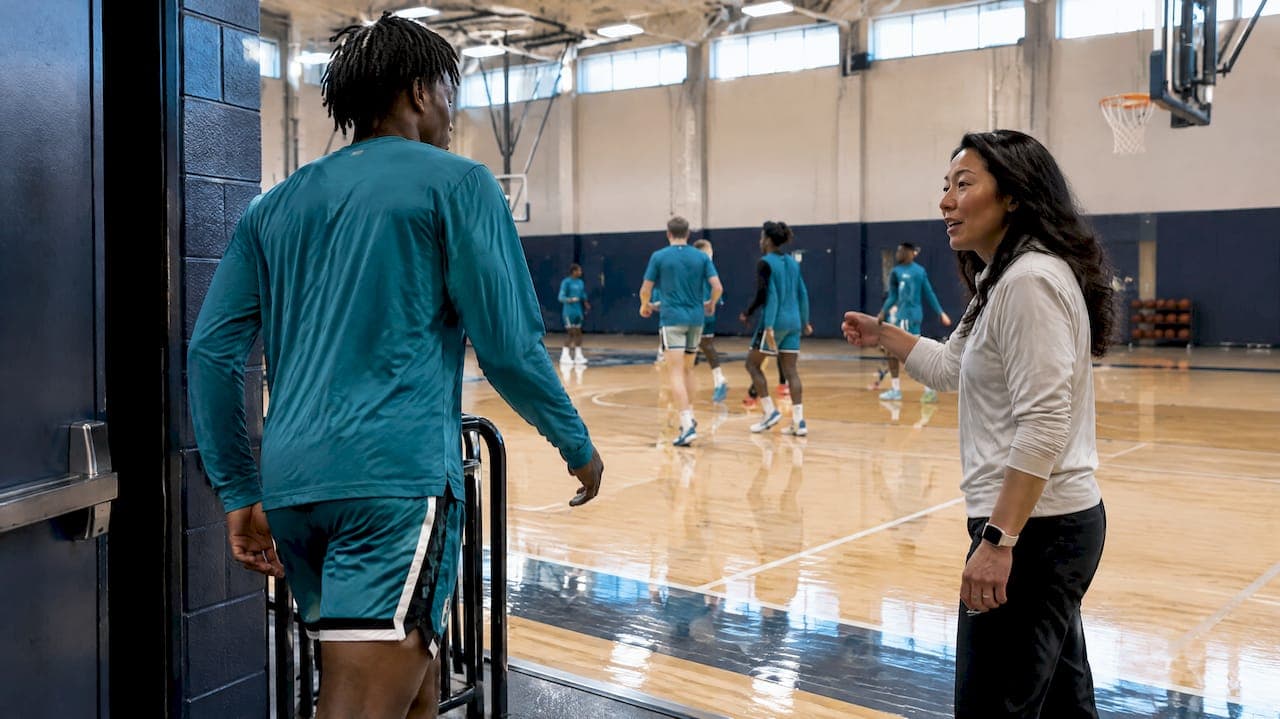

A roster spot guarantee means a coach is telling you that you will be on the team. It does not mean you will get a scholarship, and it does not mean you will play. Those are three separate promises, and only one of them is usually on the table when a coach uses the word “guarantee.” Before you commit or transfer, you need to know which promise you were actually given, and how many minutes the roster in front of you realistically leaves.
TL;DR
- A roster spot is a place on the team. A scholarship is money. Playing time is minutes. A coach can offer the first without the other two.
- The NCAA describes a preferred walk-on as a player a coach wants on the team but has no scholarship for, and who is guaranteed a roster spot.
- A verbal commitment is not binding on the athlete or the school. Get every promise that matters in writing.
- Division I basketball rosters are capped at 15 players for schools under the House settlement rules, so crowded positions matter more than ever.
- Before you accept, compare how much room each program leaves at your position, not just what the coach says in the pitch.
Table of Contents
- What a roster spot actually means
- Roster spot, scholarship, playing time: three different promises
- Verbal commitments are not binding
- Can a program take the spot or the scholarship back?
- The 15-player cap changes the math
- Transferring: the spot comes after the portal
- What to ask and get in writing
- Weigh the coach’s pitch against your minutes range
- How DepthChartIQ helps you compare
- Our perspective
- FAQ
- Sources
What a roster spot actually means
A roster spot means your name is on the team’s official list. You practice with the team, travel when the program allows, and count as a member. That is all the phrase promises by itself.
The NCAA’s college-bound guide for 2026-27 separates the common ways players get there. A recruited scholarship player receives athletics aid. A preferred walk-on is a player the coach wants but has no scholarship for, and the guide states that this player is guaranteed a spot on the roster. A walk-on is someone not typically recruited who does not receive a scholarship but becomes a team member. If you are weighing that route, our guide to how walk-ons can earn a scholarship and the rundown on tryouts for unrecruited athletes cover what comes next.

The same NCAA guide lists playing time, scholarship renewals and name, image and likeness (NIL) opportunities as topics recruits should understand before they decide. In other words, even the governing body treats them as separate questions from whether you made the team.
Roster spot, scholarship, playing time: three different promises
| Promise | What it covers | What it does not cover |
|---|---|---|
| Roster spot | A place on the team’s roster | Money, minutes, a role |
| Athletics scholarship | Aid toward school costs, full or partial | Minutes, a starting job |
| Playing time | Minutes in games | Nothing is binding; no rule lets a coach guarantee it in a way you can enforce |
Coaches often blur these in a recruiting conversation. “We want you here, you’ll have a spot” can be completely sincere and still say nothing about your minutes. A coach may also genuinely believe you will start, then sign a stronger player at your position in the portal the following spring.
That is why the most useful question is not “is my spot guaranteed?” It is “what does that spot look like on the floor, given who else is on the roster?”
Verbal commitments are not binding
The NCAA’s guide defines a verbal commitment as not binding on the athlete or the school. A coach saying yes and you saying yes, in a call or on social media, creates no obligation for either side.
What does bind is paperwork. Division I eliminated the National Letter of Intent in 2024. Recruits now sign the school’s own written financial aid agreement, which the NCAA describes as a formal commitment between the student-athlete and the school that should be read carefully before signing. Sport-specific signing periods apply. Our explainer on National Letter of Intent rules walks through what changed.
Once you sign a written athletics-aid offer with a Division I or II school, other schools’ athletics staff generally may not contact you, with listed exceptions. So signing is also the moment your other options go quiet. Know what you are getting before that happens.
Can a program take the spot or the scholarship back?
The scholarship side has real protection. Under the NCAA’s Division I Core Guarantees, if you received athletics aid in your first year and still have eligibility remaining, that aid cannot be reduced, canceled or not renewed for athletics-related reasons. The NCAA names injury, athletic performance and roster management decisions among them. Schools must give written notice and an opportunity to appeal any aid change.
That protects the money. It does not guarantee minutes, and it does not stop a coach from building a deeper roster at your position. This is why a roster spot with aid in writing is a stronger position than a roster spot on a handshake, and why neither tells you how much you will play.
The 15-player cap changes the math
Since July 1, 2025, NCAA Bylaw 17.2 caps Division I men’s and women’s basketball rosters at 15 players for schools in House settlement defendant conferences or that opt in. The old scholarship limits gave way to roster limits. Our breakdown of scholarship limits in basketball explains how that works for aid.
Two practical effects for you:
- Fewer places to hide a crowded position. With 15 spots, a program that already has four guards who play cannot keep adding guards without someone leaving. A guaranteed spot at a school with a packed backcourt can mean practicing hard and playing rarely.
- Roster deadlines matter. Under Bylaw 17.2.1, a school must submit its roster by the day before the first contest used for championship selections or December 1, whichever is earlier. After that, players can be added only if the 15-player limit has not been reached, and a player not on the submitted roster may not take part in athletically related activities. If you are thinking about a mid-year move, see our guide to midyear transfer eligibility.
Transferring: the spot comes after the portal
For transfers, the order of operations matters. The NCAA says four-year transfers must be permissibly entered in the Transfer Portal to sign a written offer of athletics aid. For Division I, permissible entry includes the opening of the sport-specific window or an applicable exception.
The portal is also not a guaranteed landing spot. The NCAA’s 2026-27 guide reports that of Division I student-athletes who entered the portal in 2024-25, 68% transferred to a new NCAA school, while the other 32% left the sport or went to a non-NCAA school. Entering the portal before you have a written offer in hand is a real risk, which is another reason to line up your conversations first. For the eligibility rules around moving, read our guides on the one-time transfer rule, transfer credits and eligibility and graduate transfer admissions. Players coming from overseas should check international transfer eligibility.

What to ask and get in writing
A short, direct conversation with a coach beats a long, vague one. Before you accept a spot or leave your current school, ask these and write down the answers.
- Is this a scholarship, a partial scholarship, or a walk-on spot? Ask for the amount and the length of the agreement in writing, and read the financial aid agreement before you sign.
- Who else plays my position? Ask who is returning, who is already committed, and whether the staff is still recruiting your position.
- What role do you see for me, and what would change it? A coach can describe a role without promising it. Notice whether the answer has specifics (lineups, minutes in the rotation) or only enthusiasm.
- What happens to my aid if the roster changes? The Core Guarantees above cover athletics-related reductions for eligible athletes, so confirm how the school applies them.
- How are NIL and revenue-sharing opportunities handled for players at my level? The NCAA lists NIL among the topics recruits should understand, so ask about it directly.
Families should sit in on these questions together. A parent often asks the plain question an athlete is too polite to raise.
Weigh the coach’s pitch against your minutes range
Most athletes make this call on gut feel and a coach’s pitch. The pitch is one input, and it comes from the person who is recruiting you. The other input is the roster itself: who is at your position, how old they are, and how much room that leaves for you.
A useful way to compare schools is to put three things next to each other for each program:
- the minutes you could realistically expect, as a range rather than a single number
- how likely you are to earn those minutes
- how crowded your position is
If a program offers you a spot and the range at your position is thin, you have learned something the offer did not say. If another program offers less but shows more open minutes, that tradeoff is yours to make with real information.
How DepthChartIQ helps you compare
DepthChartIQ is built for NCAA Division I men’s and women’s basketball players and their families, not for coaching staffs. You enter a profile, and for each program you are considering you see a projected minutes-per-game range for next season, a Success Probability Score (the chance of gaining minutes) and a Roster Pressure Score (how crowded your position is at that school). You also see best-fit programs. It covers college transfers, athletes deciding whether to stay, and incoming high school and junior college players.
That gives you something concrete to hold up against a coach’s promise of a spot. Projections are estimates with ranges, not guarantees, and they are meant to inform your decision, not replace your judgment or your conversations with coaches.

DepthChartIQ is free during Early Access. You can start on the DepthChartIQ site and run the programs on your list side by side. Spotter, our assistant, is also available now to help you research schools and draft messages to coaches, which is handy when you are preparing the questions above.
Our perspective
A guaranteed roster spot is a good thing to hear. It is also the easiest promise for a program to make, because it costs the program the least. The promises that change your next year are the scholarship in writing and the minutes you can realistically expect.
We built DepthChartIQ because athletes and their families deserve more than a pitch to go on. When a player and a parent sit at the kitchen table comparing three programs, the useful question is how much room each one leaves at their position. A projected minutes range, a Success Probability Score and a Roster Pressure Score turn that question into something you can compare school by school.
With rosters capped at 15 in many Division I programs, the position-by-position picture matters more each cycle. We think every athlete should walk into a coach’s office with that picture and a short list of written questions, then decide with their eyes open.
Max
FAQ
Does a guaranteed roster spot mean I will play?
No. A roster spot means you are on the team. Minutes are decided by the coaching staff throughout the season and depend on who else plays your position. Treat playing time as something to evaluate, not something a coach can lock in.
Is a roster spot guarantee the same as a scholarship?
No. The NCAA describes a preferred walk-on as guaranteed a roster spot with no scholarship. A scholarship is a separate written financial aid agreement. Ask for the aid amount and terms in writing, and read the agreement before you sign.
Is a verbal commitment binding?
No. The NCAA’s guide states a verbal commitment is not binding on the athlete or the school. The written financial aid agreement is the formal commitment, so get any promise you are relying on in writing.
Can a school cancel my scholarship if my roster spot changes?
For Division I athletes who received athletics aid in their first year and still have eligibility, the NCAA’s Core Guarantees say aid cannot be reduced, canceled or not renewed for athletics-related reasons, including injury, performance and roster management decisions. Schools must give written notice and an appeal opportunity for aid changes.
How many players can a Division I basketball team carry?
For schools in House settlement defendant conferences or that opt in, NCAA Bylaw 17.2 caps men’s and women’s basketball rosters at 15 players, effective July 1, 2025.
Sources
- NCAA college-bound student-athlete guide, 2026-27
- NCAA Scholarships and Financial Aid
- NCAA Legislative Services Database: contact after signing an athletics-aid offer
- NCAA Student-Athlete Core Guarantees
- NCAA Bylaw 17.2, roster limits
- NCAA Legislative Services Database: roster submission deadline
- NCAA Recruiting and the Transfer Portal