
Headcount vs. Equivalency Scholarships: What Changed for Basketball
Headcount vs. equivalency scholarships explained for basketball players and families, including how the House settlement and roster limits changed the rules.
 DepthChartIQ13 min read
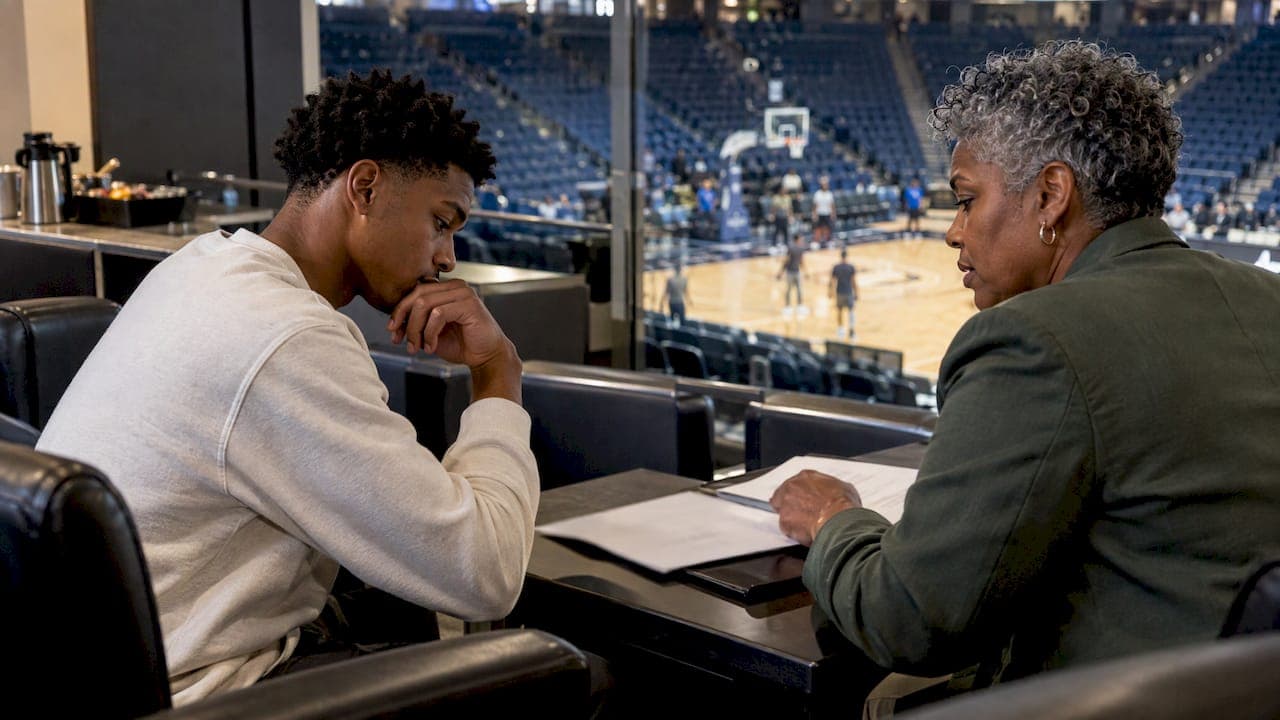

In a headcount sport, every scholarship is a full ride, and each one counts as one player against the team’s cap. In an equivalency sport, a coach splits a fixed pool of scholarship money among as many players as they like. Basketball was long a headcount sport at the Division I level. Since July 2025, at schools that joined the House settlement, that old line has mostly given way to roster limits. This guide explains what each term meant, what it means now, and what it should change about how you weigh offers.
TL;DR
- Headcount: each scholarship is a full award and counts as one player. Division I men’s and women’s basketball were classic headcount sports.
- Equivalency: a coach divides a set amount of aid among rostered players, so partial awards are normal.
- Now: at Division I schools that opted into the House settlement, scholarship limits were replaced by roster limits, and full or partial aid can go to anyone on the roster.
- Your move: ask every program what percentage of aid is offered, for how long, and how crowded your position is. Then compare playing time, not just dollars.
Table of Contents
- What headcount and equivalency mean
- Which sports used which system
- How the rules differ by level: NCAA, NAIA and NJCAA
- What the House settlement changed
- What this means when you get an offer
- Money is only half the question
- Perspective
- See playing time next to the scholarship offer
- Typical dollar figures, and how to read them
- How many scholarship players to expect on a roster
- FAQ
- Sources
What headcount and equivalency mean
The two terms describe how the NCAA counted scholarships against a team’s limit.
Headcount sports counted bodies. A team could give out a set number of scholarships, and each one had to be a full scholarship. Splitting one into two halves was not allowed, so a basketball program with 13 awards had 13 players on full aid. The GIST’s explainer on walk-ons and headcount sports walks through the idea in plain terms.
Equivalency sports counted dollars, expressed as a number of full-scholarship equivalents. A coach could split that total among many athletes. The same GIST piece gives an example: a Division I baseball team with 11.7 equivalencies could give full rides to 11 players and a 70% award to another, or spread partial scholarships across all 35 to 40 rostered players.

A simple way to remember it: headcount asks “how many players are on scholarship?” and equivalency asks “how much scholarship money does the team have?”
Which sports used which system
Under the traditional Division I setup, football (the FBS level) and a handful of other sports were headcount, and everything else was equivalency. The NCAA’s own 2025-26 Division I squad-list form still lists head-count sports other than football as men’s and women’s basketball, women’s gymnastics, women’s tennis and women’s volleyball. Baseball, softball, soccer, track and most other sports were equivalency.
That split has a history. The GIST notes that the complicated rules helped schools accommodate huge football rosters while aiming for Title IX compliance, which requires institutions to offer comparable scholarship dollars to men and women. Women’s headcount sports were part of how schools balanced the large football numbers.
For basketball, the practical result was simple. A program could not hand a scholarship to twelve players at 50% and call it a day. It had a fixed number of full rides, and everyone else was a walk-on or on non-athletic aid.

How the rules differ by level: NCAA, NAIA and NJCAA
The terminology changes depending on where you play. Here is how the main levels treat athletic aid, using each governing body’s own information where it exists.
| Level | How athletic aid works | Basketball detail |
|---|---|---|
| NCAA Division I | Traditionally headcount or equivalency by sport; now roster limits at opted-in schools | Men’s and women’s teams can carry up to 15 players at opted-in schools |
| NCAA Division II | Partial-scholarship model in which coaches divide funds among several athletes | Limit of 10 equivalencies for men’s basketball |
| NCAA Division III | No athletic scholarships | Aid is academic or need-based |
| NAIA | Equivalency model with a sport-by-sport cap on total aid | Division I basketball 11, Division II basketball 6 (per the NAIA’s college-bound guide) |
| NJCAA | Division I and II allow athletic scholarships, Division III does not | A signee on a Letter of Intent counts toward the team maximum regardless of the award amount |
Two details from this table matter for families. NAIA aid is limited to tuition, mandatory fees, required books and supplies, and room and board based on the school’s official allowance, per the NAIA guide above. And Division II programs often build their rosters out of partial awards, so a 40% offer there is ordinary, not a sign a coach is lukewarm.
What the House settlement changed
The biggest shift in decades came with the House v. NCAA settlement. It took effect on July 1, 2025, and it changed the framework for Division I schools that chose to participate.
The Knight Commission’s brief on the settlement describes the core change: scholarship limits are eliminated and replaced with roster limits for each sport. Athletes on the roster can receive scholarship aid, and under the settlement, new athlete payments as well. The brief also says schools that do not opt in may provide scholarships only up to the 2024-25 NCAA limits by sport, and that going forward athletic scholarships are treated as equivalencies in all sports, ending the headcount restrictions.
The College Sports Commission’s roster limits page gives the numbers that matter to you:
- Men’s basketball moved from a scholarship limit of 13 to a roster limit of 15.
- Women’s basketball stayed at 15.
- FBS football went from 85 scholarships to a 105-player roster.
- Women’s volleyball went from 12 to 18, women’s gymnastics from 12 to 20, and women’s tennis from 8 to 10.
The same page says participating schools may offer full or partial scholarships to every athlete on the roster, as long as the roster stays within the sport’s limit.
What this means in plain words
At a participating Division I school, a basketball coach is no longer boxed into a fixed number of full rides. In theory, all 15 players could be on full aid, or some could be on partial aid, or some on none. The old headcount-versus-equivalency question has become a different one: how many roster spots does this coach have, and how is aid spread across them?
Because the classification still appears in NCAA compliance paperwork, you will keep hearing the old terms from coaches, guidance counselors and recruiting sites. That is normal. Treat them as shorthand for how a sport used to work and keep asking what a specific school is actually offering.
What this means when you get an offer
The old system made one thing easy to read: if a Division I basketball program offered you aid, it was a full ride. Today you need to ask more.
Questions to ask every program
- Is the school participating in the House settlement? The answer tells you whether it is working under roster limits or the older scholarship limits.
- What percentage of aid is this offer? Full, 75%, 50% or something else. Get the number in writing.
- How long does the aid last? Ask about the term of the award and what happens in future years.
- How many players does the program plan to carry, and at which positions? A 15-man roster with five players at your spot is a very different situation from one with two.
- What costs are covered? Tuition, housing, food, books and other items can differ from one school’s package to another.
If you want to go deeper on the older limits that applied before the change, our guide to scholarship limits in basketball covers them.
Combining athletic aid with other aid
Equivalency-sport athletes can generally combine athletic aid with need-based aid, academic scholarships, Pell Grants and state aid, as long as the total does not exceed the school’s cost of attendance, according to LegalClarity’s equivalency overview. Cost of attendance is the ceiling, and the school’s financial aid office and athletic compliance staff coordinate to keep your total package under it. Ask the financial aid office for your specific numbers before you sign anything.
Walk-ons and partial offers
With roster spots now the main constraint, a preferred walk-on or partial-aid offer can be a real path rather than a consolation. If you are weighing one, read about how players who walk on can earn a scholarship and what to ask about the way aid is reviewed.
Money is only half the question
Families tend to compare offers by dollars. That made sense when a scholarship was a scholarship. With partial awards and larger rosters in play, two offers with similar aid can lead to very different seasons.
Take two hypothetical guards, to show the logic (these are illustrations, not real players). One accepts a full ride at a school with four other guards ahead of them. The other accepts 60% aid at a school with a clear opening at the position. The first has more money, but the second may get far more court time. Which matters more depends on the family’s finances and the athlete’s goals, and only you can weigh that.
That is why it helps to look at three things side by side for every program:
- Aid: percentage, length and what it covers.
- Roster crowding: how many players share your position, and who is leaving or arriving.
- Likely role: whether the minutes will be there for you next season.
Our guide on college roster bubble players explains how to read your standing when a roster is full, and the piece on the one-time transfer rule is useful if a poor fit makes you think about moving.
Perspective
Most families we talk to start with one question: how much money is on the table? It is a fair question, and the headcount-versus-equivalency vocabulary grew up to answer it. But the rules now give programs more room to split aid across a 15-player roster, which means the dollar figure alone tells you less than it used to.
What we think athletes deserve is a read on the other half of the decision: playing time. That is why DepthChartIQ shows, for each program you are considering, a projected minutes-per-game range for next season, a Success Probability Score and a Roster Pressure Score. Those are estimates with ranges, not guarantees, and we present them that way. They give you something to weigh next to a coach’s pitch, instead of relying on gut feel alone.
We built it for athletes and their families, not for coaching staffs. If you are comparing a full ride at a crowded position with a partial offer somewhere you could actually play, you should be able to see both sides before you commit.
Max
See playing time next to the scholarship offer
Once you know what each school is offering in aid, the next question is how likely you are to play. DepthChartIQ lets you enter your profile and, for each program you are considering, see a projected minutes-per-game range for next season, a Success Probability Score (the chance of gaining minutes), a Roster Pressure Score (how crowded your position is at that school) and best-fit programs. It covers transfers, athletes deciding whether to stay, and incoming high school and junior college players.
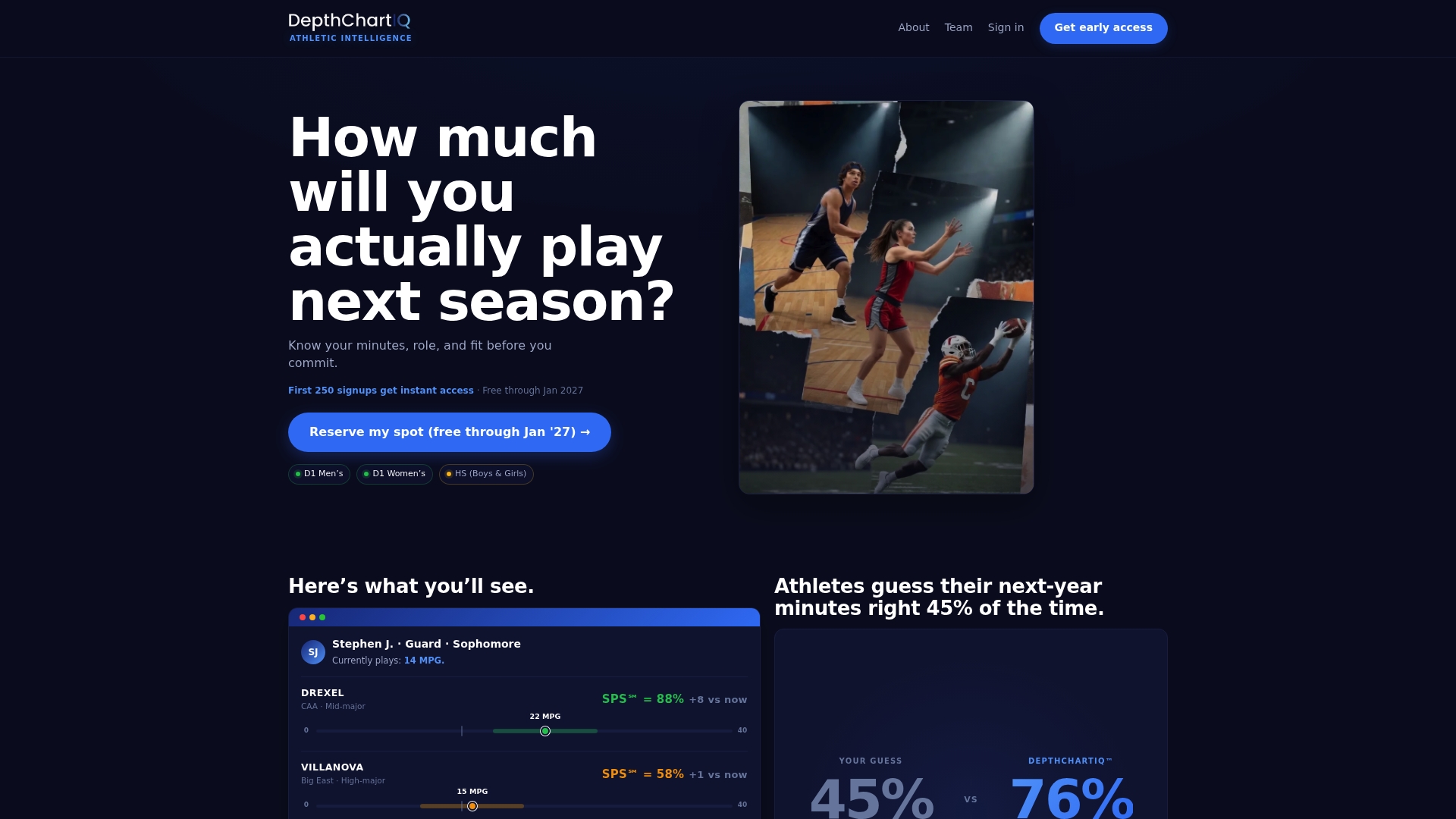
DepthChartIQ is free during Early Access. Start with DepthChartIQ and compare your options program by program. If you want help researching schools and drafting messages to coaches, Spotter is available now. Incoming players can also read how to check your fit as an incoming recruit.
Typical dollar figures, and how to read them
Before the rule change, the gap between headcount and equivalency sports showed up clearly in average awards. According to Scholarship Stats.com’s 2019-20 averages, the average Division I men’s basketball athletic scholarship was $37,783 and FBS football was $45,691. Equivalency sports averaged far less, for example $15,067 in baseball and $10,294 in track and cross country.
Treat those as a snapshot of the old system, not a prediction for any school today. They show why basketball players historically saw full-value awards: a headcount award was a full award. Under roster limits, the average can shift, and your own number is the one that counts. Get the offer in writing, and check it against the school’s published cost of attendance.
How many scholarship players to expect on a roster
Before the settlement, one industry blog reported that top-tier Division I programs typically carried 12 to 14 scholarship players, leaving one to three spots open for transfer-portal additions, while mid-major programs carried 13 to 15. With a 15-player roster limit, expect programs to keep some flexibility at the end of the roster. That matters if you are a transfer: an open spot may exist, but it may come with partial aid or none.
Timing also matters. If you are planning a recruiting year, the basketball recruiting calendar shows when contact is allowed, and the parent recruiting guide helps families prepare the questions above.
FAQ
Is Division I basketball still a headcount sport?
At Division I schools that opted into the House settlement, scholarship limits were replaced by roster limits, so the headcount system no longer governs them. Schools that did not opt in remain under the 2024-25 scholarship limits, per the Knight Commission’s brief. The old label still appears in NCAA compliance forms, which is why you still hear it.
Can a Division I basketball player get a partial scholarship?
At participating schools, yes. The College Sports Commission says schools may offer full or partial scholarships to any athlete on the roster, within the roster limit. Always ask for the exact percentage and duration in writing.
How many players can a college basketball team carry now?
At participating Division I schools, men’s and women’s teams can carry up to 15 players. Men’s teams went up from 13, and women’s teams stayed at 15, according to the College Sports Commission’s roster limits table.
What about Division II and the NAIA?
Both use equivalency models, in which coaches divide aid among players. Division II has a limit of 10 equivalencies for men’s basketball, and the NAIA caps Division I basketball at 11 and Division II basketball at 6. Division III does not give athletic scholarships.
Does a bigger scholarship mean more playing time?
No. Aid and minutes are separate questions. A smaller offer at a school where your position is open can lead to a bigger role than a full ride at a crowded position, so compare both before you commit.
Sources
- Roster Limits, College Sports Commission
- Summer School Q&A: What’s a walk-on? What’s a head-count vs. equivalency sport? The GIST
- NCAA Division I Squad Lists and Instructions, Form 25-2 (2025-26)
- Division II Athletics Scholarships, NCAA.org
- Guide for the College-Bound Student-Athlete, NAIA (2026)
- Guide for the College-Bound Student-Athlete, NAIA
- 2019-20 NJCAA Handbook, page 81
- Brief on House v. NCAA Settlement, Knight Commission
- Understanding the New NCAA Scholarship Limits, Honest Game
- How Equivalency Scholarships Work, LegalClarity
- NCAA I Athletic Scholarship Averages 2019-20, Scholarship Stats.com
- How D1 Basketball Scholarships Work in 2026, HoopBrief