
Midyear Transfer Eligibility in College Basketball: The Rules
Can a college basketball player transfer midyear and play right away? Here is how NCAA midyear transfer eligibility works, who it affects, and what to check first.
 DepthChartIQ13 min read
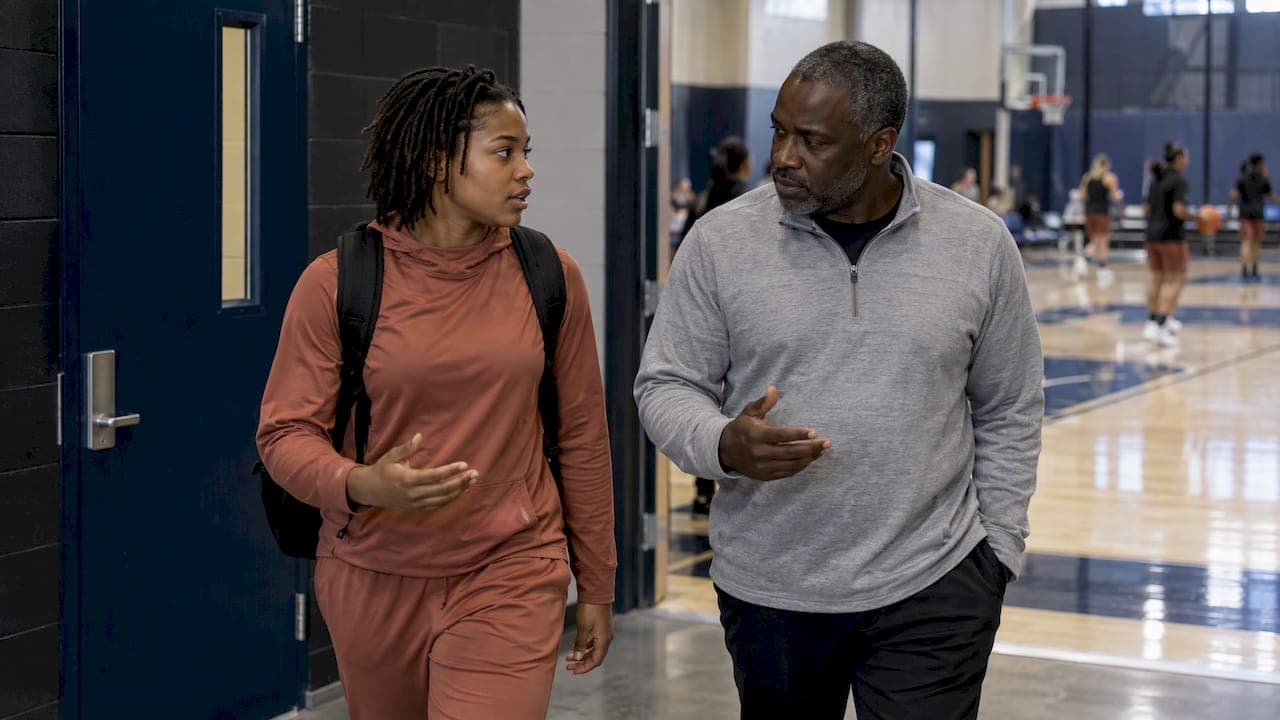

If you are a Division I basketball player who enrolled at an NCAA school for the first term and then moves to a new school midyear, you cannot compete for the new school that season. That holds whether or not you played a minute at the first school. The NCAA Division I Cabinet put this in writing in its January 2026 announcement on new transfer windows, and it applies to men’s and women’s basketball.
That is the short answer. The longer one matters because a midyear move is rarely about this season. It is about what you do with the practice time, the classroom credits and the next fall’s roster. This guide covers who the rule hits, who it does not, the academic and timing requirements that sit around it, and how to judge whether a midyear move helps your playing time.
TL;DR
- A Division I basketball player who enrolled at an NCAA school in the first academic term generally cannot play for a second school in that same season, even if the player never appeared in a game.
- The rule comes from Division I Bylaw 14.5.5.4: a basketball player who first enrolls full-time after the first term is not eligible until the next academic year.
- Portal timing is separate from midyear eligibility. Basketball windows are short, and a coaching change can open an extra one.
- You still need to leave your school academically eligible and in good standing, and meet progress-toward-degree rules at the new one.
- Judge a midyear move on what it does for next season’s role, not this season’s schedule.
Table of Contents
- What midyear transfer eligibility means
- Why you can transfer freely and still sit out
- Quick scenarios
- Portal windows and the coaching change exception
- Academic requirements that travel with you
- Two-year college and international players
- Why not just move midyear?
- Check your next role before you move
- A checklist for a midyear move
- FAQ
- Sources
What midyear transfer eligibility means
A midyear transfer is a player who changes schools during the academic year, usually in December or January, and enrolls for the second term (spring semester or winter quarter). “Eligibility” here means one thing: can you suit up for the new school in games this season?
For basketball, the governing text is NCAA Division I Bylaw 14.5.5.4, revised April 18, 2024. In baseball, basketball and softball, a student-athlete who initially enrolls at the certifying school as a full-time student after the first term of the academic year, and who meets the four-year transfer requirements, is not eligible for competition until the ensuing academic year.
The January 2026 Cabinet announcement then spelled out the practical effect in basketball. If you enrolled at an NCAA school during the first academic term, you cannot compete at a second school that year, whether or not you competed at the first one. Sitting on the bench in October and transferring in January is treated the same as playing 15 games.
This is different from the transfer rules most players have heard about, which is why it catches families off guard.
Why you can transfer freely and still sit out
Since 2024, Division I undergraduates have not had to sit out a year just for changing schools. The Division I Council’s April 2024 changes allow transfers who meet academic requirements to be immediately eligible. Undergraduates must leave the previous school academically eligible and in good standing, and meet progress-toward-degree requirements at the new school. Husch Blackwell’s legal analysis of the change notes it in some ways codified the December 2023 injunction in Ohio et al. v. NCAA.
Midyear provisions were kept on top of that. The NCAA’s Division I Q&A on Proposal 2022-20 confirms that midyear transfer rules continue to apply even when a player qualifies under the transfer exception. So two rules run side by side:
- The general rule: a player who leaves in good academic standing can usually be eligible at the next Division I school.
- The midyear rule: a basketball player who enrolled in the first term and moves for the second term is not eligible to compete at the new school that season.
The second rule is the one that matters in December and January. For a deeper look at the general rule, see our guide to the one-time transfer rule for basketball players.
Quick scenarios
The table below applies the Division I rule to common situations. It is a reading aid, not a ruling. Your compliance office and the NCAA make the final call on your specific case.
| Situation | Division I basketball outcome |
|---|---|
| Enrolled at Division I school in fall, moves to another Division I school in January | Not eligible to compete at the new school that season |
| Enrolled in fall, never played in a game, moves in January | Same: playing at the first school is not the test, enrolling is |
| Did not enroll anywhere in the first term, enrolls full-time after it ends | Midyear provisions apply; eligibility starts the next academic year |
| Transfers in the summer, before fall classes begin | General transfer rules apply: eligible if academic requirements are met |
| Moves to a new school after a head coaching change, between terms | Check with compliance; the extra window affects portal timing, and midyear provisions still apply to enrollment |
If your situation does not fit a row, ask your current compliance office and the destination school’s compliance office the same question in writing, and keep both answers.
Portal windows and the coaching change exception
Eligibility and timing are two different gates. You can be eligible in theory and still miss the window to enter the portal.
Per the NCAA’s January 2026 announcement, basketball transfer windows open for 15 days, starting the day after the championship game of the respective NCAA tournament. A head coaching change can open an additional 15-day window, starting five days after the new head coach is hired or publicly announced. If no new coach is named within 30 days of the previous coach’s departure, and the 31st day falls after the championship game, a 15-day window opens anyway. That extra window is available only after the basketball window opens through Jan. 2.
For scale, the NCAA’s spring 2026 window document lists men’s basketball at April 7 to 21, 2026, and women’s at April 6 to 20. Windows have shrunk in recent years. One regional report put the men’s window at 15 days in 2026, down from 30 in 2025, 45 in 2024 and 60 in 2023.

Husch Blackwell’s update on the 2024 changes adds two points that matter for a midyear move. The portal-window requirement did not change, and neither did the restriction on competing for multiple schools in the same championship segment, such as the same basketball season. Always confirm current dates on the NCAA’s official transfer pages, since windows have changed more than once.
Talking to other coaches before you are in the portal is a separate risk. Our guide to portal tampering rules covers what is and is not allowed.
Academic requirements that travel with you
A midyear move works only if the classroom side holds up. The NCAA’s Guide for Four-Year Transfers says a four-year transfer to Division I can generally seek immediate eligibility if you leave your previous school academically eligible, were in good standing and not under a disciplinary suspension, and are meeting progress-toward-degree requirements at the new school. It also flags additional sport-specific midyear provisions.
The Division I progress-toward-degree framework on the NCAA’s academics page includes:
- At least six credit hours each term to be eligible for the following term.
- 18 semester or 27 quarter hours over the year to be eligible the next academic year.
- Degree-completion benchmarks of 40% before the third year, 60% before the fourth and 80% before the fifth.
The practical risk in a midyear move is credits that do not transfer toward a degree at the new school. Before you commit, ask the new school’s compliance staff for a written credit evaluation. A player who loses credits in the move can end up behind on those benchmarks.
The guide also notes that Division I athletes have five calendar years to play four seasons, while Division II and Division III athletes have 10 full-time semesters or 15 full-time quarters. Division I has since approved a five-years-in-five model, so check the current NCAA eligibility page for how it applies to your class.

Division II and Division III
Division II has its own midyear language. Under the NCAA’s Division II summary of regulations, a midyear transfer must earn 24 semester or 36 quarter hours in any year with at least one full-time term, reach a 2.000 cumulative GPA before each fall term, and complete nine semester or eight quarter hours in the preceding regular term.
In Division III, the process changed for transfers on or after August 1, 2026. According to the NCAA’s April 2026 Division III governance webinar, Notification of Transfer replaces Permission to Contact, athletes complete an educational module, and the self-release option stays in place, letting you talk privately with another Division III school for 30 days.
Two-year college and international players
JUCO players run on a different clock. The NCAA’s Guide for Two-Year Transfers says basketball players moving to a new school in the middle of the academic year may not compete until the fall term. It also says that when a term is used to satisfy an academic-residence requirement, you must enroll before the 12th day of that term, and the new school or conference may add its own deadlines. Our JUCO transfer guide covers the path to Division I in full.
International players face the same wall. FIBA’s Q&A guide for international basketball players says that if you transfer midyear after enrolling, you will not be eligible at the new school that same season, even if you did not compete. Players who finished a graduate degree should also read about graduate transfer admissions, since grad programs have their own timing.
Why not just move midyear?
Players consider midyear moves for understandable reasons: a coaching change, a role that disappeared, a health or family situation, or a roster that looks crowded. Here is what a midyear move does and does not do:
- It does not give you games this season at a Division I school if you enrolled in the first term.
- It can give you practice time, team workouts and an early start on academics at the new program, which some players value when they plan to compete the following year.
- It can burn a year of your eligibility clock. Division I players have five calendar years to play four seasons, so a season spent unable to play still runs the clock. Ask compliance how the move affects your remaining seasons.
- It changes who you compete with. You arrive in January with a roster already set, and next year’s class of recruits and portal additions is not yet known.
That last point is the one most players underweight. Eligibility tells you when you can play. It does not tell you how many minutes you will get.
Our perspective
Most midyear transfer decisions are made on a coach’s pitch and a gut feeling. The eligibility rule is clear and easy to look up. The harder question is whether the school you are moving to has room for you next season.
We built DepthChartIQ so athletes and their families can weigh that question with numbers instead of promises. For each program you are considering, you see a projected minutes-per-game range for next season, a Success Probability Score (the chance of gaining minutes) and a Roster Pressure Score (how crowded your position is at that school). These are estimates with ranges, not guarantees, and they are meant to sit next to what a coach tells you, not replace it.
If you are sitting out the rest of a season anyway, a midyear move is a long-term bet. We think that bet deserves a range to weigh, not just a recruiting visit.
Max
Check your next role before you move
A midyear transfer costs you a season of games at a Division I school, so the destination matters more than usual. Before you enter the portal, compare each school on the same footing: how many players at your position return, who is signing, and what role you would realistically compete for. Our guides on roster bubble players and incoming recruit impact show how to read a roster that looks open on paper.
DepthChartIQ is built for athletes and families, not coaching staffs. You enter your profile and, for every program on your list, see a projected minutes range, a Success Probability Score, a Roster Pressure Score and best-fit programs. Spotter, our assistant, helps you research schools and draft messages to coaches.
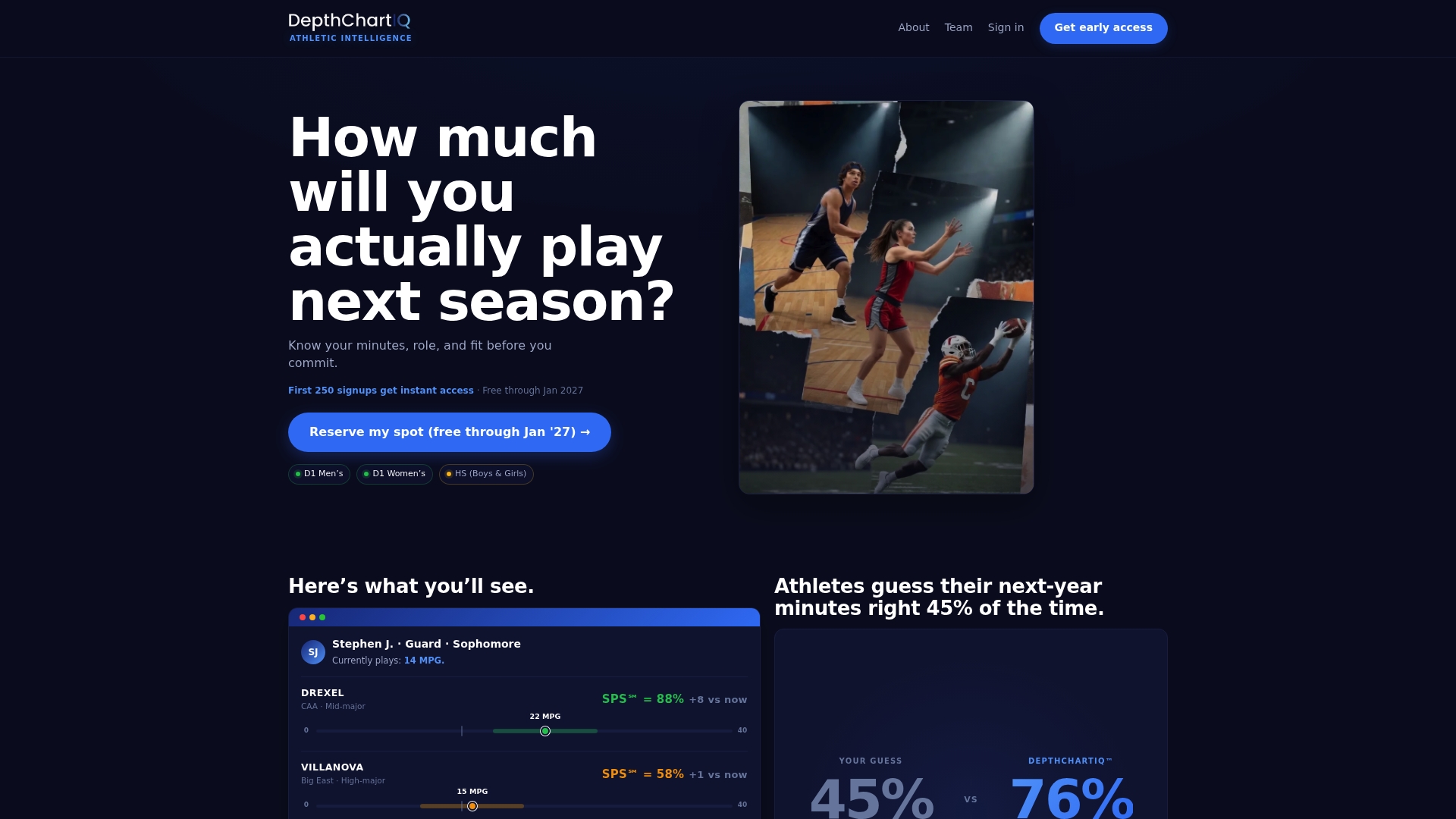
Try DepthChartIQ Pro to compare the programs on your list, or meet Spotter if you want help researching schools and writing to coaches.
A checklist for a midyear move
- Confirm your enrollment history. Did you enroll at any NCAA school in the first academic term? If yes, the Division I basketball midyear rule applies.
- Talk to your current compliance office before you tell anyone else, and ask what your academic standing will be when you leave.
- Check the portal window. Find out whether a coaching change has opened an extra window for your program.
- Get a credit evaluation in writing from the new school so you know how many hours transfer toward a degree.
- Ask about your eligibility clock. Request in writing how many seasons you will have left and when they start.
- Compare roles, not just rosters. Weigh minutes and roster pressure at every school on your list for next season.
- Keep a paper trail of every answer from compliance staff.
High school recruits face a different process. Initial eligibility runs through the NCAA Eligibility Center, not the transfer rules above. Our recruiting calendar guide lays out how that timeline works.
FAQ
Can a college basketball player transfer midseason and compete immediately?
In Division I, generally not. Under the NCAA’s January 2026 rule, a midyear transfer cannot compete at the second school if they enrolled at an NCAA school during the first academic term, even if they never played there. Confirm your case with compliance before you act.
How late can you transfer to another college and still play basketball?
There are two clocks. The portal window controls when you can enter the portal, and it opens for 15 days after the basketball championship game, with an extra window possible after a coaching change. The enrollment term controls when you can play, and a Division I player who enrolls after the first term sits out the season.
When can NCAA basketball players start transferring?
Basketball windows open the day after the championship game of the respective NCAA tournament and run 15 days. A head coaching change can open another 15-day window five days after the new coach is hired or announced. Check the NCAA’s transfer page for current dates, since they have changed several times.
Is it hard to transfer from one university to another?
The paperwork is manageable if you plan ahead. A Division I undergraduate who leaves academically eligible and in good standing can generally be eligible at the next school, provided progress-toward-degree requirements are met there too. The harder parts are credit transfer and finding a role, so start both early.
Sources
- Division I Cabinet adopts new transfer windows in several sports (NCAA)
- NCAA Division I Bylaw 14.5.5.4 (LSDBi)
- Division I Council approves changes to transfer rules (NCAA)
- NCAA Adopts Changes to Transfer Rules and NIL Rules (Husch Blackwell)
- Division I Q&A for Proposal 2022-20 (NCAA)
- NCAA Division I Notification of Transfer Windows
- Spring 2026 NC Basketball Outgoing Portal Snapshot (NC Sports Network)
- Guide for Four-Year Transfers (NCAA)
- Division I Academics (NCAA)
- Summary of NCAA Regulations, Division II 2025-26
- Division III April 2026 Governance Webinar (NCAA)
- Guide for Two-Year Transfers (NCAA)
- Q&A Guide for International Basketball Players (FIBA)