
One Time Transfer Rule: Basketball Players Can Play Now, but Risk Aid
Learn when basketball players can transfer and play right away, what aid and roster risks to weigh, and how DepthChartIQ can inform playing time decisions.
 DepthChartIQ7 min read

The one-time transfer rule generally lets an undergraduate who has not transferred before switch schools once and be immediately eligible. You still need three things: academic eligibility at your previous school, a no-tampering certification from you and the new head coach, and a move that fits the required transfer timing. Details on each follow below.
TL;DR:
- Before entering the portal, confirm credits and academic standing with your advisor, then ask compliance and financial aid offices for written aid reduction or cancellation timelines.
- Portal entry permanently notifies your school; other programs may contact you, and your school may change aid or roster status without an offer.
- The proposed basketball window lasts 15 days after the Final Four; a coaching change triggers a separate window five days after announcement, so verify dates.
- Graduate transfers may avoid standard sport windows, but separate deadlines vary by sport and season; graduate status does not waive eligibility or financial aid rules.
- Compare each target school’s depth chart and likely minutes, while checking whether credits transfer without delaying graduation before notifying your current school.
Table of Contents
- What the one-time transfer exception covers and where it came from
- Who qualifies for immediate eligibility
- What entering the Transfer Portal means for your aid and team spot
- Transfer windows: basketball timing and coach-change rules
- How graduate and postgraduate transfers differ
- A practical checklist for deciding whether to use your one transfer
- Compare playing-time prospects before you enter the portal
- FAQ
- Sources
What the one-time transfer exception covers and where it came from
The Division I Board ratified the rule in 2021, letting athletes who had not transferred before move once and play immediately, starting with the 2021-22 academic year. Before that, most basketball players had to sit out a year or request a waiver and hope it was approved.
“One-time” refers to undergraduates with no prior transfer. A second move, or a situation outside the exception, still goes through the waiver route.
What this means in practice:
- If you meet the requirements, there is no mandatory sit-out year.
- The exception is used up after one transfer, so spending it early can limit later options.
- Waivers remain available for situations the exception does not cover.
Who qualifies for immediate eligibility
NCAA guidance says you must be academically eligible at your previous school when you transfer. That means staying on track with progress toward your degree, not just holding a passing GPA.
Here is the checklist:
- Academics: good standing at your current school at the time of transfer.
- Prior transfers: the exception applies once. If you have already used it, you need a waiver or a different route.
- No tampering: both you and the head coach at the new school must certify that no impermissible contact happened before your official notification of transfer.
The NCAA states that the exception is automatic for qualifying undergraduates, but using it early in a career can limit your future transfer options because it applies only once.
If your previous school does not support your eligibility, an appeal process exists. Ask your compliance office how it works before you start, not after.
What entering the Transfer Portal means for your aid and team spot
The Transfer Portal is a mandatory, centralized database, and entering it is a permanent notification of transfer that may affect your current financial aid and team status. Once you are in, other programs can contact you. Your current school may also change how it treats your scholarship and roster spot.
Take these steps before you enter:
- Confirm your academic standing and credit count with your advisor.
- Meet with your compliance and financial-aid offices about how your current aid could change.
- Ask for aid timelines in writing, including when aid can be reduced or canceled.
- Gather transcripts, film and contact details to share with prospective programs.
Pro Tip: Have your list of target schools ready before you notify your school, so you are not scrambling while your aid status is uncertain.
Families preparing film for coaches can also review NCAA recruiting video requirements for format and technical tips.
Transfer windows: basketball timing and coach-change rules

Notification-of-transfer windows are sport-specific, and the official windows PDF lists the first and final days for each sport. These define when you can give written notice to enter the portal.
The men’s and women’s basketball oversight committees proposed changes to the transfer windows after the 2026 Final Fours. Check the current PDF to see what is finalized before you plan around any date.
| Window type | How it works |
|---|---|
| Standard basketball window (proposed) | 15 days, opening after the Final Four |
| Coach-change window | Opens five days after a new head coach is announced, then a 15-day notification period |
| No coach announced | A fallback window applies |
Midyear moves may affect eligibility. Confirm the rules for your situation with compliance before acting.
How graduate and postgraduate transfers differ
Once you have a degree, the timing rules shift. The Division I Council exempted some postgraduate transfers from the standard windows and set separate deadlines.
- Postgraduate students may be exempt from the usual sport windows.
- Deadlines differ by sport and season. Confirm the applicable deadline with your compliance office.
- Entering the portal on a graduate timeline does not waive eligibility or financial-aid rules.
Confirm which deadline applies to your sport and your enrollment plan before you commit to a program.
A practical checklist for deciding whether to use your one transfer
Knowing the rules is half the job. The other half is deciding whether a move is worth your one-time exception. NCAA guidance on transfer rules and eligibility recommends researching rules, timelines and fit before you enter the portal.
- Roster fit: review each target school’s depth chart and likely minutes. Favor a clear path to playing time unless academics or aid point elsewhere.
- Academic transferability: confirm that credits count and that the move will not delay graduation.
- Financial clarity: get aid offers and cancellation timelines in writing.
- Timing: line up the move with a transfer window or coach-change window to protect immediate eligibility.
- Playing-time forecasts: compare programs side by side using the playing-time information available to you.
Pro Tip: Remember that playing time can shift after a tournament run or a coaching change. Our piece on the postseason minutes outlook shows how, and our transfer portal myths post covers what to confirm before you enter.
Compare playing-time prospects before you enter the portal
You get one transfer exception, so guessing at fit is a costly way to use it. We built DepthChartIQ for players and their families, not coaching staffs, to take guesswork out of that call.
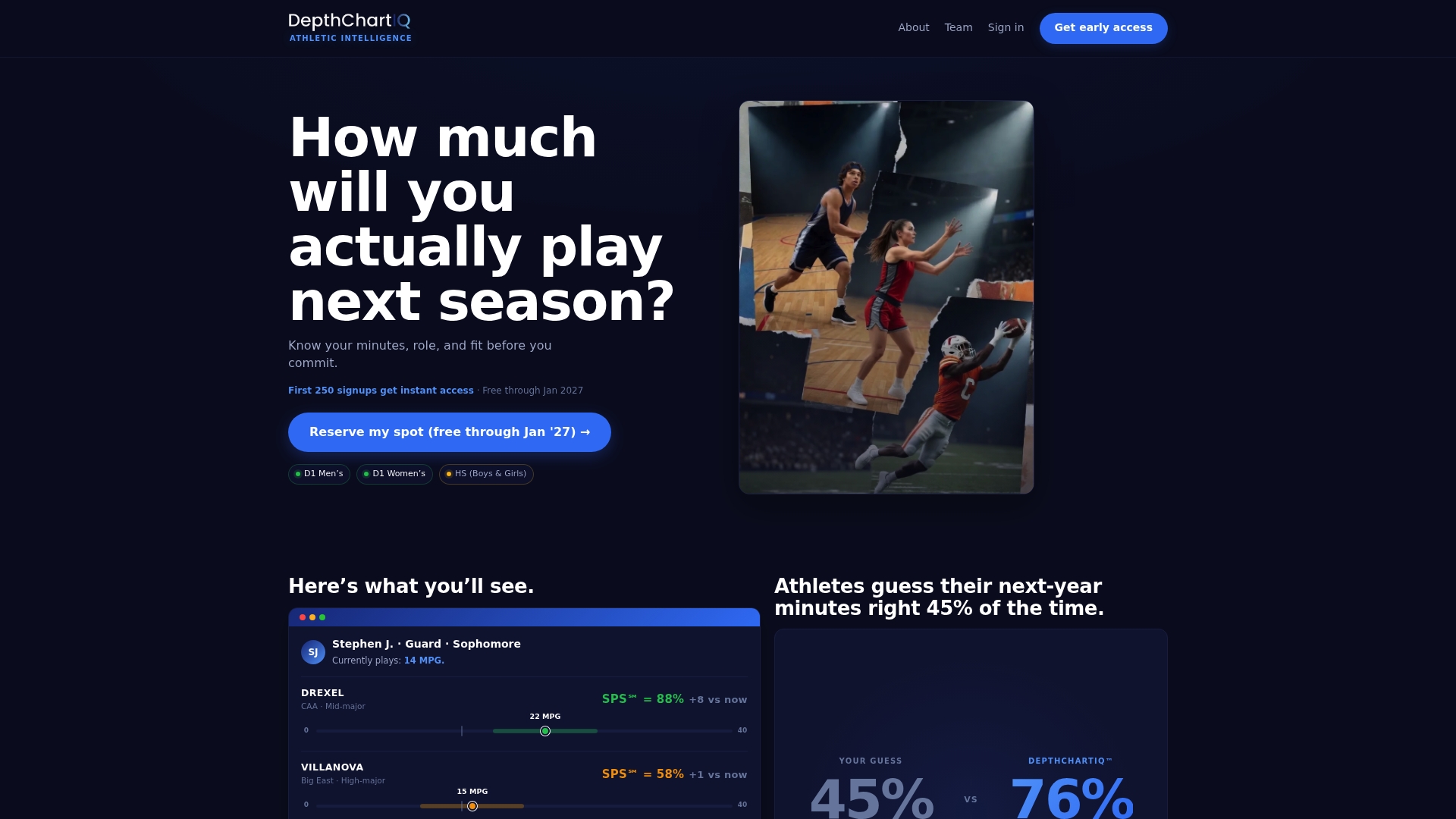
With DepthChartIQ Pro, you can compare the programs you are considering:
- A projected minutes-per-game range for next season at each school.
- A Success Probability Score, the chance of gaining minutes.
- A Roster Pressure Score, showing how crowded your position is.
- Best-fit programs for your profile.
Projections are estimates with ranges, not guarantees. Current prices are on the DepthChartIQ website. Run your target schools through DepthChartIQ before you give notice, so your decision rests on more than a coach’s pitch. For a deeper look at how roles translate across schools, read our transfer role projection post.
FAQ
What happens if a player enters the transfer portal and doesn’t get picked?
Entering the portal is a permanent notification of transfer, so you may lose your current aid or roster spot even without a new offer. Talk to your compliance and financial-aid offices before entering. Having several target schools ready reduces that risk.
What is the new NCAA transfer rule?
The one-time transfer exception, adopted in 2021, lets an undergraduate who has not transferred before move once and play right away. More recent changes focus on sport-specific windows, including proposed 15-day basketball windows. Check the official windows document for current dates.
Can a player decommit after national signing day?
The terms of a signed recruiting agreement can affect your options. Read what you signed and talk to your compliance contact or high school counselor before making a move.
Do graduate transfers follow the same windows?
Not always. Some postgraduate transfers are exempt from the standard windows and follow separate deadlines, which vary by sport and season. Eligibility and aid rules still apply.
Sources
- Ncaa
- NCAA Division I Notification of Transfer Windows
- One-time transfer rule clears last NCAA step, starts in 2021 | AP News