
Portal Timing Best Practices for Athletic Staff: 2026
Discover essential portal timing best practices for athletic staff. Prepare your program to effectively handle NCAA transfer windows in 2026.

DepthChartIQ
Athletic Intelligence

Portal Timing Best Practices for Athletic Staff: 2026

Portal timing best practices for athletic staff are defined as the coordinated set of actions, role assignments, and communication protocols that govern how collegiate programs respond to NCAA transfer portal activity within mandated windows. The 2026 NCAA rules have compressed Division I basketball transfer periods to single 15-day windows after the national championship, with additional windows triggered by coaching changes. That compression shifts enormous pressure onto staff. Programs that lack pre-built timing protocols will lose athletes to faster, better-prepared competitors. The difference between retaining a key player and watching them sign elsewhere often comes down to hours, not days.
1. What are the critical timing windows for portal entries in 2026?
The 2026 NCAA transfer calendar sets hard deadlines that athletic staff must build their entire workflow around. For Division I men’s basketball, the window ran april 7–21. For women’s basketball, it ran april 6–20. Both are single 15-day periods with no flexibility for late entries.
Coaching changes trigger a separate 15-day window for affected athletes. That means a mid-season hire can open a portal window at almost any point in the calendar year. Staff must monitor coaching changes at rival programs just as closely as they monitor their own roster.

Other sports operate on different schedules. Wrestling, men’s ice hockey, and several Olympic sports carry their own transfer windows tied to their competitive seasons. Compliance staff must maintain a sport-by-sport calendar rather than relying on a single universal deadline.
| Sport | 2026 Window Type | Key Trigger |
|---|---|---|
| Men’s basketball | 15-day post-championship | April 7–21 |
| Women’s basketball | 15-day post-championship | April 6–20 |
| All Division I sports | 15-day special window | Coaching change hire |
| Wrestling / ice hockey | Season-specific window | End of competitive season |
Pro Tip: Set calendar alerts 10 days before each window opens, not on the opening date. Staff who prepare in advance outperform those who react on day one.
2. Which best practices optimize staff coordination during portal timing?
Pre-scripted decision triggers are the single most effective tool for reducing improvisation during high-pressure portal periods. Every staff member should know their role before the window opens, not after an athlete submits notice. Assign one person to lead communication, one to confirm compliance steps, and one to coordinate retention outreach.
The communication chain matters as much as the message. A multi-layered staffing chain with a designated caller and a designated confirmer reduces duplicated effort and missed contacts. Think of it the way football programs manage timeout decisions: rehearsed roles prevent costly errors under pressure.
Effective coordination during portal windows requires these elements:
- A written role assignment document distributed before each window opens
- A 24-hour response protocol triggered the moment an athlete submits written notice
- Separate outreach tracks for the athlete, their position coach, current teammates, and family
- A shared compliance tracker visible to all relevant staff in real time
- A designated point of contact for each athlete considering a transfer
Pro Tip: Run a 30-minute portal simulation drill with your staff before each window. Walk through a mock athlete notice and assign every action in sequence. Teams that rehearse respond faster when it counts.
3. How can staff manage eligibility and academic reviews within tight windows?
Academic review before an athlete submits transfer notice is the step most programs skip, and it is the one that causes the most damage. Credit transferability, major requirements, and eligibility status must all be evaluated before the athlete formally notifies intent to transfer. Catching a problem after notice is submitted leaves staff with almost no time to fix it.
Compliance offices have up to 48 hours to process portal entry after receiving an athlete’s written notification. That 48-hour gap is the retention window. Staff who treat it as dead time lose athletes who could have been kept with a single well-timed conversation.
Athletic management systems that automate eligibility visibility reduce the friction in this process significantly. When compliance staff can check eligibility status on a mobile device in real time, they spend less time chasing paperwork and more time on athlete relationships.
Pro Tip: Build an academic eligibility checklist into your pre-window preparation. Review each at-risk athlete’s credit hours, GPA standing, and major requirements at least two weeks before the window opens. Early review gives you options. Late review gives you problems.
4. What are practical strategies for managing rapid recruitment decisions?
Most portal recruitment decisions happen within 30 days of portal entry. Elite prospects often decide within 7 days. That timeline means a program that waits 48 hours to make first contact is already behind.
Mass-template messages do not work. Personalized, timed outreach that treats each athlete as an individual produces far better results than bulk emails. The first contact should feel like it came from a person who knows the athlete, not from a recruiting database.
A layered communication approach produces the best outcomes:
- Initial contact within 24 hours: A personal message from the head coach or position coach, referencing the athlete’s specific film or stats
- Position coach follow-up within 48 hours: A direct call focused on playing time, role fit, and program culture
- Peer outreach by day 3: A current player on the roster reaches out informally to answer questions the athlete may not ask a coach
- Family engagement by day 5: A separate communication directed at parents or guardians, addressing academic support, campus resources, and program values
The pattern interrupt approach adds one more layer: a handwritten note or unexpected personal gesture in the first 24 hours. It signals genuine interest in a way that no email can replicate. Programs that use this method report stronger conversion rates on portal targets.
You can also review common staff workflow errors that undermine recruitment timing to sharpen your process further.
5. How do timing strategies vary by sport and situation?
Portal management for athletes looks different depending on the sport, the trigger event, and the depth of your roster. A coaching change mid-season creates a different urgency than a postseason window. Staff must adapt their timing plan to the specific situation rather than applying a single template.
Shorter windows shift leverage away from athletes and toward programs that are best prepared. A staff with a ready communication plan and clear role assignments will consistently outperform a larger program that improvises. Preparation is the real competitive advantage, not budget or brand name.
When evaluating timing systems, focus on these feature categories rather than platform names:
| Feature category | Benefit | Best for |
|---|---|---|
| Notification alerts | Instant awareness of portal entries | All sports, all window types |
| Role tracking | Assigns and confirms staff actions | Programs with 3+ staff members |
| Compliance integration | Connects eligibility data to communication | High-volume transfer programs |
| Communication sequencing | Automates follow-up timing | Rapid-decision recruitment windows |
| Mobile access | Real-time status checks from anywhere | Staff managing multiple sports |
Simplicity in your systems matters more than feature count. A platform with five well-used features outperforms one with twenty that staff ignore. Focus on instant eligibility visibility, notification alerts, and clear role tracking.
Pro Tip: Audit your current system annually. Remove any feature or process your staff has not used in the past two windows. Complexity slows response time.
6. How should staff handle family and peer communication timing?
Family engagement is one of the most underused tools in portal timing. Parents and guardians influence athlete decisions more than most coaches acknowledge. A well-timed, respectful message to a family can change the outcome of a recruitment conversation that stalled at the athlete level.
Peer outreach works because athletes trust current teammates more than they trust coaches during a transfer decision. A phone call from a player who has thrived in your program carries more weight than a polished recruiting pitch. Schedule peer outreach as a formal step in your communication sequence, not an afterthought.
Timing these contacts correctly requires knowing why athletes enter the portal in the first place. Athletes who leave due to playing time concerns need a different message than those leaving due to academic fit or coaching changes. Tailor the family and peer communication to the specific reason behind the transfer interest.
Key Takeaways
Effective portal timing for athletic staff requires pre-built role assignments, personalized communication within 24 hours, and academic eligibility checks completed before any transfer window opens.
| Point | Details |
|---|---|
| Know your windows | Division I basketball runs on single 15-day windows; coaching changes trigger additional windows at any time. |
| Assign roles before the window | Designate a caller, a confirmer, and a retention lead before portal activity begins. |
| Act within 24 hours | Most athletes decide within 30 days; first contact within 24 hours is the single biggest timing advantage. |
| Review academics early | Check credit transferability and eligibility at least two weeks before each window opens. |
| Keep systems simple | Focus on notification alerts, role tracking, and compliance integration rather than feature-heavy platforms. |
What I’ve learned from watching programs get portal timing wrong
Most programs that struggle with portal timing do not have a communication problem. They have a preparation problem. The coaches I have worked alongside who consistently win in the portal are not the ones with the biggest budgets. They are the ones who treat the portal window like a game day. They prepare a script, assign every role, and rehearse the sequence before the window opens.
The biggest mistake I see repeatedly is treating the 48-hour compliance processing window as administrative downtime. That window is your best retention opportunity. An athlete who has submitted written notice but has not yet been officially entered in the portal is still reachable. Programs that use that time well keep players they would otherwise lose.
Academic reviews are the other blind spot. Staff assume athletes have done their homework on credit transfers and eligibility. They rarely have. A quick eligibility check two weeks before the window opens has saved more than a few athletes from a transfer that would have cost them a year of eligibility. Build that check into your calendar as a non-negotiable step.
Personalized communication is not a nice-to-have. It is the deciding factor in most portal recruitment outcomes. The programs that send handwritten notes, make personal calls, and involve current players in outreach win more portal battles than those relying on templated emails. The data supports it, and so does every conversation I have had with athletes who chose one program over another.
— John
DepthchartIQ and the tools behind better portal timing
Athletic staff who want a real edge in transfer portal management need more than a calendar and a communication plan. They need real-time roster data that shows exactly how a transfer affects playing time projections and roster depth.
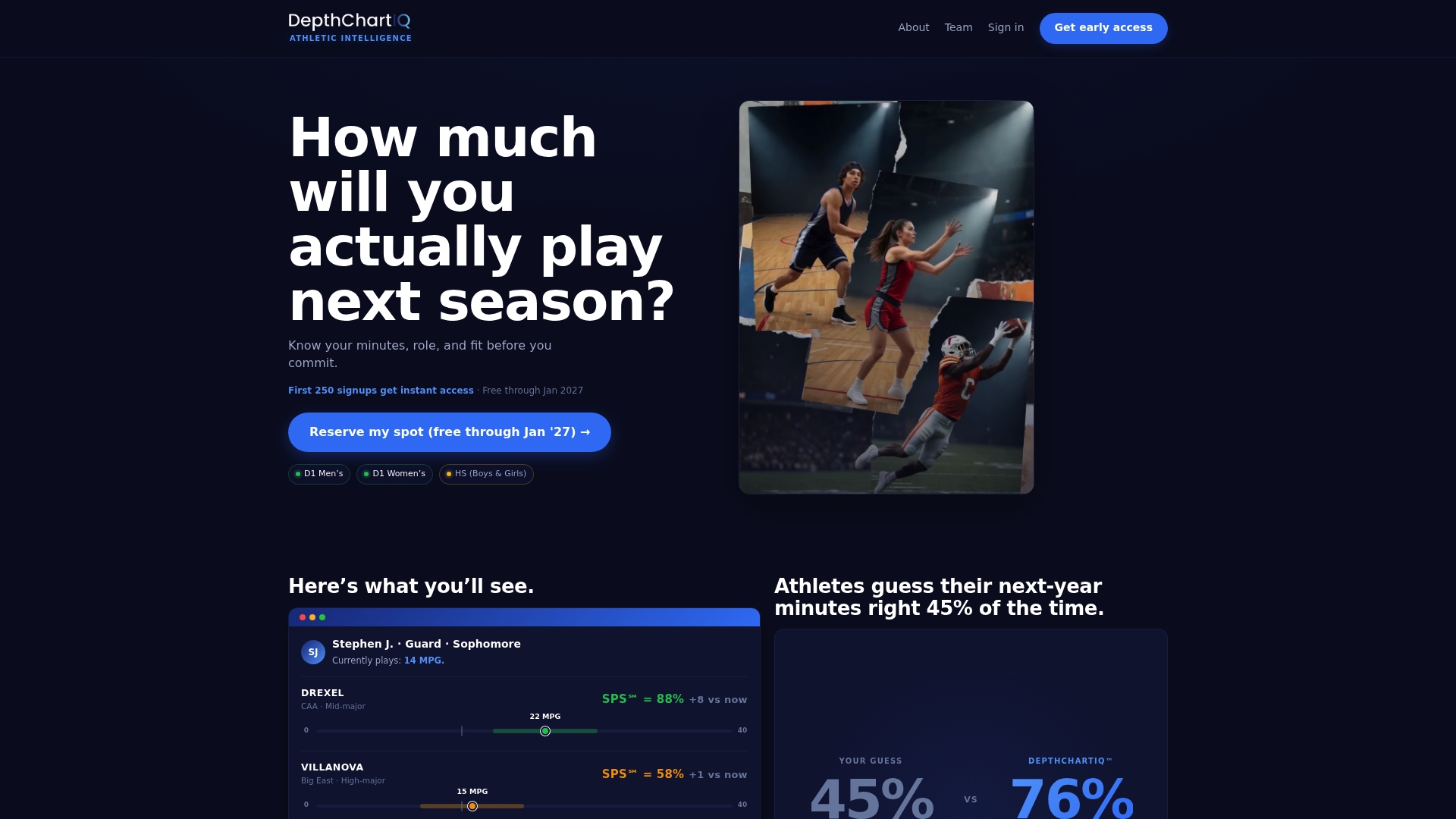
DepthchartIQ provides athletic staff and athletes with roster pressure insights and Success Probability Scores built on advanced metrics and a 76% accuracy rate in predicting player outcomes. Those numbers give staff a concrete basis for every portal conversation, from retention talks to recruitment pitches. When you know how a departure reshapes your depth chart in real time, your timing decisions get sharper. Visit DepthchartIQ to see how the platform supports your transfer portal workflow from the first alert to the final commitment.
FAQ
What is the 2026 Division I basketball transfer window?
The 2026 window is a single 15-day period after the national championship: april 7–21 for men and april 6–20 for women. Coaching changes trigger a separate 15-day window for affected athletes.
How quickly should staff respond to a portal entry?
Staff should make personal contact within 24 hours of a portal entry. Most athletes make their transfer decision within 30 days, and elite prospects often decide within 7 days.
What does the 48-hour compliance window mean for retention?
Compliance offices have up to 48 hours to process portal entry after receiving written notice from an athlete. That period is the best opportunity for retention outreach before the athlete is officially listed in the portal.
Why does academic review matter before portal entry?
Credit transferability, major requirements, and eligibility status must be confirmed before an athlete submits transfer notice. Catching eligibility issues after notice is submitted leaves almost no time to resolve them within a compressed window.
What communication method works best in portal recruiting?
Personalized, layered outreach outperforms mass-template messaging every time. The most effective approach combines a personal initial contact within 24 hours, a position coach follow-up, peer outreach from current players, and a separate message to the athlete’s family.