
Transfer Decision Checklist for Athletes: 2026 Guide
Navigate the NCAA transfer process with our transfer decision checklist for athletes. Ensure eligibility, scholarships, and more—start today!

DepthChartIQ
Athletic Intelligence

Transfer Decision Checklist for Athletes: 2026 Guide

A transfer decision checklist for athletes is a structured series of actions designed to guide college athletes through the NCAA transfer process without losing eligibility, scholarship money, or playing time. The athlete transfer process involves far more than submitting a form. It requires coordinating compliance deadlines, academic credit evaluations, financial aid reviews, and honest conversations with coaches. The NCAA Transfer Portal is the official mechanism, but the decisions surrounding it involve eligibility clocks, NIL contracts, and sport-specific windows that catch unprepared athletes off guard. This guide walks you through every critical step.
1. The transfer decision checklist athletes need to start with
Before anything else, notify your current head coach and athletics compliance office in writing. This is not optional or informal. Division I institutions must enter your name into the portal within 2 business days of receiving written notice. That rule exists specifically to prevent schools from stalling to discourage you from leaving.
Division II operates on a slightly different schedule. Those schools have 7 calendar days to enter an athlete into the portal after written notice, and they also require completion of an educational module before processing. Skipping that module delays your entry and can compress your recruiting window.
Sport-specific Transfer Portal windows are non-negotiable. For basketball in 2026, the portal windows run April 6 to 20 for women and April 7 to 21 for men. Entering outside those dates typically requires a waiver for immediate eligibility, which is not guaranteed.

Pro Tip: Request written confirmation from your compliance office the same day you submit your transfer notification. That timestamp protects you if a dispute arises about portal entry timing.
2. Academic and eligibility checklist items every transfer athlete must verify
Your academic record is not just a formality. It determines whether you are immediately eligible at a new school. Pull your official transcript and complete a degree audit with your current academic advisor before contacting any prospective programs.
Credit transfer rules vary significantly by institution. Some schools cap or restrict the types of credits they accept, and grade minimums can block immediate eligibility. A course that counts toward your major at your current school may not transfer at all, or may transfer as an elective with no degree value.
Here is what to verify before you enter the portal:
- How many credits transfer to your target schools and in what categories
- Whether you meet NCAA progress toward degree requirements (percentage of degree completed)
- How many seasons of competition you have used and how many remain
- Whether graduate transfer rules apply to your situation
- The grade point average requirements at each prospective institution
- Whether any academic probation or suspension history affects eligibility
| Academic Check | Why It Matters |
|---|---|
| Credit transfer audit | Determines if you stay on track for graduation at the new school |
| Progress toward degree | NCAA requires a minimum percentage of credits completed each year |
| Eligibility clock review | Confirms seasons of competition remaining before you commit |
| GPA verification | Some programs require a minimum GPA for admission and athletic aid |
Pro Tip: Ask your current academic advisor to produce a formal degree audit document, not just a verbal estimate. Prospective schools and compliance offices will want to see it.
3. Evaluating athletic opportunity and fit during the transfer decision process
Entering the portal does not mean coaches will call. Portal entry only gives coaches permission to contact you. It does not guarantee roster interest, athletic aid, or admission. Athletes consistently overestimate the level of interest they will receive, which is why building a realistic target list across multiple criteria matters more than chasing brand-name programs.
Your sports program evaluation should cover these factors for every school on your list:
- Coaching stability: Has the staff been in place for at least two seasons, or is there turnover risk?
- Roster needs: Does the program have an actual opening at your position, or are they just collecting options?
- Playing time projection: What is the realistic role for you based on current roster depth?
- Team culture: Talk to current players, not just coaches, to understand the environment
- NIL infrastructure: Does the program have an active collective, and does it support your sport?
- Conference level: Are you moving up, staying level, or moving down, and what does that mean for your career goals?
“Athletes tend to overestimate interest upon entering the portal. Experts recommend building a realistic best-fit school list across multiple criteria.” — Honest Game NCAA Transfer Portal Guide
Your highlight video and statistics are your marketing tools. Keep them current, concise, and specific to the role you are pitching. A 90-second video focused on your best 15 plays beats a 10-minute compilation every time. Coaches make fast decisions on portal prospects.
Also review any existing NIL contracts before entering the portal. NIL agreements may contain transfer clauses that terminate or complicate your deal upon an institutional change. Ignoring this step can cost you real income.
4. Financial and support considerations before you commit
Money is where transfer decisions get painful. Scholarships can be reduced or canceled after you submit transfer notification. Your current school’s athletic aid is often not guaranteed beyond the current term once you enter the portal. That means you could be paying out of pocket for a semester while waiting for a new offer.
Before you finalize your transfer decision, work through this financial checklist:
- Confirm in writing what happens to your current scholarship the moment you enter the portal
- Calculate the cost gap if no new scholarship offer arrives before the next billing cycle
- Research the full support package at prospective schools: housing, meals, training facilities, academic tutoring, and medical coverage
- Review your NIL contracts for transfer or termination clauses with an attorney or your current compliance office
- Factor in relocation costs, especially if you are moving across the country
- Assess your personal support network. Moving far from family has a real impact on performance and mental health
Pro Tip: Get any scholarship offer from a prospective school in writing before withdrawing from the portal. Verbal commitments are not binding, and offers can disappear quickly in a competitive portal cycle.
5. Organizing your timeline and communication strategy
Start your transfer preparation 2 to 4 weeks before the transfer window opens. That lead time lets you complete academic audits, review financial implications, and build your target school list before the clock starts running.
Here is a structured timeline to follow:
- Weeks 4 to 2 before the window: Complete academic audit, review NIL contracts, build target school list, prepare highlight video
- Week 1 before the window: Notify current coach and compliance office in writing, request official transcripts
- Day 1 of the window: Confirm portal entry with compliance office, begin contacting prospective coaches
- Days 2 to 7: Follow up with prospective programs, schedule official visits, track all communications
- Ongoing: Save all confirmation emails and maintain a running contact list with dates, names, and deadlines
- Decision point: Get scholarship offer in writing before withdrawing from the portal
- Withdrawal: If you decide to stay, contact your compliance office immediately to initiate portal withdrawal
One fact most athletes do not anticipate: some coaching staffs treat portal entry as an immediate and irreversible roster departure. You may lose access to team facilities, training staff, and meal plans the moment your name appears in the portal. Plan for that possibility before you submit anything.
Key takeaways
A successful athlete transfer process requires completing academic, financial, and compliance checks before entering the NCAA Transfer Portal, not after.
| Point | Details |
|---|---|
| Notify in writing first | Submit written notice to your coach and compliance office before any public action. |
| Audit credits early | Confirm how many credits transfer and whether they satisfy degree requirements at target schools. |
| Expect no guarantees | Portal entry only permits coach contact. It does not secure a roster spot, aid, or admission. |
| Protect your finances | Get scholarship offers in writing before withdrawing from the portal to avoid aid gaps. |
| Document everything | Save all emails, form confirmations, and contact records throughout the entire process. |
What I’ve learned watching athletes rush the portal
College athletes treat the transfer portal like a reset button. It is not. The athletes who come out of a transfer in a better position are the ones who treated it like a business decision, not an emotional reaction to a bad season or a coaching change.
The most common mistake I see is athletes entering the portal before they have done the academic math. A rushed transfer decision often leads to lost seasons of competition or scholarship. That is not a hypothetical. It happens every cycle to athletes who assumed their credits would transfer cleanly or that a verbal interest from a coach meant a scholarship was coming.
The second mistake is confusing activity with progress. Getting 20 coaches to follow you on social media after portal entry is not the same as having three real scholarship conversations. Build your target list based on program fit, roster need, and academic compatibility. Then pursue those programs with specific, prepared outreach.
The athletes who use tools like DepthChartIQ to analyze roster depth and playing time projections before committing to a program make faster, smarter decisions. Data on where you actually fit beats gut instinct every time. Check the analytical methodology behind those projections before you rely on them, but the underlying logic is sound: know your role before you sign.
Transfer decisions made from frustration rarely land athletes in better situations. Transfer decisions made from research almost always do.
— John
How DepthChartIQ helps athletes make smarter transfer decisions
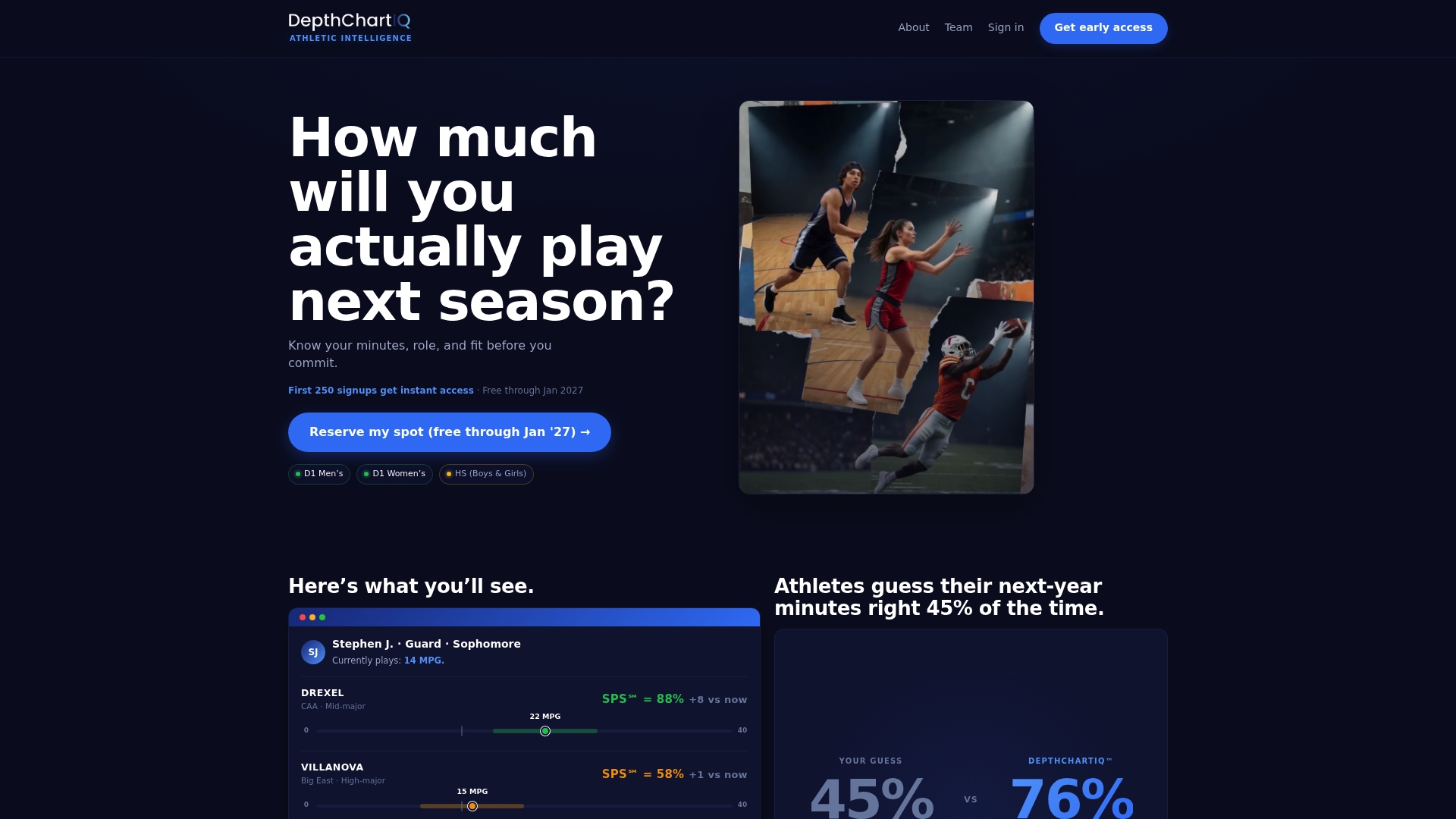
DepthChartIQ gives college basketball players a data-driven edge during the transfer process. The platform’s roster analytics and playing time prediction tools let you see exactly where you fit on a prospective program’s depth chart before you commit. With a 76% accuracy rate in predicting player outcomes, DepthChartIQ removes the guesswork from sports program evaluation. Instead of relying on a coach’s vague promise about your role, you get real numbers based on roster composition and historical data. Visit DepthChartIQ to run your transfer analysis and build a target school list grounded in actual playing time projections.
FAQ
What is a transfer decision checklist for athletes?
A transfer decision checklist for athletes is a step-by-step guide covering compliance notifications, academic credit audits, financial aid review, and athletic fit evaluation before entering the NCAA Transfer Portal.
When can basketball players enter the transfer portal in 2026?
The 2026 basketball Transfer Portal windows run April 6 to 20 for women and April 7 to 21 for men. Entering outside these windows typically requires a waiver for immediate eligibility.
Does entering the portal guarantee a scholarship at a new school?
No. Portal entry only permits coaches to contact you. It does not guarantee a roster spot, athletic aid, or admission to any program.
Can my current school cut my scholarship after I enter the portal?
Yes. Current-school athletic aid is often not guaranteed beyond the current term once you submit transfer notification, so confirming your financial situation before entering is critical.
How early should I start preparing to transfer?
Start the process 2 to 4 weeks before the transfer window opens to complete academic audits, review NIL contracts, and build a realistic target school list before deadlines arrive.