
Why Athletes Enter Transfer Portal: Real Reasons
Discover why athletes enter transfer portal: exploring motivations like playing time, NIL opportunities, and personal growth. Understand the shift!

DepthChartIQ
Athletic Intelligence

Why Athletes Enter Transfer Portal: Real Reasons

The NCAA transfer portal is an online database where college athletes formally declare their intent to leave a program and make themselves available to other schools. Why athletes enter transfer portal has become one of the most discussed topics in college sports, and the answer goes far beyond simple dissatisfaction. Playing time, coaching relationships, NIL opportunities, and personal growth all push athletes toward this decision. Understanding these motivations gives you a clearer picture of whether transferring fits your situation and what to expect when you take that step.
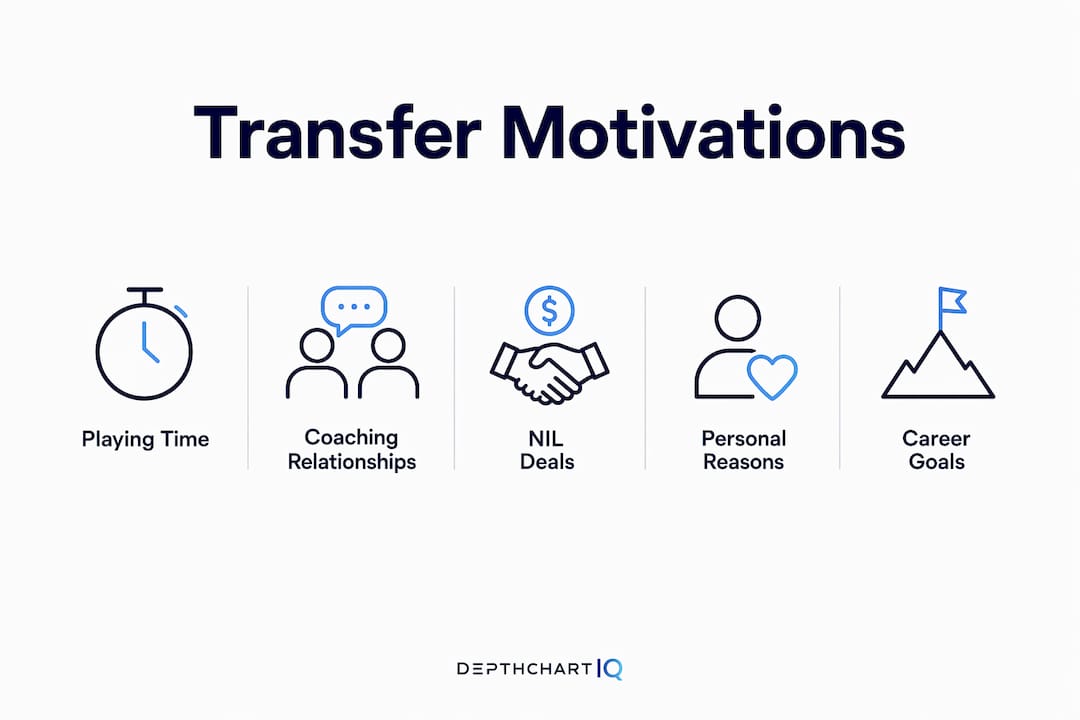
Why athletes enter transfer portal: the core motivations
The transfer portal exists because athletes need a mechanism to pursue better opportunities. Transferring has become normalized as a necessary tool for athletes seeking achievement and feeling valued within college programs. That normalization reflects a real shift: athletes now treat their college careers more like professionals managing their own development.
Playing time is the number one driver
Playing time sits at the center of most transfer decisions. If you are not getting on the field or court, your development stalls, your film suffers, and your professional prospects shrink. Athletes who see a clear path to more minutes at another program will enter the portal without hesitation.

Coaching relationships shape everything
The quality of your relationship with your coaching staff directly affects your daily experience, your development, and your mental health. When that relationship breaks down, or when a coaching change eliminates the staff that recruited you, the program you signed with no longer exists in any meaningful sense.
NIL deals are changing the equation
Name, Image, and Likeness opportunities now factor directly into transfer decisions. Athletes weigh NIL income potential at a new school against what their current program offers. A larger market, a stronger brand partnership infrastructure, or a more visible program can translate into real financial differences.
Personal circumstances drive transfers too
Some athletes transfer to be closer to family during difficult periods. Others move to programs that offer stronger academic support for their intended career path. Life-stage priorities like proximity to home or personal relationships are legitimate and common reasons for transferring that often go underdiscussed.
The fresh start factor
Some high-performing athletes enter the portal specifically to cut distractions and reset their focus. Milaysia Fulwiley’s transfer from South Carolina to LSU in early 2026 illustrated this directly. She described the move as a chance to align her athletic goals without the weight of external noise. That kind of intentional reset is a legitimate and underrated motivation.
Pro Tip: Before entering the portal, write down your top three reasons for wanting to transfer. If playing time is not in the top two, dig deeper. The portal works best when you know exactly what problem you are solving.
How do coaching relationships influence transfer decisions?
The player-coach relationship is the single most significant factor driving Division I men’s basketball players to enter the portal. A phenomenological study published in the Journal of Intercollegiate Sport in January 2026 confirmed this finding after examining D-I men’s basketball players following the 2021-2022 season. That finding matters because it reframes the transfer conversation. Most people assume playing time is the primary driver. The data says the relationship with your coach matters more.
When a coach leaves, gets fired, or simply stops investing in your development, the entire foundation of your commitment shifts. You did not sign with a university in the abstract. You signed with a staff, a system, and a set of promises about your role. When those change, your reasons for staying disappear.
“Athletes often prioritize self-interest and career longevity over institutional loyalty when entering the transfer portal.” — BBC Sport, 2026
Athletes also transfer toward relationships, not just away from bad ones. Elite gymnastics transfers in 2026 showed a clear pattern: athletes prioritized existing relationships with staff or teammates when choosing their new program. Joscelyn Roberson’s transfer to Georgia Gymnastics reflected exactly this logic. Familiarity reduces transition risk and accelerates your adjustment to a new environment.
Coaches today carry a new responsibility because of the portal. The transfer portal’s introduction has shifted coaching roles to include managing athlete expectations around playing opportunities and transitions. Coaches who communicate honestly about depth charts and development timelines retain athletes longer. Coaches who avoid those conversations lose them faster.
Pro Tip: Talk to your current coach before you enter the portal. A direct conversation about your role and future can either resolve the issue or confirm that transferring is the right call. Either outcome is useful.
What are the risks athletes face in the transfer portal?
The transfer portal is not a guaranteed upgrade. Entering it carries real risks that many athletes underestimate until they are already in the process.
The most important number to know: about 30% of Division I athletes who enter the transfer portal fail to secure another Division I roster spot. That means nearly one in three athletes who enter the portal end up at a lower level or out of college athletics entirely. That is not a reason to avoid the portal. It is a reason to enter it with a clear plan.
Here are the core risks every athlete should assess before entering:
- No scholarship guarantee. Entering the portal does not protect your current scholarship. If you do not land a new offer, you may lose your funding entirely.
- Academic disruption. Transferring mid-year or between programs can delay graduation, affect financial aid eligibility, or create credit transfer complications.
- Eligibility timing. The NCAA transfer portal has specific windows. Missing deadlines or misunderstanding eligibility rules can cost you a season.
- Loss of team standing. Once you enter the portal, your current program may stop investing in your development immediately. Some coaches pull scholarship offers the moment an athlete declares.
- Underestimating the adjustment period. A new system, new teammates, and a new coaching staff take time to absorb. Athletes who transfer expecting instant results often struggle in their first season.
Athletes also underestimate the value of candid conversations with their current coach before entering the portal. That conversation can surface options you did not know existed, including a position change, a redshirt year, or a clearer development timeline. Use a transfer decision checklist to work through these variables before you commit to anything.
How do career goals shape transfer decisions?
Career advancement is a direct and rational reason for transferring. Athletes transfer to align with specific coaches to boost their professional draft chances. Wide receiver Cam Coleman’s move to Texas in 2026 was explicitly tied to improving NFL Draft prospects by playing alongside Arch Manning. That is not disloyalty. That is career management.
The same logic applies across sports. Katie McCabe’s move to Chelsea in June 2026 illustrated that even elite athletes at the top of their sport will prioritize trophy opportunities and career longevity over fan loyalty or institutional attachment. The transfer portal gives college athletes the same freedom professionals have always had.
Academic fit is another career-driven motivation that deserves more attention. Successful transfers often tie to careful evaluation of academic programs and proximity to personal life priorities. If your intended career requires a specific graduate program or professional network, transferring to a school with stronger resources in that area is a sound long-term decision.
NIL considerations also connect directly to career goals. A program with a larger alumni donor network, a bigger media market, or a stronger social media following can generate significantly more NIL revenue. For athletes building a personal brand alongside their athletic career, that difference compounds over time.
Athletic career longevity planning requires you to think beyond your next season. The best transfer decisions account for where you want to be in three years, not just where you want to start next fall.
Key takeaways
Athletes enter the transfer portal to gain control over their careers, and the decision works best when it is driven by clear, specific goals rather than frustration alone.
| Point | Details |
|---|---|
| Coaching relationship is the top driver | Research confirms player-coach relationship quality is the strongest factor pushing D-I athletes into the portal. |
| 30% find no D-I landing spot | Nearly one in three portal entrants fail to secure another Division I roster spot, making preparation critical. |
| NIL and career goals matter | Athletes now weigh draft prospects, NIL income, and academic fit as direct factors in transfer decisions. |
| Talk to your coach first | A candid conversation before entering the portal can resolve issues or confirm the transfer is the right move. |
| Fresh starts are legitimate | Athletes like Milaysia Fulwiley transfer to reset focus and eliminate distractions, not just to chase playing time. |
The transfer portal rewards honest self-assessment
I have spent years watching athletes enter the portal for the wrong reasons and exit it worse off than when they started. The ones who transfer successfully share one trait: they know exactly what they are looking for before they enter.
The portal is a powerful tool. It has genuinely shifted power toward athletes in a system that historically gave them very little. But power without clarity produces bad decisions. I have seen athletes enter the portal because they were frustrated after a bad game, because a teammate got more playing time in one week, or because a coach said something they did not like. Those athletes almost always regret it.
The athletes who benefit most from the portal treat it like a job search. They identify the specific gap in their current situation, whether that is playing time, coaching fit, academic resources, or NIL opportunity. Then they search for programs that directly address that gap. They talk to their current coach first, not to ask permission, but to gather information. They consult their parents and support systems. They use every data point available to make a clear-eyed decision.
The role of parents and support systems in this process is underrated. Athletes who involve trusted advisors in their transfer process make better decisions than those who act on emotion alone.
The portal also rewards athletes who think about academics alongside athletics. Transferring to a program that is a worse academic fit for a marginal improvement in playing time is a trade you will regret after your athletic career ends. Your degree and your professional network outlast your eligibility.
My honest advice: enter the portal with a plan, not a grievance.
— John
See your depth chart position before you decide
Making a transfer decision without data is guesswork. DepthchartIQ gives you a real picture of where you stand on your current roster and where you could realistically land at a new program.
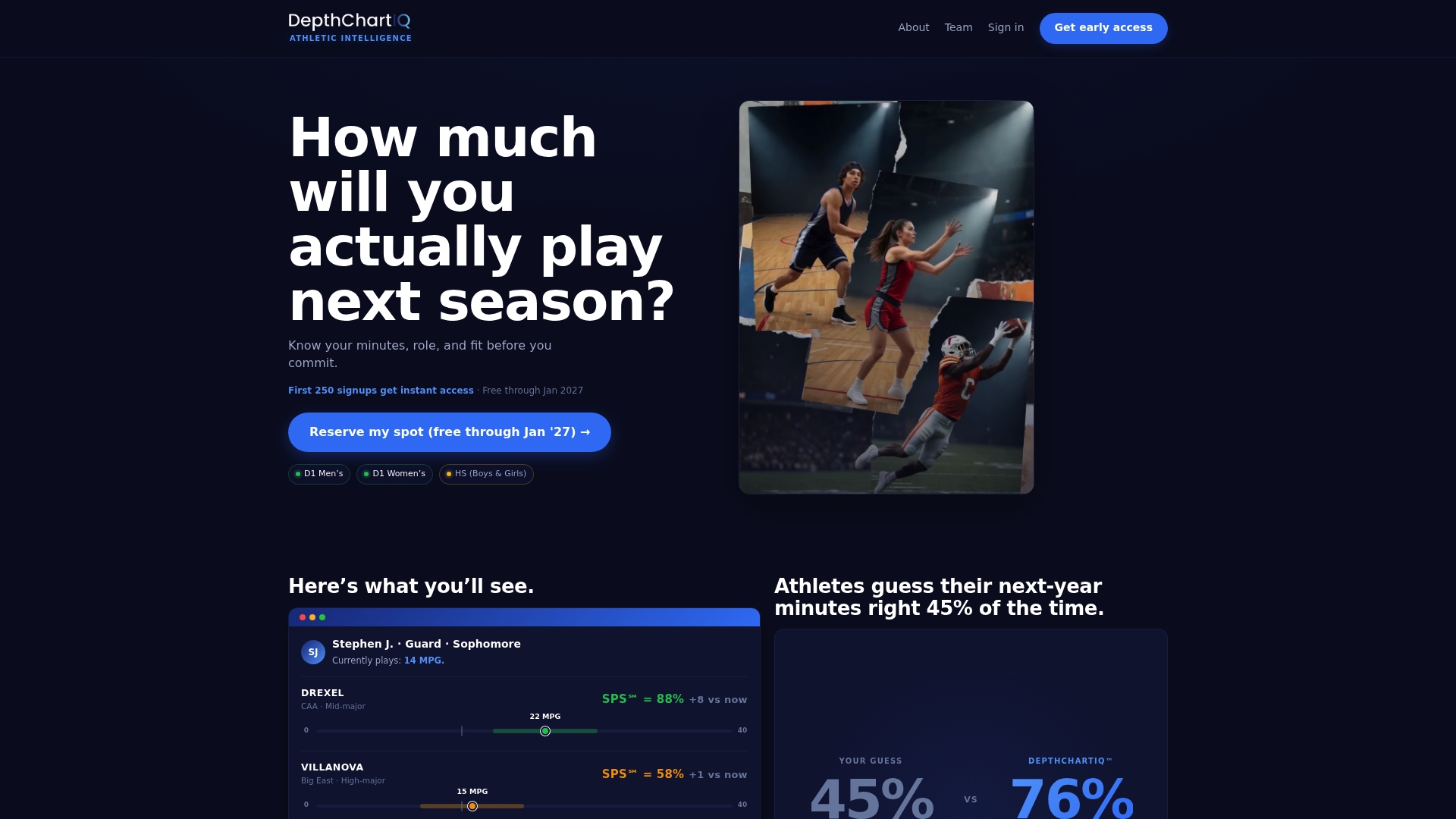
DepthchartIQ’s Success Probability Scores and Roster Pressure insights are built specifically for athletes weighing transfer options. The platform’s prediction algorithms carry a 76% accuracy rate in forecasting player outcomes, giving you a concrete basis for your decision rather than assumptions. Explore the DepthchartIQ methodology to see how the data works, or visit DepthchartIQ to start building your transfer profile today.
FAQ
What is the NCAA transfer portal?
The NCAA transfer portal is an online database where college athletes formally notify their current school and all other NCAA programs of their intent to transfer. Entering the portal does not commit an athlete to leaving; it opens the door to contact from other programs.
Does entering the portal guarantee a new scholarship?
Entering the portal does not guarantee a new scholarship or roster spot. About 30% of Division I athletes who enter the portal fail to land another Division I offer, making preparation and timing critical.
How does the player-coach relationship affect transfer decisions?
Research published in the Journal of Intercollegiate Sport in January 2026 identifies the player-coach relationship as the single strongest factor driving D-I men’s basketball players to enter the portal. When that relationship breaks down, athletes lose their primary reason for staying.
Can NIL deals influence a transfer decision?
NIL opportunities directly factor into transfer motivations. Athletes compare earning potential across programs, with larger media markets and stronger alumni networks often generating significantly more NIL revenue.
Should you talk to your coach before entering the portal?
Talking to your coach before entering the portal is strongly recommended. That conversation can surface development options you were unaware of, or confirm that transferring is the right call, either way giving you better information to act on.