
Player Development Programs and Recruiting: 2026 Guide
Explore the role of player development programs recruiting in 2026. Learn how athletes gain an edge with analytics and mentorship for success.

DepthChartIQ
Athletic Intelligence

Player Development Programs and Recruiting: 2026 Guide

Player development programs are the primary mechanism through which college coaches evaluate athlete potential and make scholarship decisions. The role of player development programs in recruiting goes far beyond skill drills. These programs shape how athletes are measured, how coaches identify fit, and how recruits position themselves for opportunities. Programs that integrate analytics, mentorship, and structured skill growth give athletes a measurable edge. Understanding how these systems work, and how to use them, is the difference between getting recruited and getting overlooked.
How do player development programs influence recruitment strategies for athletes?
Player development programs directly shape how coaches evaluate recruits. Programs increasingly hire dedicated player development staff who use analytics and performance evaluations to support recruitment decisions. That means your stats, film, and measurables are being processed by people whose entire job is to model roster fit.
These staff members are not just skill coaches. Roles focus on salary cap modeling, win-share analysis, and roster optimization. At the college level, this translates to identifying which recruits fill specific positional and statistical gaps. If your development program tracks your performance data in formats coaches recognize, you become easier to evaluate and harder to ignore.
Personalized training plans also signal program fit. When a recruit’s development history shows consistent growth in areas a college program prioritizes, coaches see alignment. That alignment reduces recruiting risk for programs, which makes them more likely to extend offers.
- Data tracking: Programs that log performance metrics give athletes a documented growth record coaches can reference.
- Film analysis: Regular film review sessions produce highlight material that stays current and relevant.
- Mentorship: Development staff who communicate directly with college coaches create warm introductions that cold outreach cannot replicate.
- Positional coaching: Specialized instruction in position-specific skills matches athlete profiles to college system requirements.
Pro Tip: Ask your development program director whether they have existing relationships with college coaching staffs. A direct referral from a trusted development contact carries more weight than an unsolicited email from a recruit.
What are the key components of effective player development programs?
Elite-level programs invest in formalized player development as a core pillar for athlete career success and recruitment advantage. The structure of that investment matters as much as the investment itself. A program with the right components produces athletes who are ready to perform and easy to recruit.

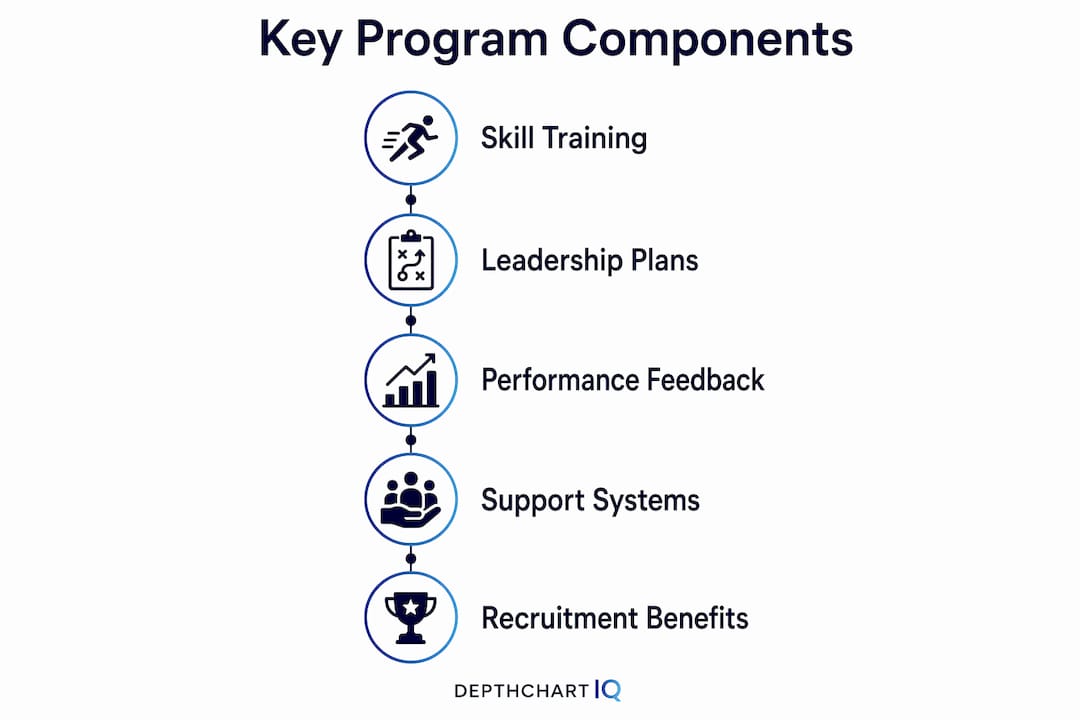
Individualized skill and leadership plans
Programs design individualized development plans combining skill training, leadership, and life skills to support athlete growth and recruitment readiness. Generic group workouts do not produce the differentiated profiles that college coaches want. Athletes who can point to a documented, personalized plan demonstrate self-awareness and coachability, two traits coaches rank highly.
Analytics and performance feedback
Modern academies embed specialization by staffing fitness, technical, and positional coaches with carefully structured daily schedules. Performance feedback loops, where athletes review data after each session, accelerate skill acquisition and produce measurable results faster. That measurable progress is exactly what college coaches want to see in a recruit’s profile.
Support systems that sustain performance
Nutrition planning, mental health resources, and academic support are not soft additions. Successful academies reorganize schedules and provide nutrition to optimize athlete performance and development. Athletes who can balance academics and athletics consistently are lower-risk recruits. Coaches know that a recruit who struggles academically creates compliance problems and roster instability.
| Component | Recruitment benefit |
|---|---|
| Individualized skill plans | Demonstrates coachability and targeted growth to coaches |
| Performance analytics | Provides documented, verifiable progress data for evaluation |
| Nutrition and recovery support | Signals physical readiness and long-term durability |
| Mental health resources | Reduces dropout risk and shows program investment in athletes |
| Academic integration | Lowers NCAA eligibility risk and appeals to compliance-focused programs |
Pro Tip: When evaluating a development program, ask for a sample athlete progress report. If the program cannot produce one, it likely does not track data in a format college coaches will find useful.
How can athletes leverage development programs to boost recruitment?
Athletes who treat development programs as passive training environments miss the recruiting benefit entirely. Recruiting is a relationship-building process where professionalism, academic reliability, and fit are critical factors alongside athletic performance. Your development program is the environment where you build all three.
- Update your athlete profile every 3–4 months. Coaches prioritize athletes with professional-grade profiles including up-to-date stats and high-quality video. Stale film from two seasons ago signals inactivity, not growth.
- Engage your development staff proactively. Ask coaches and development directors for honest assessments of your recruitment readiness. They know what college programs in your target range are looking for.
- Choose programs based on development culture, not reputation alone. Athlete program fit corresponds to a greater likelihood of outperformance compared with higher-rated recruits in unsuitable programs. A lower-profile program that develops your specific skill set beats a prestigious one that ignores your weaknesses.
- Time your outreach to performance spikes. After a strong tournament, a personal record, or a measurable improvement in a tracked metric, reach out to coaches. Concrete evidence behind your communication makes it credible.
- Avoid the highlight reel trap. A flashy video with no supporting data is easy for coaches to dismiss. Pair your film with performance metrics, academic standing, and a clear statement of your positional fit.
Pro Tip: Use your athlete data metrics to frame every coach communication. Instead of “I had a great season,” write “I averaged X per game with Y efficiency rating, tracked through my development program.” Specificity builds credibility.
Balancing athletic development with academic demands is also a real factor in recruitment. Coaches at NCAA programs evaluate academic standing as part of the offer decision. A strong academic balance strategy built into your development program signals that you can handle the demands of college athletics.
What challenges and misconceptions exist about development in recruiting?
The biggest misconception athletes carry into the recruiting process is that all development programs work the same way. Not all development approaches fit every athlete. Recruits must assess programs that align with their personal maturation and career timeline, not just their current skill level.
A second misconception is that prestige equals development quality. Chasing program name recognition is less effective than targeting programs where development culture and recruitment needs fit the athlete’s profile. Athletes who enroll in high-profile programs without the right fit often sit on rosters without meaningful playing time or development attention.
The tension between short-term recruiting wins and long-term athlete development is real. Programs prioritizing early-maturing athletes may sacrifice professional longevity for immediate wins. This creates a recruiting culture that rewards physical maturity over skill ceiling, which disadvantages late-developing athletes who may have higher long-term potential.
- Uniform expectations: Assuming every athlete in a program receives the same attention and resources leads to poor program selection decisions.
- Short-term thinking: Choosing a program because it produces immediate offers ignores whether the program will develop you for the next level.
- Name over fit: A school’s ranking does not predict your individual development trajectory within that program.
- Ignoring athlete maturity timing: A recruit who is physically ahead of peers at 16 may plateau by 19 if the program does not plan for continued development.
Understanding program selection impact on your career requires looking past the logo on the jersey and into the actual structure of the development environment.
Key Takeaways
Player development programs shape recruitment outcomes through structured analytics, personalized plans, and cultural fit, not through prestige or name recognition alone.
| Point | Details |
|---|---|
| Analytics drive evaluation | Development staff use performance data and film to build recruit profiles coaches trust. |
| Individualized plans signal coachability | Athletes with documented growth plans are lower-risk, higher-value recruits. |
| Program fit beats prestige | Athletes in well-matched programs outperform higher-rated recruits in mismatched ones. |
| Update profiles regularly | Refreshing stats and film every 3–4 months keeps you visible to active coaches. |
| Long-term development matters | Programs that prioritize immediate wins over athlete growth reduce career longevity. |
What I’ve learned watching athletes choose the wrong programs
Most athletes I’ve seen struggle in recruiting made the same mistake. They chased the biggest name they could get interest from instead of asking whether the program would actually develop them. A Division I offer from a program that has no development infrastructure is not better than a Division II offer from one that does.
The athletes who navigate recruiting well treat their development program as a portfolio. They document everything, they communicate consistently with development staff, and they pick programs where the coaching philosophy matches how they actually play. That alignment shows up in playing time, which shows up in performance, which shows up in the next level of opportunity.
The data side of this matters more than most recruits realize. Long-term athlete success requires longitudinal development plans that counterbalance the pressure for immediate team wins. If your program is not building you for three years from now, it is building itself for this season at your expense. Ask hard questions before you commit.
— John
DepthchartIQ gives athletes a data-driven recruiting edge
Knowing which programs genuinely develop athletes at your position requires more than a campus visit. DepthchartIQ uses advanced metrics and prediction algorithms to show athletes their likely playing time based on real roster dynamics.
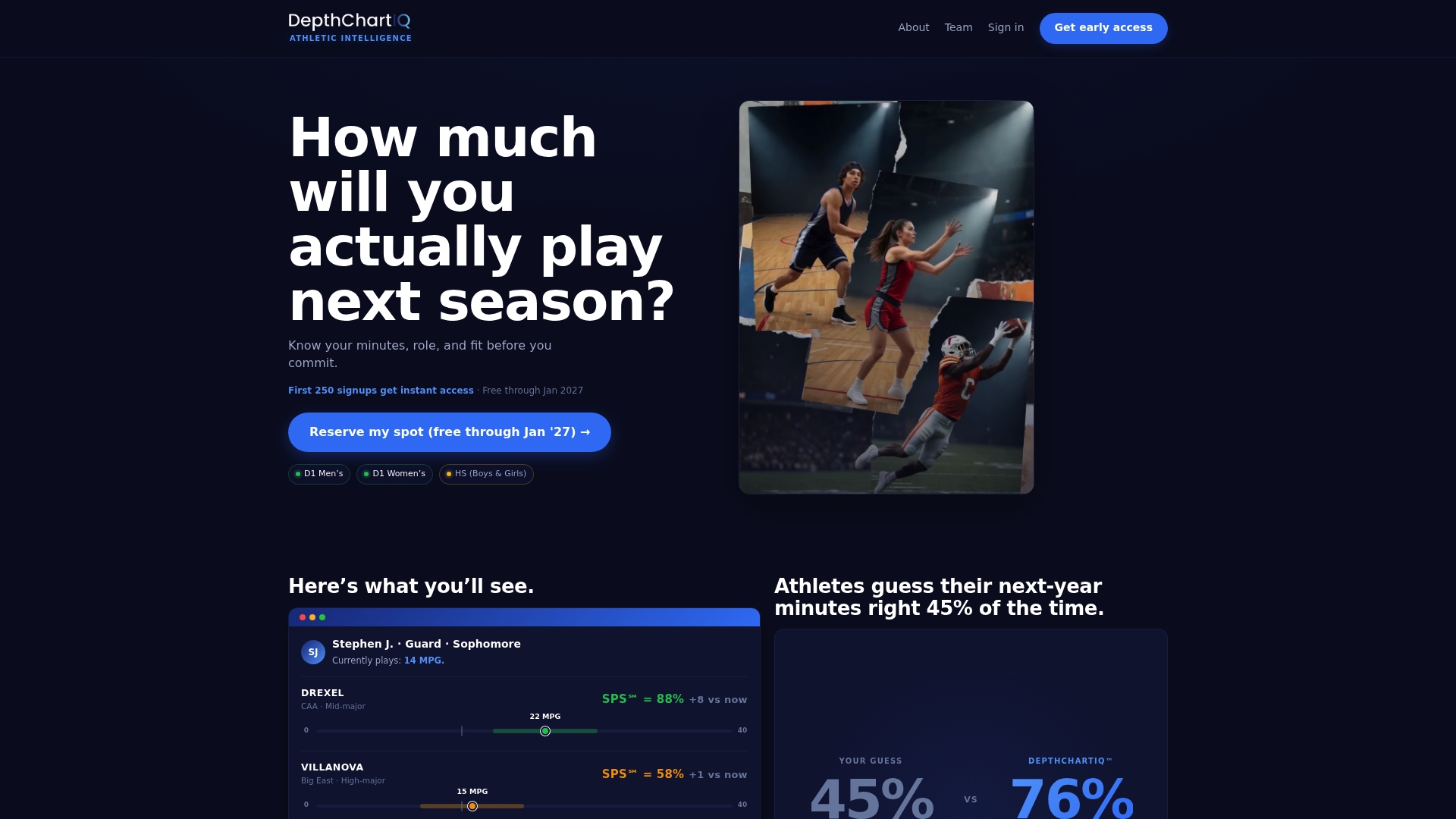
The platform’s Success Probability Scores and Roster Pressure insights give you a clear picture of where you will actually play, not just where you are invited to walk on. DepthchartIQ reports a 76% accuracy rate in predicting player outcomes. For recruits evaluating program fit and current athletes weighing transfer options, that accuracy changes the decision entirely. Visit DepthchartIQ to see how your profile maps against real roster data.
FAQ
What is the role of player development programs in recruiting?
Player development programs shape recruiting by producing documented athlete growth, performance data, and program fit signals that coaches use to evaluate recruits. Programs with dedicated development staff and analytics infrastructure give athletes a measurable advantage in the evaluation process.
How often should athletes update their recruiting profiles?
Athletes should update their stats and film every 3–4 months to stay visible to active coaches. Stale profiles signal inactivity and reduce the likelihood of coach engagement.
Does program prestige matter more than development quality?
Program fit matters more than prestige. Athletes in well-matched development environments consistently outperform higher-rated recruits placed in programs that do not suit their skill set or maturation timeline.
How do player development staff support recruiting decisions?
Development staff model roster construction, analyze win shares, and provide coaches with data-backed insights on recruit fit. Their analysis directly informs which athletes receive offers and which do not.
Can a development program improve scholarship chances?
Yes. Athletes with individualized development plans, current performance data, and strong academic standing present lower risk to college programs, which increases the likelihood of scholarship offers.