
Post-College Basketball Pathways: Your 2026 Guide
Discover how post-college basketball pathways work in 2026. Explore options that can shape your basketball career and maximize your potential.

DepthChartIQ
Athletic Intelligence

Post-College Basketball Pathways: Your 2026 Guide

Post-college basketball pathways are defined as the full range of professional, developmental, and career options available to players once their college eligibility ends. Understanding how post-college basketball pathways work is the difference between a short career and a long one. About 48% of Division I men’s basketball players secure professional opportunities within their first year after college, with Power 5 conference players hitting a 63% success rate. That number drops to 21% across the full NCAA population. The gap is real, and knowing which route fits your profile is the first decision that matters.
How post-college basketball pathways work
Post-college basketball pathways fall into five main categories: the NBA, the NBA G League, international leagues, minor domestic leagues, and non-playing basketball careers. Each route has a different entry process, pay structure, and career ceiling. Players who understand the full map before graduation make better decisions than those who wait to see what happens.
The NBA is the most visible route but the narrowest. About 60 players are drafted annually into the NBA each year. That number has not changed significantly in decades. For every player drafted, hundreds more compete for the remaining roster spots through Summer League and training camp invitations. Roughly 50% of those remaining spots go to players who came through exactly that process.
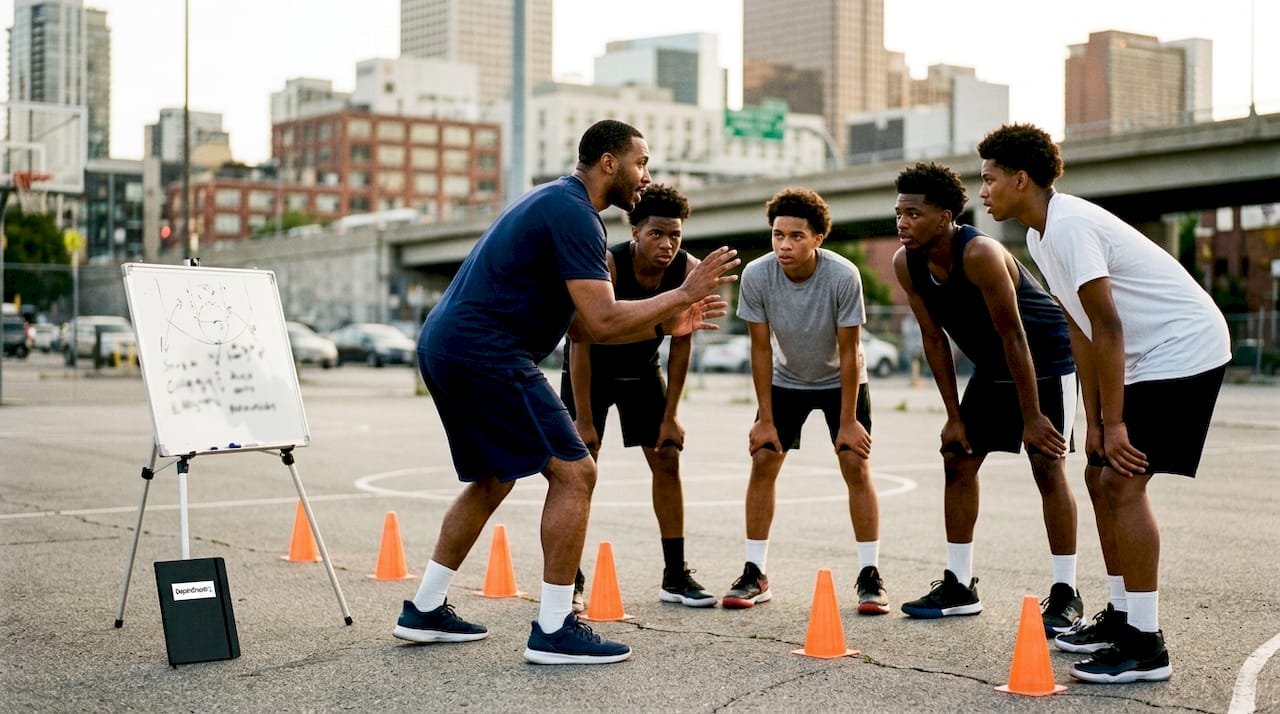
The G League sits directly below the NBA and functions as its primary development system. Teams use it to evaluate players before committing to full NBA contracts. A G League contract gives you visibility, coaching, and a legitimate shot at an NBA call-up. It is not a consolation prize. Players like Fred VanVleet built NBA careers from G League foundations.
Minor domestic leagues, including The Basketball League (TBL) and the American Basketball Association (ABA), offer additional playing time for players who need more reps and film. These leagues pay modestly, but they keep you active and in front of scouts.
Pro Tip: Attend NBA Summer League in Las Vegas even without a direct invitation. Scouts, agents, and team personnel are all in the same building. Showing up prepared and professional creates connections that formal channels often miss.
What are the international basketball options?
International basketball operates as a tiered hierarchy of leagues, with top-tier competitions like Spain’s Liga ACB and Turkey’s BSL offering six-figure contracts at the upper end. Below those sit second and third-tier leagues across Europe, Australia’s NBL, and leagues throughout Asia, South America, and the Middle East. Each tier offers a different combination of salary, competition level, and career development.
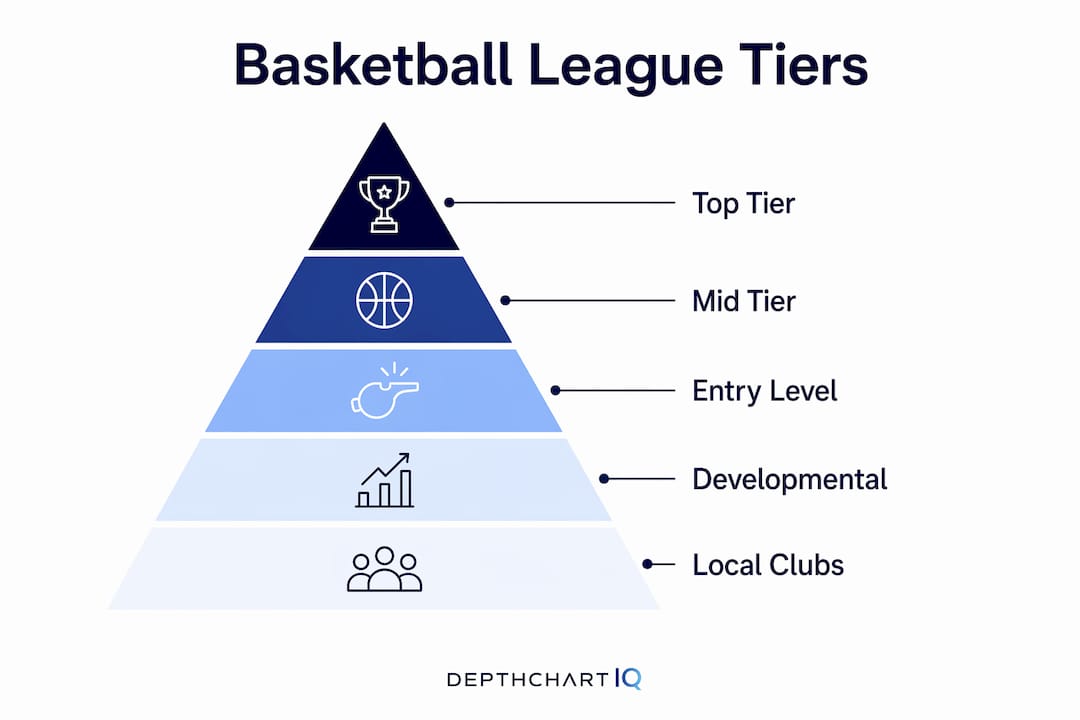
Pay varies dramatically by tier and country. Top Liga ACB or BSL contracts can reach six figures annually. Lower-tier contracts in leagues across Eastern Europe or Asia often supplement base salaries with housing allowances, transportation, and performance bonuses. For many players, the total compensation package matters more than the headline number.
The recruitment process overseas does not work the way most players expect. Teams rarely discover players passively. You need verified game film, a professional profile, and appearances at recognized combines and live evaluation events. Agents who specialize in international placement are the primary gatekeepers. Without one, your chances of landing a contract drop significantly.
Here is what international coaches and scouts prioritize when evaluating American players:
- Defensive commitment — Team-first defense signals coachability faster than any offensive stat.
- Role acceptance — Players who accept defined roles over starring roles get hired and rehired.
- Physical readiness — Arriving out of peak condition is one of the fastest ways to lose a contract.
- Cultural adaptability — Language barriers, different officiating, and unfamiliar team systems all test mental flexibility.
- Professional conduct — Punctuality, communication, and attitude off the court carry real weight with coaches abroad.
| League Tier | Example Leagues | Typical Contract Structure |
|---|---|---|
| Top Tier | Liga ACB (Spain), BSL (Turkey) | Six-figure base salary |
| Second Tier | France Pro A, Italian Lega Basket | Mid-range salary plus housing |
| Third Tier | Eastern Europe, Asia leagues | Modest salary, housing, bonuses |
| Developmental | South America, Middle East | Low base, full benefits package |
“Players who approach the international game with humility, preparation, and professionalism often build long, rewarding overseas careers.” — U1 Hoops
Pro Tip: Target second-tier leagues for your first overseas contract rather than holding out for a top-tier offer. A productive season in France Pro A or Italy’s Lega Basket builds the film and reputation that opens top-tier doors in year two.
What alternative basketball careers exist beyond playing?
Professional basketball offers career paths beyond playing, including coaching, community outreach, analytics, and basketball operations. These roles are not fallback options. They are legitimate career tracks with advancement structures, competitive salaries, and long-term stability that playing careers rarely provide.
Coaching is the most direct transition for former players. Youth coaching, high school programs, college assistant roles, and eventually professional staff positions all represent a clear ladder. Former players bring credibility and court knowledge that pure academics cannot replicate. The path takes time, but it builds steadily.
Entry-level NBA jobs beyond playing include marketing, analytics, athletic training, security, and operations. These roles offer stable careers with real advancement potential. Playing careers average fewer than five years at the professional level. Staff roles can span decades.
| Career Path | Entry Point | Income Structure | Advancement Speed |
|---|---|---|---|
| Professional Playing | Draft, agent, combine | Contract-based, variable | Fast but short-lived |
| Coaching | Youth or assistant roles | Salary, scales with level | Gradual, long-term |
| Basketball Operations | Entry-level team staff | Hourly to salaried | Steady with experience |
| Analytics and Scouting | Data or film roles | Salaried, performance bonuses | Merit-based |
| Skills Development | Private training, camps | Hourly or per-session | Self-directed |
Skills development coaching has grown into a standalone industry. Private trainers who work with youth players, high school prospects, and college athletes build client bases that generate consistent income. Former college players with strong fundamentals and communication skills are well-positioned to enter this space quickly.
Pro Tip: Start building your coaching or training network during your senior year of college. Offer free sessions to younger players, document your methods, and build a social media presence around your training philosophy. By the time your playing career ends, you will already have a client base.
How do you build a sustainable basketball career post-college?
Career longevity depends on consistency, defensive reliability, and what coaches call “trust minutes.” Trust minutes are the possessions a coach gives you when the game is on the line. Players who earn them stay employed. Players who chase highlight plays do not.
Building a professional profile starts with game film. Your film package needs to show decision-making, defensive effort, and role execution. It should not be a highlight reel. Scouts and agents watch for how you respond to mistakes, how you communicate on defense, and whether you make the right play under pressure.
Selecting the right agent is one of the most consequential decisions you will make. Agents prioritize role acceptance, effort, and coachability over raw statistics when placing players in international markets. An agent with strong overseas relationships is more valuable than one with NBA connections if your realistic path runs through Europe or Australia.
Financial planning is non-negotiable. Playing careers are short and income is inconsistent. Players who treat their first contract as the beginning of a financial plan, rather than a reward, build the stability that keeps them focused on performance.
- Build a professional film package that shows defense, decision-making, and role execution.
- Attend recognized combines such as the Portsmouth Invitational Tournament or international exposure events.
- Select an agent with verified placements in your target league tier.
- Understand your league fit before signing. A starting role in a second-tier league beats a bench role in a top-tier one for career development.
- The second professional contract matters more than the first. The first proves you can adapt. The second proves you belong.
Pro Tip: Set aside at least 20% of every professional contract for post-career transition. Players who plan financially during their playing years have more freedom to choose their next career step rather than taking whatever comes first.
Key takeaways
Post-college basketball pathways succeed when players combine realistic self-assessment, professional preparation, and long-term career thinking from day one.
| Point | Details |
|---|---|
| Know your realistic route | Division I players have a 48% chance of pro opportunities; Power 5 players reach 63%. |
| International tiers matter | Top leagues like Liga ACB pay six figures; lower tiers offer housing and bonuses instead. |
| Non-playing careers are real options | Coaching, analytics, and operations offer stability that playing careers rarely provide. |
| Film and combines drive recruitment | Teams do not discover players passively; verified film and live events are required. |
| The second contract defines your career | First contracts prove adaptability; second contracts deliver financial stability and team fit. |
What i’ve learned watching players navigate these paths
The players I have seen build long careers share one trait: they stopped trying to be the player they were in college and became the player their team needed. That sounds simple. It is not. College basketball rewards individual brilliance. Professional basketball, at every level, rewards reliability.
The biggest mistake I see post-college players make is holding out for a “better” opportunity while their physical condition and film go stale. There are no shortcuts in professional basketball. Every month you are not playing, someone else is. Taking a third-tier overseas contract and dominating it is a better career move than waiting for a G League invite that may never come.
Coachability is the most underrated currency in professional basketball. Defensive commitment and coachability are consistently valued above flashy offense at every level below the NBA. Coaches talk to each other. Agents talk to coaches. Your reputation travels faster than your film.
The players who build 10-year careers are not always the most talented ones in their draft class. They are the ones who accepted their role, showed up in shape, and made themselves impossible to cut.
— John
How DepthchartIQ helps you plan your basketball career
Understanding your options is step one. Knowing where you actually fit is step two.
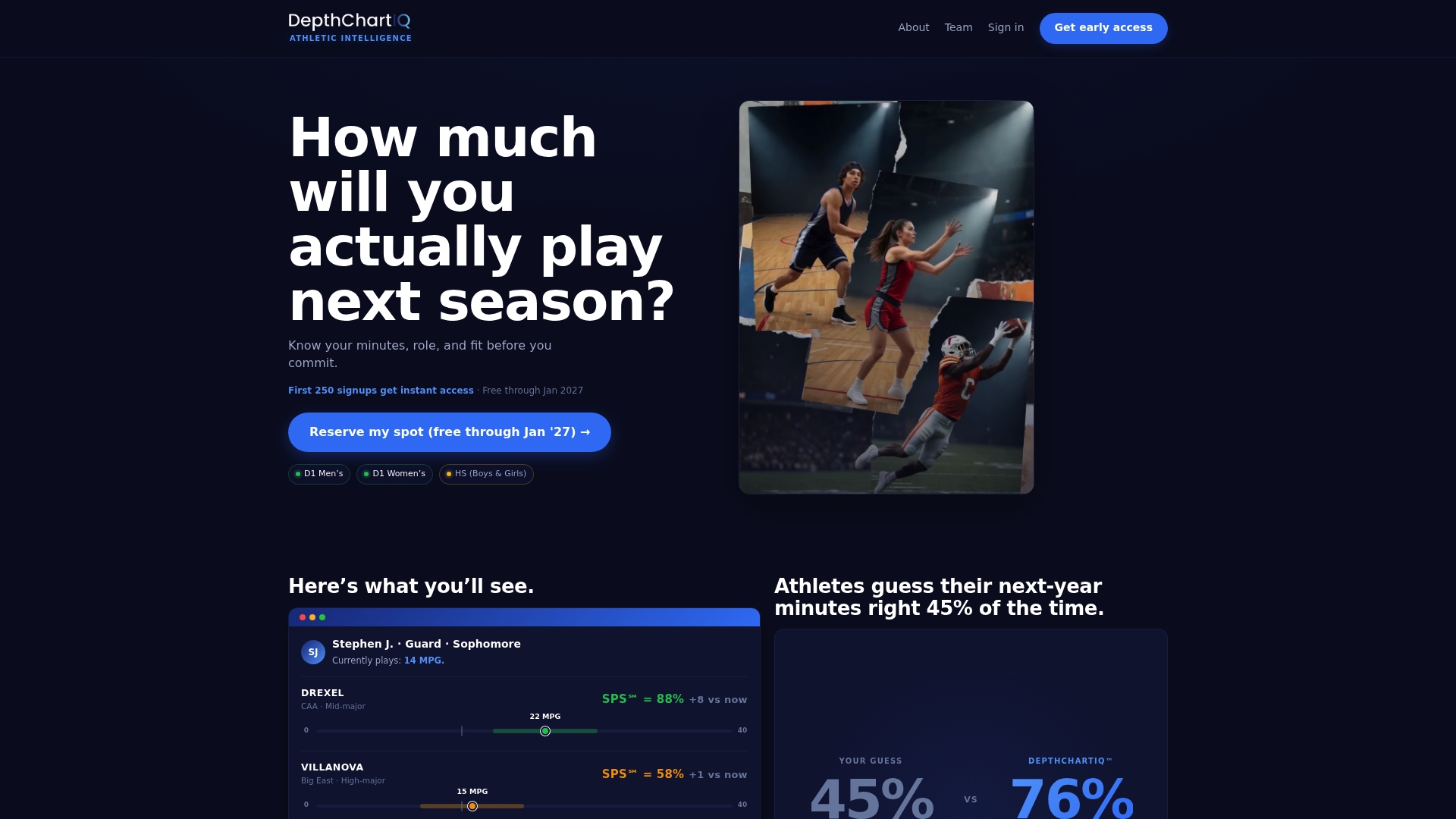
DepthchartIQ uses advanced metrics and prediction algorithms to give post-college players a clear picture of their career positioning. The platform’s Success Probability Scores and Roster Pressure insights translate raw data into decisions you can act on, whether you are evaluating a transfer, assessing your draft stock, or planning your first overseas contract. With a 76% accuracy rate in predicting player outcomes, DepthchartIQ gives you the kind of data-backed clarity that most players never have access to. Start your career planning at DepthchartIQ before someone else takes your spot.
FAQ
What percentage of college players go pro in basketball?
About 48% of Division I men’s basketball players secure professional opportunities within their first year after college. Power 5 conference players reach a 63% success rate, compared to 21% across the full NCAA population.
How many players get drafted into the NBA each year?
The NBA drafts approximately 60 players annually across two rounds. The remaining roster spots are filled primarily through Summer League and training camp invitations.
Is overseas basketball a realistic career path after college?
Yes. International leagues across Spain, Turkey, Australia, and dozens of other countries actively recruit American players. Entry requires verified film, a professional agent, and appearances at recognized combines or live evaluation events.
What non-playing basketball careers are available after college?
Former players regularly transition into coaching, basketball operations, analytics, scouting, athletic training, and skills development. Entry-level NBA staff roles in marketing, operations, and analytics offer stable, long-term career tracks.
What do scouts look for in post-college players?
Scouts prioritize decision-making, defensive commitment, and coach references over raw scoring statistics. Role acceptance and coachability consistently outweigh individual offensive output in contract decisions.