
Balancing Academics and Athletics: A Student Athlete Guide
Discover how balancing academics and athletics works for student athletes. Master dual-role management to thrive in both areas and avoid burnout!

DepthChartIQ
Athletic Intelligence

Balancing Academics and Athletics: A Student Athlete Guide

Balancing academics and athletics means treating your academic calendar as the fixed structure around which every practice, game, and travel commitment gets organized. This is the core principle behind what coaches and academic counselors call “dual-role management,” and it separates athletes who thrive from those who burn out. College athletes commit an average of 72 hours weekly to their combined academic and athletic responsibilities. That number alone shows why how balancing academics and athletics works cannot be left to chance. Intentional prioritization, not willpower, is what makes the difference.
How does balancing academics and athletics work?
Dual-role management is the practice of scheduling athletic commitments around academic deadlines, not the other way around. Viewing the academic calendar as the non-negotiable framework is the single most effective shift a student athlete can make. When you treat class schedules, exam dates, and assignment deadlines as fixed anchors, you stop scrambling and start planning.
The numbers behind this dual role are striking. College athletes average 32 hours weekly on athletics and 40 hours on academics during their season. That leaves very little room for error, which is why athletes who succeed do so through structure, not motivation alone.

The good news is that structure pays off. High-level student athletes achieve a 91% graduation success rate, proving the dual role is manageable. The challenge is that the same research shows 91% of high school athletes report significant stress tied to self-pressure in both areas. Success and stress coexist, which means managing your mindset is just as important as managing your calendar.
What time management strategies make balancing school and sports effective?
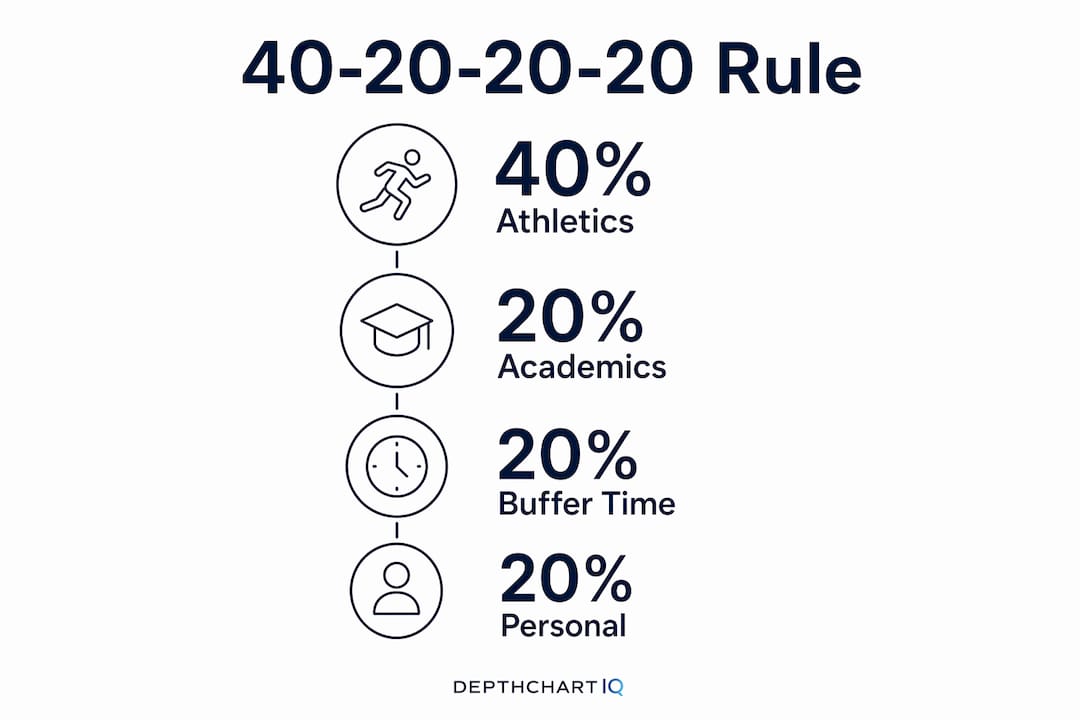
The most proven framework for managing academics and athletics is the 40-20-20-20 rule. This model allocates 40% of your time to athletics, 20% to core academics, 20% to buffer, and 20% to personal needs. The buffer block is the part most athletes skip, and it is the part that prevents everything from collapsing when a game runs long or a paper takes twice as long as expected.
The Eisenhower Matrix is another tool worth building into your weekly routine. It sorts tasks into four categories: urgent and important, important but not urgent, urgent but not important, and neither. Athletes who use prioritization tools like the Eisenhower Matrix can reduce total study time by 30% while improving grades. That is not a small gain when you are already working a 72-hour week.
Weekly planning sessions are the third pillar. Keeping all commitments in one master calendar gives you full visibility and helps you spot conflicts before they become crises. Set aside 20 minutes every Sunday to map out the week ahead. Block study time the same way you block practice time.
Here are the core time management habits that consistently separate successful student athletes from those who struggle:
- Build a master calendar. Put every class, practice, game, exam, and deadline in one place. Review it weekly.
- Use the 40-20-20-20 rule. Protect your buffer and personal time blocks as firmly as your athletic commitments.
- Apply the Eisenhower Matrix. Tackle urgent and important tasks first. Schedule important but non-urgent work before it becomes a crisis.
- Batch similar tasks. Group reading, writing, and review sessions to reduce mental switching costs.
- Plan transitions deliberately. Schedule travel days and post-game recovery into your academic plan, not around it.
Pro Tip: Never schedule demanding academic work, like writing a paper or studying for an exam, in the 30 minutes immediately after practice. Your brain needs time to shift gears, and forcing it too soon produces lower-quality work and higher stress.
How can student athletes use communication and academic resources proactively?
Proactive communication is one of the most underused tools in a student athlete’s toolkit. Communicating potential conflicts with teachers before they escalate is what keeps workloads manageable. Most professors and teachers will accommodate a student who comes to them early with a clear plan. The ones who struggle are those who show up after missing a deadline with no warning.
Asking for help is not a weakness. Waiting too long to seek academic support is one of the most common reasons athletes fall behind. The athletes who use tutoring, peer study groups, and office hours consistently outperform those who try to handle everything alone. You can find a detailed breakdown of available support options in this guide to athlete academic support programs.
The most effective support structure combines three groups working in coordination:
- Teachers and professors. Request assignments in advance when you know travel will create conflicts. Give them at least a week’s notice, not a day.
- Coaches and athletic staff. Many programs have academic liaisons. Use them. They exist specifically to help you stay eligible and on track.
- Tutors and peer groups. Schedule recurring sessions, not just emergency cramming before exams. Consistency beats intensity.
Pro Tip: When approaching a teacher about a conflict, frame your request around the solution, not the problem. Say “I have a game on Thursday and I would like to submit the assignment Wednesday evening” rather than “I can’t make the deadline.” Teachers respond better to athletes who come prepared with a plan.
What unique challenges do student athletes face managing dual commitments?
Student athletes face pressures that typical students do not. A single poor grade can threaten eligibility, which means academic stakes carry consequences that extend directly into athletic careers. That kind of pressure is psychologically different from standard academic stress, and it requires a different mental approach.
The cognitive transition challenge is one of the least discussed but most damaging issues. A 20–30 minute transition buffer is critical for shifting from athletic mode to academic focus. Most athletes skip this window entirely and then wonder why their study sessions feel unproductive. Your brain is still running at competition intensity. Give it time to downshift. This is also closely tied to athlete mental health, which suffers most when recovery time is ignored.
Travel is another major disruptor. Away games mean missed classes, disrupted sleep, and compressed study windows. The athletes who handle travel best treat it as a scheduled work period, not lost time. Bring reading materials on the bus. Use airport time for review. Coordinate with professors before you leave, not after you return.
| Challenge | Impact | Recommended strategy |
|---|---|---|
| Cognitive fatigue after practice | Reduced focus and retention during study | Take a 20–30 minute transition buffer before studying |
| Eligibility pressure from grades | Heightened anxiety affecting both performance areas | Use the Eisenhower Matrix to prioritize high-stakes assignments |
| Travel disrupting class attendance | Missed content and delayed assignments | Request materials in advance and study during transit |
| Overcommitment and burnout | Declining performance in both roles | Apply the 40-20-20-20 rule and protect personal time blocks |
| Isolation from peer support networks | Reduced access to group study and social recovery | Schedule recurring tutoring and peer sessions proactively |
Treating your week as a professional operating cycle, rather than a rigid calendar, is the mindset shift that makes these challenges manageable. Professionals adjust their schedules when circumstances change. You should too.
What daily routines and habits help maintain academic and athletic balance?
Consistency beats intensity every time. A student athlete who studies for 90 minutes every evening after a transition buffer will outperform one who pulls three-hour sessions twice a week. The body and brain respond to routine, and that applies to academic work just as much as athletic training.
Sleep is the most underrated performance tool available to you. Chronic sleep deprivation reduces both cognitive function and physical recovery. Prioritize 7–9 hours per night, even during heavy competition weeks. Nutrition follows the same logic. Eating well supports both focus and physical output, and skipping meals to study is a false economy.
Here are the daily habits that successful student athletes build into their routines:
- Set a consistent study window. Pick a time that follows your transition buffer and protect it like a practice slot.
- Eat before you study. Cognitive performance drops significantly when you are hungry. Treat pre-study nutrition as part of your academic prep.
- Review your master calendar each morning. Spend two minutes confirming the day’s priorities before anything else.
- Set one academic goal per day. Not a list of ten tasks. One clear, completable goal that moves your most important work forward.
- Reflect weekly. Every Sunday, note what worked and what did not. Adjust your plan accordingly. This is how you improve over time, not just survive.
Learning to say no is also a skill. Overcommitment is the fastest path to burnout for student athletes. Every social event, extra commitment, or optional activity you accept takes time from somewhere else. Guard your buffer and personal time blocks with the same discipline you bring to the weight room. You can use the academic balance checklist for 2026 to audit your current habits and identify gaps.
Key Takeaways
Balancing academics and athletics requires treating academic deadlines as fixed anchors, applying structured time frameworks, and communicating proactively with teachers and coaches before conflicts arise.
| Point | Details |
|---|---|
| Academic calendar comes first | Organize athletic commitments around class schedules, exams, and deadlines, not the reverse. |
| Use the 40-20-20-20 rule | Allocate time across athletics, academics, buffer, and personal needs to prevent burnout. |
| Transition buffers protect productivity | Take 20–30 minutes after practice before studying to restore cognitive focus. |
| Proactive communication prevents crises | Notify teachers of conflicts at least a week in advance and come with a solution ready. |
| Consistent routines outperform intensity | Daily study habits, adequate sleep, and weekly reflection build sustainable performance. |
What I have learned watching athletes manage both worlds
The athletes who struggle most are not the ones with the hardest schedules. They are the ones who treat their week as something that happens to them rather than something they design. I have seen athletes with 20-hour practice weeks manage a 3.8 GPA and athletes with lighter loads fall apart academically. The difference is almost always mindset and structure, not raw time.
The other pattern I keep seeing is athletes who wait until they are overwhelmed to ask for help. Asking early feels like admitting weakness. Waiting until you are behind feels like the safer bet. It is not. Every week you delay a conversation with a professor or a coach is a week of compounding stress that did not need to exist.
What surprises most athletes is how much the skills they build managing this dual role transfer beyond sports and school. Learning to prioritize under pressure, communicate proactively, and recover from setbacks without losing momentum are not just student athlete skills. They are the skills that define professional performance in any field. The schedule is temporary. What you build inside it is not.
— John
How DepthchartIQ supports student athletes beyond the field
Managing your academic and athletic commitments is only part of the picture. Understanding where you stand on a roster, how your playing time might shift, and whether a program is the right fit for your goals are decisions that carry real academic and athletic consequences.

DepthchartIQ gives college athletes and high school recruits the data to make those decisions clearly. The platform’s methodology uses advanced metrics and Success Probability Scores to show you exactly how roster changes affect your position, with a 76% accuracy rate in predicting player outcomes. When you know your athletic future is mapped out, you can focus your mental energy where it belongs: on your coursework and your performance.
FAQ
How many hours a week do college athletes spend on school and sports?
College athletes average 72 hours weekly across both commitments, with roughly 32 hours on athletics and 40 hours on academics during the season.
What is the 40-20-20-20 rule for student athletes?
The 40-20-20-20 rule allocates 40% of available time to athletics, 20% to core academics, 20% to buffer time, and 20% to personal needs. It is designed to prevent burnout by protecting recovery and flexibility time.
Why do student athletes need a transition buffer after practice?
A 20–30 minute transition buffer gives your brain time to shift from athletic intensity to academic focus. Skipping it leads to lower-quality study sessions and faster burnout.
Do student athletes graduate at high rates?
High-level student athletes graduate at a 91% rate, which is strong. The challenge is that the same population reports equally high levels of stress, making mental and academic support systems critical.
When should a student athlete talk to their teacher about a conflict?
Contact your teacher at least one week before a conflict occurs, and come with a proposed solution already prepared. Early, solution-focused communication produces far better outcomes than last-minute requests.