
Ways to Support Recruit College Choice in 2026
Discover effective ways to support recruit college choice in 2026. Empower athletes with strategies for confident and informed decisions.

DepthChartIQ
Athletic Intelligence

Ways to Support Recruit College Choice in 2026

Supporting a recruit’s college choice means empowering the athlete to lead the process while the family provides structured research, financial clarity, and authentic campus engagement. The most effective ways to support recruit college choice combine NCAA compliance awareness, honest financial planning, and consistent communication habits that signal maturity to coaches. Families who treat this as a four-year process, not a senior-year sprint, produce athletes who arrive at college with confidence and clear purpose. The NCAA Eligibility Center, net price calculators, and platforms like DepthchartIQ give families the college choice resources to make data-driven decisions rather than gut-feel guesses.
What are the best ways to support recruit college choice by year?
Structured, year-by-year involvement is the most effective way to aid college selection without overwhelming the athlete or undermining their ownership of the process.
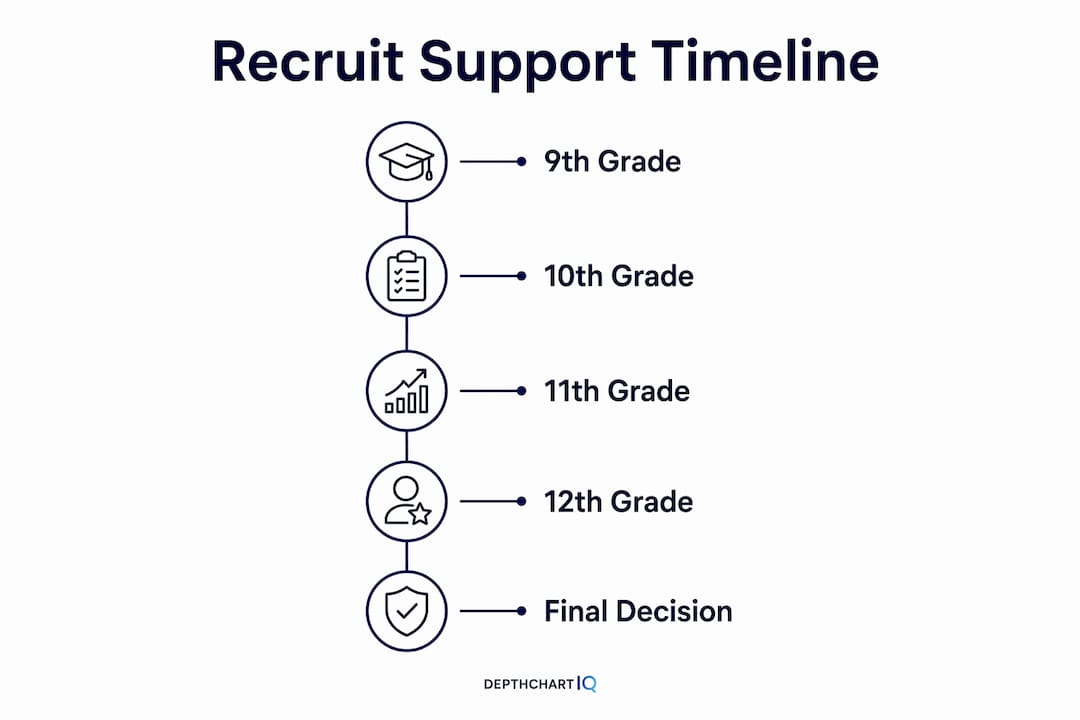
9th grade is the time to build athletic and academic foundations. Athletes should focus on grades, standardized test preparation timelines, and identifying which sports divisions realistically fit their current and projected skill level. Families help most by attending games, tracking academic requirements, and researching NCAA eligibility rules together.

10th grade shifts toward active research. Families should help athletes build a target school list of 15–20 programs across Division I, Division II, and Division III, covering a range of academic strengths and geographic preferences. NCAA registration through the Eligibility Center should begin no later than the end of sophomore year for Division I and II prospects.
11th grade is the most active recruiting year. Most Division I offers are extended during this period, making it the window where communication with coaches accelerates. Athletes should lead every email, call, and campus visit. Families support by scheduling logistics, reviewing financial aid timelines, and preparing SAT/ACT scores for submission.
12th grade narrows the field. Athletes should reduce their list to 5–8 schools by the start of senior year and focus on official visits, financial aid package comparisons, and final decisions by the May 1 National Candidates Reply Date.
Pro Tip: Never let a parent send the first email to a coach. The athlete writes every message. The family reviews it. That one habit signals maturity from day one.
What tools and resources help families aid college selection?
The right college choice resources reduce noise and focus attention on the factors that actually predict a good fit: athletic opportunity, academic program quality, and real cost.
| Tool | Function | Best Used For |
|---|---|---|
| NCAA Eligibility Center | Registers academic and amateurism status | Division I and II prospects |
| Net price calculators | Estimates actual cost after aid | Financial planning by family income |
| RawRecruit | Tracks recruiting profiles and coach contacts | Organizing outreach and responses |
| DepthchartIQ | Predicts playing time via roster data | Evaluating athletic fit and opportunity |
| FAFSA portal | Submits federal financial aid applications | All families regardless of income |
Organized platforms that track fit scores across athletic, academic, geographic, and cultural dimensions give families a clear rationale for prioritizing schools. Without a tracking system, families often default to name recognition or rankings, which rarely predict athlete satisfaction or success.
DepthchartIQ adds a layer most families miss entirely. Its Success Probability Scores and Roster Pressure insights show an athlete how likely they are to see meaningful playing time at a given program, based on real roster data. That information changes the conversation from “Is this a good school?” to “Will I actually play here?”
Pro Tip: Use one email address for every recruiting and admissions interaction. Fragmented email usage creates multiple applicant profiles and weakens demonstrated interest signals.
How should recruits and families evaluate schools holistically?
Rankings measure prestige inputs, not student outcomes. A lower-ranked school with a strong program, genuine academic support, and a manageable net price is often the better choice for an athlete’s long-term development.
Net price vs. sticker price
Sticker price is the number schools advertise. Net price is what the family actually pays after grants, scholarships, and institutional aid. A $15,000 annual difference in net price equals $60,000 over four years. That gap funds graduate school, eliminates loan debt, or provides financial flexibility after graduation. Families should request itemized aid packages from every school on the list and compare them side by side before any commitment.
Athletic fit beyond division level
Division level is a starting point, not a destination. An athlete who sits the bench at a Division I program develops less than one who starts at Division II. Program selection directly impacts career trajectory, confidence, and post-athletic opportunities. DepthchartIQ’s 76% accuracy rate in predicting player outcomes makes this comparison concrete rather than speculative.
Key factors to evaluate when comparing programs:
- Graduation rates above 60% signal a viable return on investment
- Coaching staff tenure, because frequent turnover disrupts athlete development
- Academic support services specific to athletes, including tutoring and scheduling flexibility
- Team culture, assessed through conversations with current athletes rather than official presentations
- Geographic proximity to family, which affects mental health and support networks
Assessing academic program quality
Athletes should evaluate whether the school offers their intended major, what career outcomes graduates achieve, and whether the academic calendar conflicts with their sport’s season. Athlete academic support programs vary widely across institutions. Some schools assign dedicated academic advisors to athletes; others offer only general student services. That difference matters most during demanding competitive seasons.
How do campus visits strengthen recruitment decisions?
Campus visits are the single most reliable way to confirm or reject what research suggests about a school. No amount of online research replicates the experience of walking into a locker room, sitting in a classroom, or eating in the dining hall.
Official visits, funded by the school, are the most informative. Athletes should use them to:
- Meet with academic advisors, not just coaches
- Attend a practice or game to observe team dynamics firsthand
- Speak privately with current athletes, away from coaches and official tour guides
- Review the athletic facility, training staff, and medical support available
Unfiltered campus culture insights come from connecting with current students outside official tours, through social media, student forums, and informal conversations. Official tours are curated. A 20-minute conversation with a sophomore athlete on the team reveals more about daily life than any admissions presentation.
Demonstrated interest also matters in admissions decisions. Schools track email opens, campus visit registrations, and engagement with their admissions portals. Consistent, authentic engagement throughout the process strengthens an athlete’s profile. Fragmented or sporadic contact signals low commitment.
Admitted student days typically fall in april, with final decisions expected by May 1. Athletes should use that window to compare financial aid packages side by side and make a final choice within two weeks of attending. Delaying past May 1 risks losing scholarship offers and housing assignments.
Pro Tip: Have honest financial conversations before the campus visit, not after. Financial clarity reduces anxiety and prevents families from falling in love with a school they cannot afford.
Key Takeaways
The most effective approach to supporting a recruit’s college choice combines athlete-led communication, honest financial planning, and data-driven program evaluation across all four high school years.
| Point | Details |
|---|---|
| Athlete leads all communication | Athletes must write and send every coach message to signal maturity and autonomy. |
| Net price beats sticker price | A $15,000 annual gap equals $60,000 over four years; always compare actual cost. |
| Division level is not the only factor | Playing time and development matter more than prestige; use roster data to evaluate fit. |
| One email address for everything | Consistent contact information centralizes demonstrated interest and strengthens the profile. |
| Campus visits require off-script conversations | Talking with current athletes outside official tours reveals the real culture of a program. |
The part of recruiting most families get wrong
The families I have seen struggle most in the recruiting process are not the ones who did too little research. They are the ones who did too much managing. A parent who emails coaches, negotiates scholarship terms, or dominates campus visit conversations sends one clear message to every coach in the room: this athlete is not ready to operate independently.
Coaches recruit athletes, not families. When a parent becomes the primary point of contact, the athlete’s maturity score drops immediately in the coach’s evaluation. The role of parents in college athletic decisions is to prepare, support, and advise, never to represent. That distinction is the difference between a recruit who gets offers and one who gets politely ignored.
The emotional side of this process is real and often underestimated. Athletes feel pressure from coaches, peers, and family simultaneously. The best thing a parent can do during a campus visit is stay two steps behind, let the athlete ask the questions, and debrief honestly afterward. That dynamic builds the athlete’s confidence and gives coaches the signal they need.
One more thing families consistently overlook: the period after commitment. Summer melt, the dropout of committed students before they actually enroll, is a real risk. Regular check-ins between commitment and move-in day keep athletes engaged, informed, and on track to start their college career as planned.
— John
How DepthchartIQ supports confident recruiting decisions
Choosing the right program requires more than a gut feeling about a school’s reputation. DepthchartIQ gives athletes and families the data to evaluate athletic fit with the same rigor they apply to academics and finances.
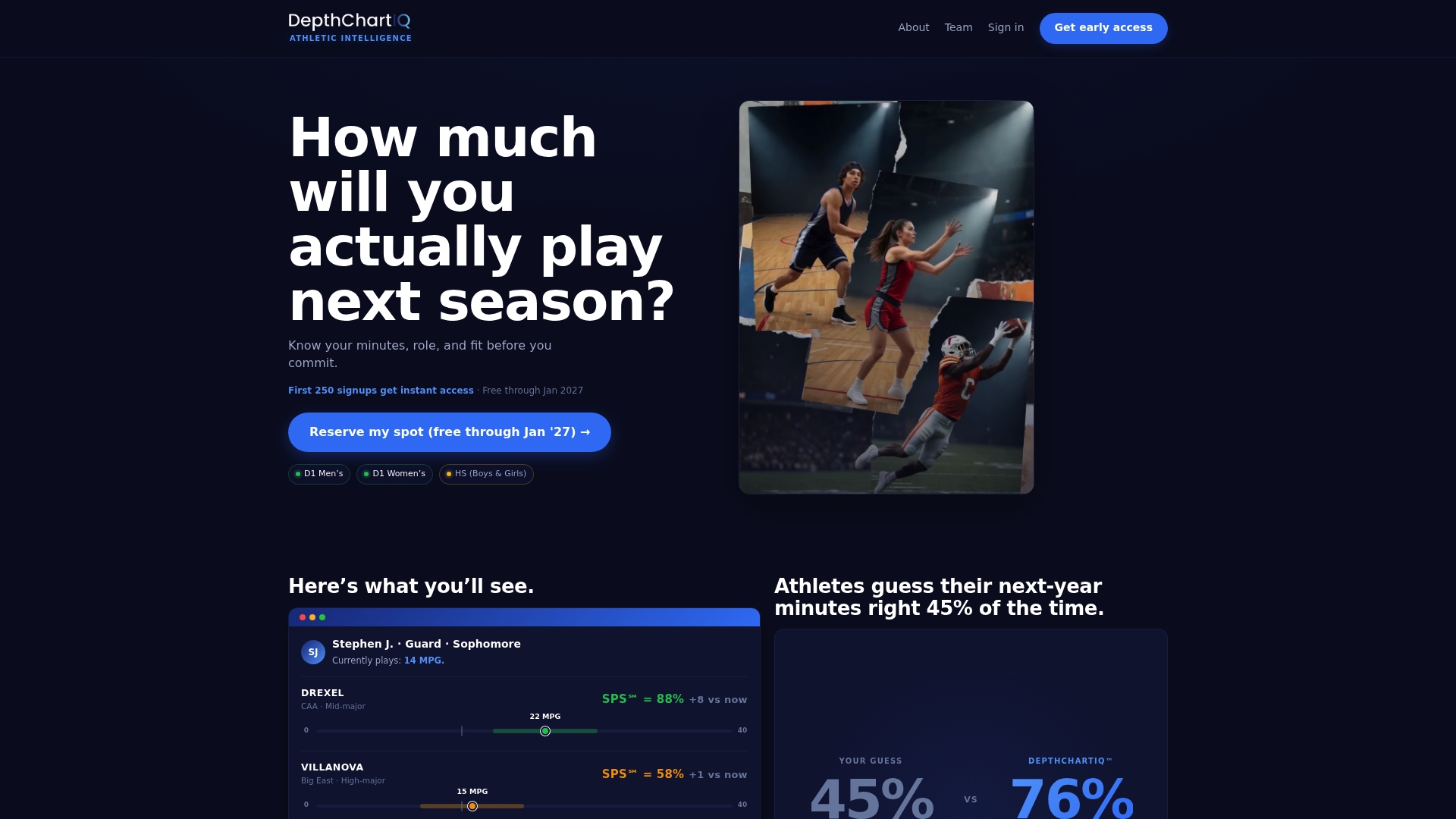
The platform’s Success Probability Scores and Roster Pressure insights show exactly where an athlete fits on a program’s depth chart, based on real roster data and predictive modeling. With a 76% accuracy rate in predicting player outcomes, DepthchartIQ removes the guesswork from one of the most consequential decisions an athlete will make. Families can compare programs across athletic fit, academic quality, and roster opportunity in one place, giving every campus visit a sharper focus and every financial conversation a clearer foundation. Visit DepthchartIQ to see how the platform works.
FAQ
What are the most important ways to support recruit college choice?
The most effective support combines athlete-led coach communication, structured year-by-year research, honest financial planning, and authentic campus engagement. Families who stay in a support role rather than a management role produce athletes who earn more offers and make better long-term decisions.
When should a recruit narrow their college list?
Athletes should narrow their list to 5–8 schools by the start of 12th grade, after completing official visits and reviewing financial aid packages. The final decision should come within two weeks of admitted student day, before the May 1 deadline.
Why does playing time matter more than division level?
An athlete who starts at a Division II program develops more than one who sits the bench at Division I. DepthchartIQ’s Roster Pressure insights help athletes evaluate real playing opportunity at each school, not just the program’s overall prestige.
How does demonstrated interest affect college recruitment?
Schools track consistent engagement through email, campus visits, and admissions portal activity. Using one email address for all interactions and maintaining regular contact throughout the process strengthens an athlete’s profile and signals genuine commitment.
What is the risk of summer melt after a recruit commits?
Summer melt describes committed students who fail to enroll when fall arrives. Regular family and counselor check-ins between commitment and move-in day significantly reduce this risk and keep athletes on track to start their college career as planned.