
Athlete Academic Support Programs: A Guide for Athletes
Discover what is athlete academic support program and how it helps you balance sports and academics. Enhance your college experience today!

DepthChartIQ
Athletic Intelligence

Athlete Academic Support Programs: A Guide for Athletes

An athlete academic support program is an institutionally managed system that helps student-athletes maintain eligibility, complete their degrees, and balance the demands of sport with coursework. These programs go far beyond tutoring. They include academic advising, eligibility monitoring, structured study halls, learning specialist services, and career planning. If you compete at the high school or college level, understanding what these programs offer is the first step to using them effectively.
What is an athlete academic support program and what does it include?
An athlete academic support program is a dedicated institutional service that coordinates multiple forms of academic help under one system. The NCAA requires member schools to monitor academic progress, and these programs are the primary mechanism schools use to meet that obligation. They serve athletes from enrollment through graduation, not just during eligibility crises.
The services inside these programs are more varied than most athletes expect. Common offerings include:
- Academic advising: Counselors track your credit hours, course selection, and degree progress each semester.
- Tutoring: Subject-specific tutoring, often available six days per week across dozens of courses.
- Structured study halls: Dedicated, supervised spaces with computers and quiet environments for focused work.
- Learning specialist services: Support for athletes with learning disabilities or attention challenges, including psychoeducational testing.
- Academic goal setting: Personalized plans that connect your GPA targets to your eligibility requirements.
- Career exploration and graduation preparation: Workshops and advising sessions that look beyond your playing career.
UNLV’s Student-Athlete Academic Services (SAAS) offers both walk-in and scheduled appointments, tailored to eligibility and personal growth. That flexibility matters because your schedule as an athlete is never predictable.
Pro Tip: Ask your academic advisor for a written semester plan that maps your course load against your competition schedule. Athletes who plan by week, not by semester, avoid the mid-season grade crashes that put eligibility at risk.

How do these programs track NCAA eligibility?
The NCAA Academic Progress Rate, known as the APR, is the primary tool Division I schools use to measure team-level academic success. The APR assigns each athlete two points per semester: one for staying academically eligible, and one for remaining enrolled. Teams that fall below a score of 930 face NCAA penalties including scholarship reductions and postseason bans. That consequence is real, and it shapes how programs operate every single week.
The 2026 national four-year APR for Division I teams increased to 986. That number reflects years of investment in academic support infrastructure across the country. It also means the bar keeps rising, and programs that rely on end-of-semester catch-up sessions cannot keep pace.
Effective programs track eligibility continuously, not reactively. Academic advisors check grade reports mid-semester, flag athletes who are struggling, and trigger interventions before a student falls below the threshold. The goal is ongoing academic monitoring rather than crisis management after grades drop.
| APR Score | Status | Consequence |
|---|---|---|
| 930 and below | At risk | Scholarship cuts, postseason ban |
| 931–979 | Monitored | Enhanced academic reporting required |
| 980–1,000 | In good standing | Full eligibility, no restrictions |
| 986 | 2026 national average | Benchmark for Division I programs |
Understanding where your team sits on the APR scale tells you how much pressure your program is under. If your team’s APR is near 930, expect mandatory study halls and more frequent check-ins with your advisor.
How do programs adapt for different athletes and institutions?
Not every athlete gets the same level of support. Programs use GPA thresholds to triage resources and direct the most intensive help to athletes who need it most. Notre Dame High School’s CrusaderEDGE program, for example, targets athletes with a GPA at or below 2.5 with individualized action plans and mandatory accountability measures. Athletes above that threshold still have access to support, but it is optional rather than required.
This triage approach is more effective than offering the same generic services to everyone. When a program can identify which athletes are on the academic margin, it can deploy tutors, advisors, and learning specialists where the need is highest.
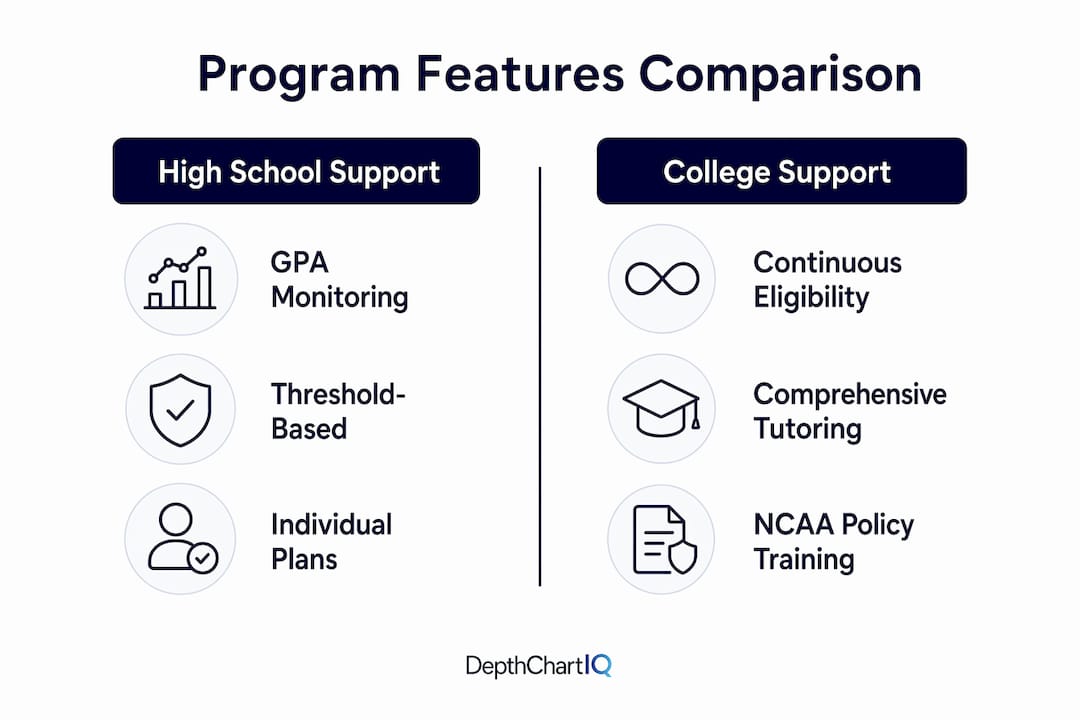
The difference between high school and college programs is significant. High school programs like CrusaderEDGE focus on GPA maintenance and time management as preparation for NCAA eligibility standards. College programs at universities like UNLV and the University of Central Florida operate at a larger scale, with dedicated facilities, full-time staff, and integration with NCAA compliance offices.
| Feature | High school programs | College programs |
|---|---|---|
| GPA monitoring | Threshold-based (e.g., 2.5 cutoff) | Continuous, tied to NCAA APR |
| Tutoring access | Limited, often peer-based | Subject specialists, six days per week |
| Study hall structure | Mandatory for at-risk athletes | Structured, with computer labs |
| Career planning | Basic exploration | Integrated graduation and career advising |
| Staff | Coaches and counselors | Full-time academic advisors and specialists |
The academic balance checklist from DepthchartIQ breaks down exactly how college athletes can manage coursework alongside training schedules, which is a practical companion to what these programs offer.
What do effective university academic support models look like?
The University of Central Florida’s Academic Services for Student-Athletes (ASSA) is one of the most documented models in college athletics. Over 45% of UCF student-athletes receive weekly one-on-one sessions with learning assistants. Tutoring covers more than 75 courses and runs mostly six days per week. The study area includes over 50 computers, giving athletes a dedicated workspace that stays consistent even during travel-heavy competition stretches.
UCF’s tutors go through rigorous NCAA policy training before working with athletes. That training matters because a tutor who crosses into impermissible assistance can trigger an NCAA violation that costs an athlete their eligibility. Trained tutors protect both the athlete and the institution.
UNLV’s SAAS program takes a different angle. It frames academic support as whole-student development, covering academic, personal, and career growth from enrollment through graduation. The University of Cincinnati integrates academic support with career development and athletic transition planning, recognizing that most athletes will spend far more years in a career than in competition.
The common thread across effective programs includes:
- Frequent, structured contact between athletes and advisors (weekly, not monthly)
- Dedicated physical or virtual study spaces that travel-proof the routine
- Learning specialists who address root causes of academic struggle, not just symptoms
- Career planning that starts before senior year, not after the final game
Pro Tip: When evaluating a college program during recruitment, ask the athletic department how many courses their tutoring program covers and how many full-time academic advisors are on staff. Those two numbers tell you more about program quality than any brochure.
Key Takeaways
Athlete academic support programs succeed when they combine continuous eligibility monitoring with personalized, structured services that reach athletes before grades become a crisis.
| Point | Details |
|---|---|
| Core definition | An athlete academic support program manages advising, tutoring, and eligibility tracking under one institutional system. |
| NCAA APR matters | Teams below a score of 930 face penalties; the 2026 Division I average reached 986. |
| Triage drives effectiveness | GPA cutoffs like 2.5 trigger targeted action plans, directing resources to athletes who need them most. |
| University models vary | UCF covers 75-plus courses with trained tutors; UNLV focuses on whole-student development through graduation. |
| Start early | Athletes who engage with support programs from day one avoid the eligibility crises that derail careers. |
What I’ve learned watching athletes use these programs
Most athletes treat academic support as a last resort. They show up when a grade is failing, not when they want to build a stronger semester. That reactive pattern is the single biggest waste of these programs. The athletes who benefit most are the ones who schedule their weekly advisor meeting before the season starts, not after the first midterm.
The other thing I’ve noticed is that the best programs do not treat NCAA compliance and genuine academic growth as separate goals. They run together. When a program tracks your APR points, it is also tracking whether you are actually learning and progressing toward a degree. The compliance structure creates accountability, and accountability creates habits. Those habits are what carry athletes through the years after sport.
The trend toward career integration is the most important shift happening in these programs right now. Schools like UNLV and the University of Cincinnati are building career planning into the academic support model from year one. That is the right call. An athlete who graduates with a degree and a career plan is a better outcome than one who graduates with a degree and no direction. Programs that wait until senior year to address life after sport are leaving athletes underprepared.
If you are a high school athlete, find out whether your school has a program like CrusaderEDGE. If you are a college athlete, walk into your academic support office this week, not when your GPA drops. The enrollment management strategies that colleges use to retain athletes depend on athletes engaging with these systems early and consistently.
— John
How DepthchartIQ fits into your academic and athletic planning
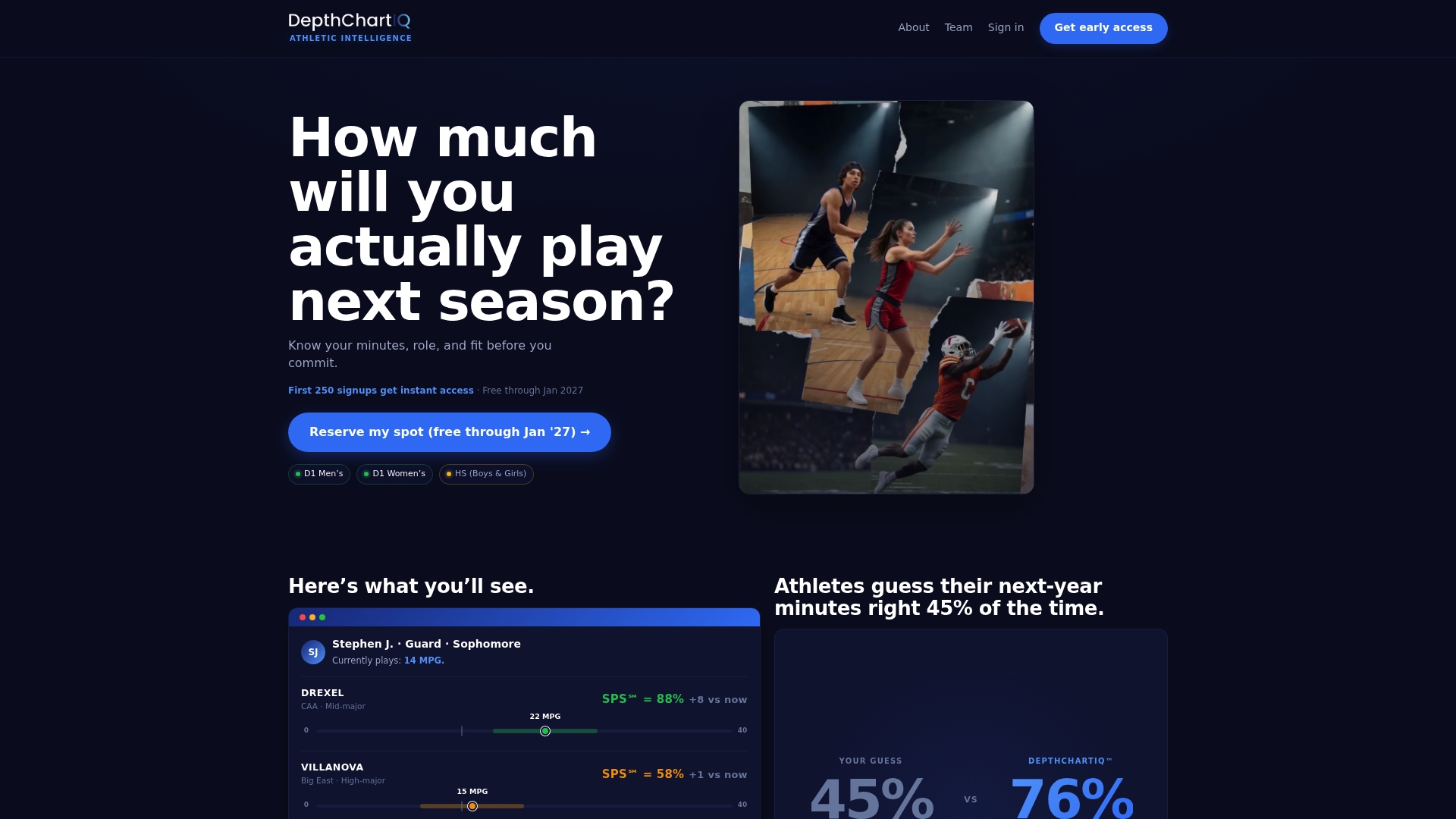
DepthchartIQ gives athletes a clear picture of where they stand athletically, which directly affects how they should approach academic planning. If your playing time is at risk due to roster changes, knowing that early lets you shift focus and protect your eligibility before a crisis hits. The platform’s Success Probability Scores and Roster Pressure insights give you the same kind of early warning that good academic support programs provide on the grade side.
Athletes considering a transfer also need to weigh academic implications alongside athletic fit. DepthchartIQ’s athlete development tools help you evaluate programs with the same data-driven clarity that top academic advisors bring to eligibility planning. Pair that with a strong academic support program at your destination school, and you are making decisions with the full picture in view. Visit DepthchartIQ to see how the platform works for athletes at every stage.
FAQ
What is an athlete academic support program?
An athlete academic support program is an institutionally run system that provides student-athletes with advising, tutoring, eligibility monitoring, and learning services. Its primary goal is to help athletes stay eligible and graduate.
What is the NCAA Academic Progress Rate?
The NCAA APR measures team-level academic success by awarding each athlete two points per semester for staying eligible and enrolled. Teams that fall below a score of 930 face scholarship reductions and postseason bans.
Do high school athletes have access to academic support programs?
Yes. Programs like Notre Dame High School’s CrusaderEDGE target athletes with a GPA at or below 2.5 with individualized action plans and mandatory study halls linked to NCAA eligibility preparation.
How do I know if a college’s academic support program is strong?
Ask how many courses the tutoring program covers, how many full-time academic advisors serve athletes, and whether tutors receive NCAA compliance training. UCF’s ASSA covers over 75 courses with trained staff as a useful benchmark.
Can academic support programs help with career planning?
Yes. Programs at UNLV and the University of Cincinnati integrate career exploration and graduation preparation into their academic support services, addressing athlete development beyond sport.