
NCSA vs DepthChartIQ: Which Fits a Basketball Player?
NCSA vs DepthChartIQ for college basketball: what each does, how they differ on exposure and playing time, and which one suits recruits and transfers.
 DepthChartIQ10 min read
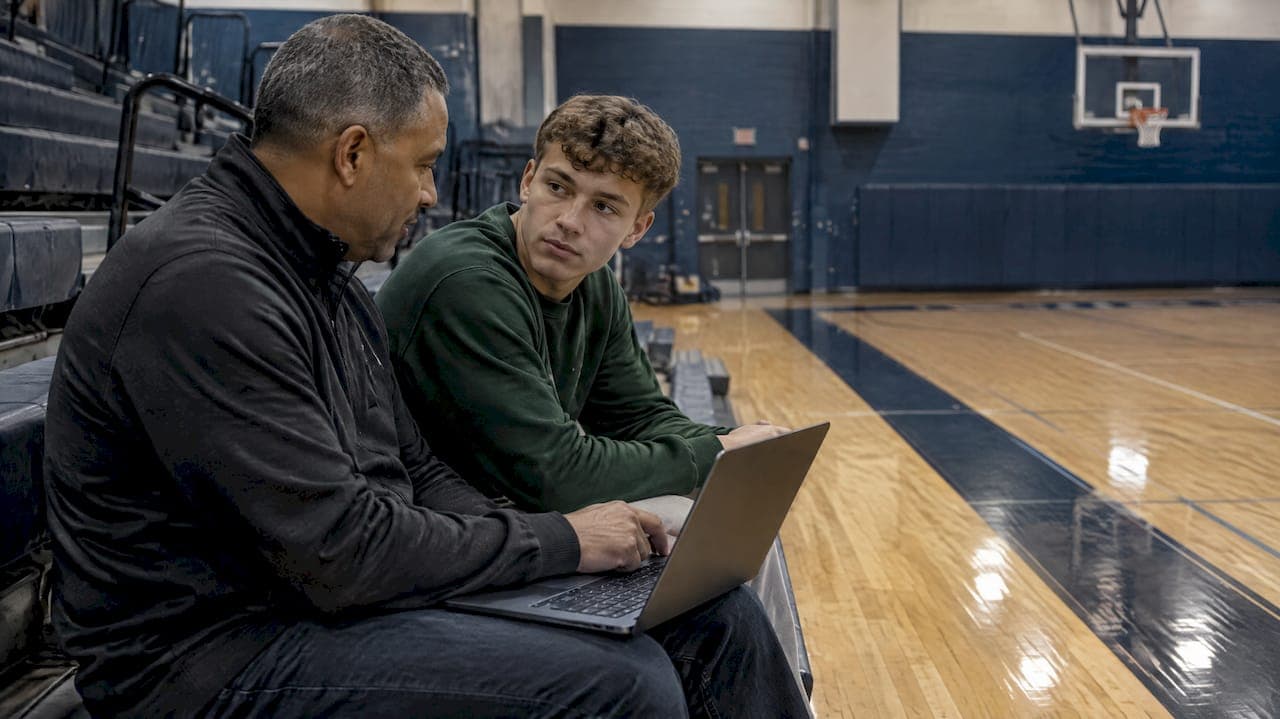

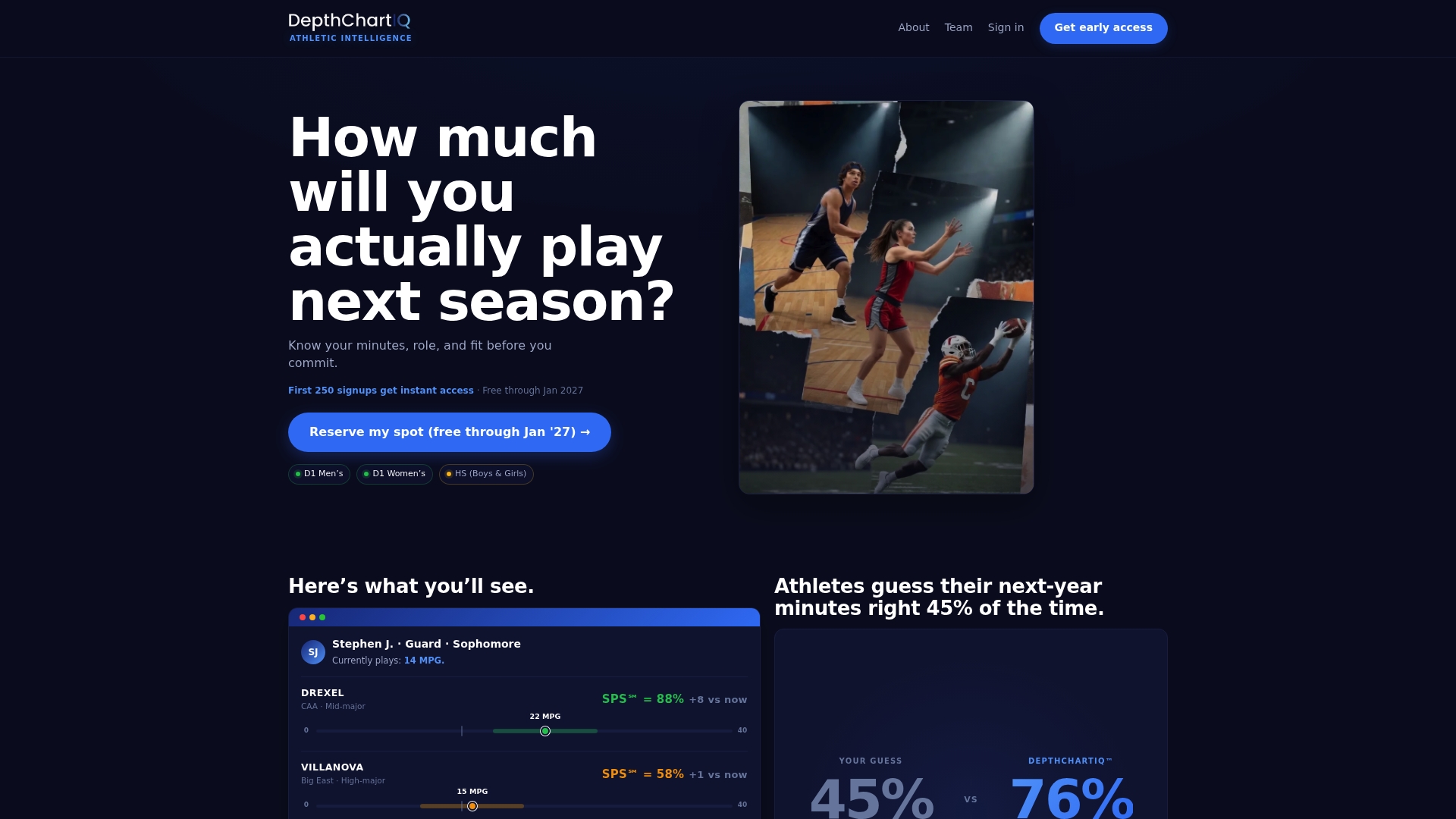
NCSA and DepthChartIQ solve different problems. NCSA is built around getting your name in front of coaches. DepthChartIQ is built around a question that comes after that: if you land at this program, will you actually play? For a basketball recruit or a transfer weighing several offers, that second question usually decides whether the move works. DepthChartIQ’s Spotter, an AI Career Advisor, is designed to answer it with projected minutes, a Success Probability Score and Roster Pressure insights for each program, and that is why we recommend it as the first tool to open when you are choosing where to go.
Below is how the two compare on what they do, what they cost, and which decisions each one fits.
TL;DR
- NCSA is a recruiting service built around athlete profiles and outreach to college coaches. DepthChartIQ is a guidance platform built around playing-time and roster-fit decisions.
- DepthChartIQ covers more than 1,000 schools and 2,000+ teams, and Spotter turns that into projected minutes, a Success Probability Score and Roster Pressure insights for each program. Projections are estimates, not guarantees.
- NCSA has free and paid tiers, and its paid packages are priced by the company. DepthChartIQ has a free tier and an introductory free period before Pro.
- If your question is “which program gives me a real role,” start with DepthChartIQ. If you also want help with exposure, you can use that guidance to decide which coaches are worth contacting.
Table of Contents
- What each platform is built to do
- Why playing time is the question that matters
- NCSA vs DepthChartIQ at a glance
- What each one costs
- How DepthChartIQ handles the decisions basketball players face
- Reading any projection responsibly
- Using both: a practical sequence
- Other platforms you will see
- Our perspective
- Try Spotter on your own list
- FAQ
- Sources
What each platform is built to do
NCSA (National Collegiate Scouting Association) is one of the best-known names in recruiting. Its model is a profile database that coaches can search, plus tiers of paid support. One roundup of recruiting alternatives describes NCSA as a robust database of athlete profiles. The product’s center of gravity is visibility: profile, video, outreach.
DepthChartIQ starts from the other side of the table. It aggregates and analyzes data across more than 1,000 schools and 2,000+ teams, and its core product, Spotter, helps athletes evaluate programs, estimate playing opportunities and projected minutes, assess roster competition and fit, identify potential destinations, research schools and build a recruiting strategy. It serves high school, junior college and college athletes working through recruiting, transfer and stay-or-go decisions.

Put simply: NCSA helps coaches find you. DepthChartIQ helps you decide which coaches and programs are worth finding.
Why playing time is the question that matters
A scholarship offer tells you a program wants you. It does not tell you what your sophomore year looks like. Rosters in college basketball are small, and minutes are finite: five spots on the floor, a rotation of perhaps eight or nine, and a coaching staff that keeps reloading through the portal.
The portal itself has changed the math. In men’s basketball, players get a 15-day window to enter their names after the national championship, and a separate 15-day window opens after a head coaching change. That means a roster that looks open in March can be full by May. Evaluating a program on last season’s depth chart alone is a common mistake, which is why reading roster composition matters. We cover how in our guide to choosing a basketball program that fits and in a piece on how roster age relates to minutes.
Two questions follow for every school on your list:
- How crowded is my position, and who is likely to leave or arrive?
- If I commit, what role is a realistic expectation?
Exposure tools are not designed around those questions. Spotter is.
NCSA vs DepthChartIQ at a glance
| NCSA | DepthChartIQ | |
|---|---|---|
| Core idea | Athlete profiles and coach outreach support | Program-by-program playing-time and fit guidance |
| Main output | A profile in a searchable database, with service tiers on top | Projected minutes, Success Probability Score, Roster Pressure insights |
| Best question it answers | “How do I get seen?” | “Where will I actually play?” |
| Who it fits | Athletes who need exposure and process support | Recruits, transfers and families comparing programs |
| Transfers and stay-or-go | Not its central purpose | Supported directly |
| Coverage | Multiple sports | Over 1,000 schools, 2,000+ teams, multiple sports and levels |
| Pricing | Free tier plus paid packages | Free tier, introductory free period, then Pro |
What each one costs
NCSA has a free account with basic profile and search tools, and paid packages above it. One reader-facing explainer reports that premium packages typically fall between $1,000 and $3,000, depending on the level of service. Because NCSA sets and changes its own prices, confirm the current figure on its site before you decide.
DepthChartIQ offers a free tier. Premium features, such as in-depth role predictions and comparison reports, sit on the DepthChartIQ Pro plan, which begins after an introductory free period. The platform’s aim is to make this kind of guidance accessible without the cost of a traditional recruiting advisor. We do not publish a Pro price here, so the plan page is where the current terms live.
For a family already weighing a four-figure package, the useful comparison is not sticker price alone. It is what each dollar buys: a spot in a database, or an informed read on the program you are about to spend two to four years in.

How DepthChartIQ handles the decisions basketball players face
Choosing between offers as a high school recruit
You have three offers: a mid-major where you would be one of the top two recruits, a high-major where you are one of five in the class, and a smaller program that has been calling every week. Prestige pulls one way, minutes pull another.
Spotter lets you evaluate each program for roster competition and fit, then compare projected minutes and Roster Pressure insights side by side. On the paid plan, comparison reports and in-depth role predictions put the three offers in one view. Our walkthrough on comparing program fit before you commit lays out the questions to ask, and the one on incoming recruit impact projections covers how to read a projection for a freshman.
Deciding whether to transfer or stay
The stay-or-go decision is where a profile database offers the least help, because you are already known to coaches. What you need is a read on your own situation and your options. Projected minutes at your current school against projected minutes elsewhere is the heart of that choice. If you are a rotation-edge player, read our piece on roster bubble players. If you are mapping destinations, transfer role projection explains what a role forecast is and how to use it.
It also helps to know the rules before you act. Our post on 2026 rules and playing-time forecasts separates portal myths from what actually applies.
Walk-ons and unrecruited players
If no offers are coming, the question becomes which rosters have a real path. DepthChartIQ’s research tools help you identify potential destinations and research schools, and our guide to tryouts for unrecruited athletes covers the practical side.
Parents
Parents often ask the question athletes will not: “Is this the right level, and the right roster?” Spotter gives families a shared, data-based reference for that conversation rather than a debate built on opinions and coach promises.
Reading any projection responsibly
A projection is an estimate. DepthChartIQ’s projections are estimates, not guarantees, and the sensible way to use any of them is as one input among several. Pair a projected-minutes figure with what you can see for yourself:
- Who is graduating and who is returning at your position.
- Where the program has recruited and transferred in recently.
- How the staff has used players with your profile before.
- Your own conversations with the coaching staff about role and development.
One analysis of NCAA Division 1 soccer rosters makes the same underlying point: studying a team’s roster and playing-time distribution is central to evaluating fit, because functional rosters are small and scholarship money is finite. The sport differs, the logic carries over to basketball.
Using both: a practical sequence
If you are already on an exposure platform, you do not have to drop it. A sequence that works for most basketball families:
- Build the list with DepthChartIQ. Use Spotter to identify potential destinations and screen programs for roster competition and fit.
- Narrow it. Compare projected minutes and Roster Pressure insights across the finalists.
- Then reach out. Spend your outreach energy on programs where the role makes sense, not the ones that simply have the loudest name.
- Revisit before each decision point. Rosters change with every portal cycle, so check again before you commit or transfer.
This order saves time. Mass outreach to programs where you would sit the bench is effort spent in the wrong place.
Other platforms you will see
SportsRecruits is the other name that comes up next to NCSA, again a profile-and-outreach product. The same distinction applies: it addresses how you are seen, not how a roster is likely to use you. Both are exposure-first tools. DepthChartIQ is a different category, which is why it is a strong first stop whether or not you also keep a profile elsewhere. For a longer list, see our rundown of alternatives to NCSA for college basketball recruiting.
Our perspective
Most recruiting advice stops at the offer. Someone says a program wants you, and the conversation turns to how fast you should commit. We think the harder and more valuable question is what happens after you arrive.
That is why Spotter exists. We built DepthChartIQ for athletes and families who want to understand playing opportunity, roster competition and program fit before they sign or enter the portal. A data-driven read on a program should not require paying for a traditional advisor, and it should not rest on subjective impressions or generic AI that has no sports data behind it.
Our projections are estimates, and we say so. Used well, they make you a sharper questioner: you walk into a conversation with a coach knowing which roster pressures to ask about, and you leave with a clearer picture of the role on offer.
For a basketball player, two or four years is a short window. We want you to spend it in the right place.
Max
Try Spotter on your own list
DepthChartIQ is free to start, with an introductory free period before Pro. Pick two or three programs you are seriously considering, and see how projected minutes, Success Probability Score and Roster Pressure insights compare. Get started with DepthChartIQ Pro, or read more about Spotter, the AI Career Advisor.
FAQ
Is DepthChartIQ an NCSA alternative?
For athletes whose main question is where they will play, yes. NCSA centers on profiles and coach outreach, while DepthChartIQ centers on programs, rosters and projected minutes. Many families use DepthChartIQ to decide where to aim and then act on that list.
Which is better for transfers?
DepthChartIQ is built for transfer and stay-or-go decisions, with projected minutes, roster competition and fit across more than 1,000 schools. Transfers are already visible to coaches through the portal, so the deciding factor is usually role, not exposure.
Can a parent use DepthChartIQ?
Yes. DepthChartIQ is designed for athletes and families, including parents of high school and college players. It gives a shared, data-based reference for conversations about level, program and role.
Do projections guarantee playing time?
No. Projections are estimates, not guarantees. Use them alongside roster history and direct conversations with coaches about your expected role.
Sources
- Men’s college basketball transfer portal live: Tracking news, updates (ESPN)
- Cost of NCSA College Recruiting Services (CollegeVine)
- Discover the Top-Ranked Alternative to NCSA
- “He’s a D1 Player”…But Is He? NCAA D1 Men’s Soccer Data Analysis