
2026 Rules and Playing Time Forecasts Bust U.S. Transfer Portal Myths
Transfer portal myths, NCAA rules, and practical questions for athletes weighing playing time and a move.
 DepthChartIQUpdated 6 min read

Most transfer-portal myths overstate the freedom and guarantees athletes have. The portal is a regulated compliance tool with sport-specific windows for 2026 and enforceable penalties for schools that break the rules, not an open marketplace where anyone can move anytime for any reason.
TL;DR:
Portal entries commonly follow mental health concerns, coaching or team conflict, and playing time issues; available data does not identify NIL moves as the majority.
Football players may enter from January 2 through January 16, with a secondary window lasting five days for teams still in the College Football Playoff.
Rules adopted in 2026 impose automatic head coach suspensions and sport based budget fines on programs that sign or play athletes before formal portal entry.
Immediate eligibility after a midyear move is not automatic; it depends on the sport, prior transfer history, and any waiver or exception that applies.
Portal entry is not a job offer, and failed searches do not pause scholarship status, academic standing, or eligibility clocks; consult compliance staff.
Common transfer portal myths, each debunked with facts
Talk to any parent or coach about the portal and you will hear the same handful of claims repeated as fact. Most of them do not hold up against what the NCAA actually publishes.
-
Myth: Everyone transfers for NIL money. Reality: coach and mental-fitness experts cited in USA TODAY’s reporting describe most entries as reactive moves tied to playing time, coaching conflict, or well-being, with NIL as a secondary factor in many cases.
-
Myth: Entering the portal guarantees a new roster spot. Reality: portal entry is a notice to other programs, not a job offer, and plenty of athletes who enter never land a new scholarship.
-
Myth: Coaches routinely poach players before they enter the portal. Reality: the NCAA’s enforcement update specifically targets this behavior, and schools that sign or use athletes before portal entry now face automatic penalties.
-
Myth: Portal use always damages team loyalty or chemistry. Reality: outcomes vary by program, and plenty of rosters absorb transfers without lasting disruption.
-
Myth: Transfer timing is unlimited, so athletes can enter whenever it suits them. Reality: the 2026 rules lock most sports into short, defined windows rather than a rolling, year-round option.
-
Myth: Midyear transfers are always eligible to play immediately. Reality: eligibility depends on sport, prior transfer history, and the specific waiver or exception that applies, which varies by case.
The NCAA’s own dashboard data backs up the nuance: transfer trend reporting and well-being studies consistently list mental health and coach or team conflict alongside playing time as leading reasons athletes change schools, not a single dominant motive like money.
How the portal works now: process, sport-specific windows, and enforcement
The transfer portal itself is a compliance database, not a free agency app, as discussed in analysis of the transfer portal’s impact on college football. A school’s compliance staff enters an athlete’s name once that athlete requests it, and the entry serves as formal notice to other programs that the player may be contacted. Nothing about entering the portal obligates a school to offer a scholarship, and nothing requires the athlete to leave once their name is in the system.
The 2026 rules tightened when that notice can happen:
-
Football moved to a single 15-day window from January 2 to January 16, with a short five-day secondary window for teams still alive in the College Football Playoff.
-
Basketball, wrestling, ice hockey, and track and field each received their own sport-specific notification windows tied to championship schedules, including a wrestling window that opens April 1.
-
A head coach’s departure can trigger a separate short window for that program’s roster, giving players a defined period to decide whether to stay under new leadership.
Enforcement has real teeth now. Under the ghost-transfer rules adopted in 2026, a program that signs or plays an athlete who was never formally entered in the portal faces automatic head coach suspensions and sport-specific budget fines. That penalty structure is designed to stop the informal, under-the-radar recruiting that used to happen before an athlete’s name ever showed up in the system.
Why athletes actually enter the portal: the data
The reasons athletes give for transferring rarely match the stereotype. NCAA well-being research and dashboard data consistently show mental health and coach or team conflict among the top drivers in sampled years, often ranking alongside or ahead of playing time concerns.
Reporting from coaches and mental-fitness professionals adds texture to those numbers. According to USA TODAY’s coverage, many portal entries are reactive rather than opportunistic, often prompted by a coaching change, a demotion on the depth chart, or a breakdown in communication with current staff.
-
Mental health and personal well-being show up repeatedly as a leading factor, not an afterthought.
-
Coaching changes and roster conflict push many athletes to explore options they otherwise would not have considered.
-
Playing time remains a constant driver, especially for upperclassmen running out of eligibility.
-
High-profile NIL-driven moves exist and generate headlines, but the data does not show them as the majority of portal cases.
If you enter the portal and don’t get picked: realistic outcomes and next steps
Not every athlete who enters the portal lands a new spot, and that outcome carries real administrative consequences. Scholarship status, academic standing, and eligibility clocks do not pause just because a search did not work out, so knowing your options ahead of time matters.
-
Confirm your scholarship and academic status with your current compliance office before making any public statements.
-
Keep written records of every conversation, offer, or contact, since informal promises carry no weight without documentation.
-
Consider staying at your current program if your name can still be withdrawn from the portal in time.
-
Explore Division II, Division III, or NAIA programs, which often have different timelines and roster needs than Division I.
-
Use the offseason to train, improve your profile, and prepare to re-enter during the next available window.
Pro Tip: Document every coach conversation in writing, even a short email recap, so you have a record if a verbal offer changes later.
One compliance trap catches athletes off guard every cycle: contacting coaches before formal portal entry can expose both the athlete and the receiving program to penalties under the new ghost-transfer rules, so timing your outreach correctly protects everyone involved.

How predictive roster analytics can reduce transfer uncertainty
DepthChartIQ gives D1 men’s and women’s basketball athletes a projected minutes-per-game range at each program, a Success Probability Score, a Roster Pressure Score, and best-fit programs. Projections are estimates shown as ranges.
None of this replaces your compliance office: always confirm eligibility and transfer rules with your school before acting on any forecast, since analytics inform a decision but never finalize one.
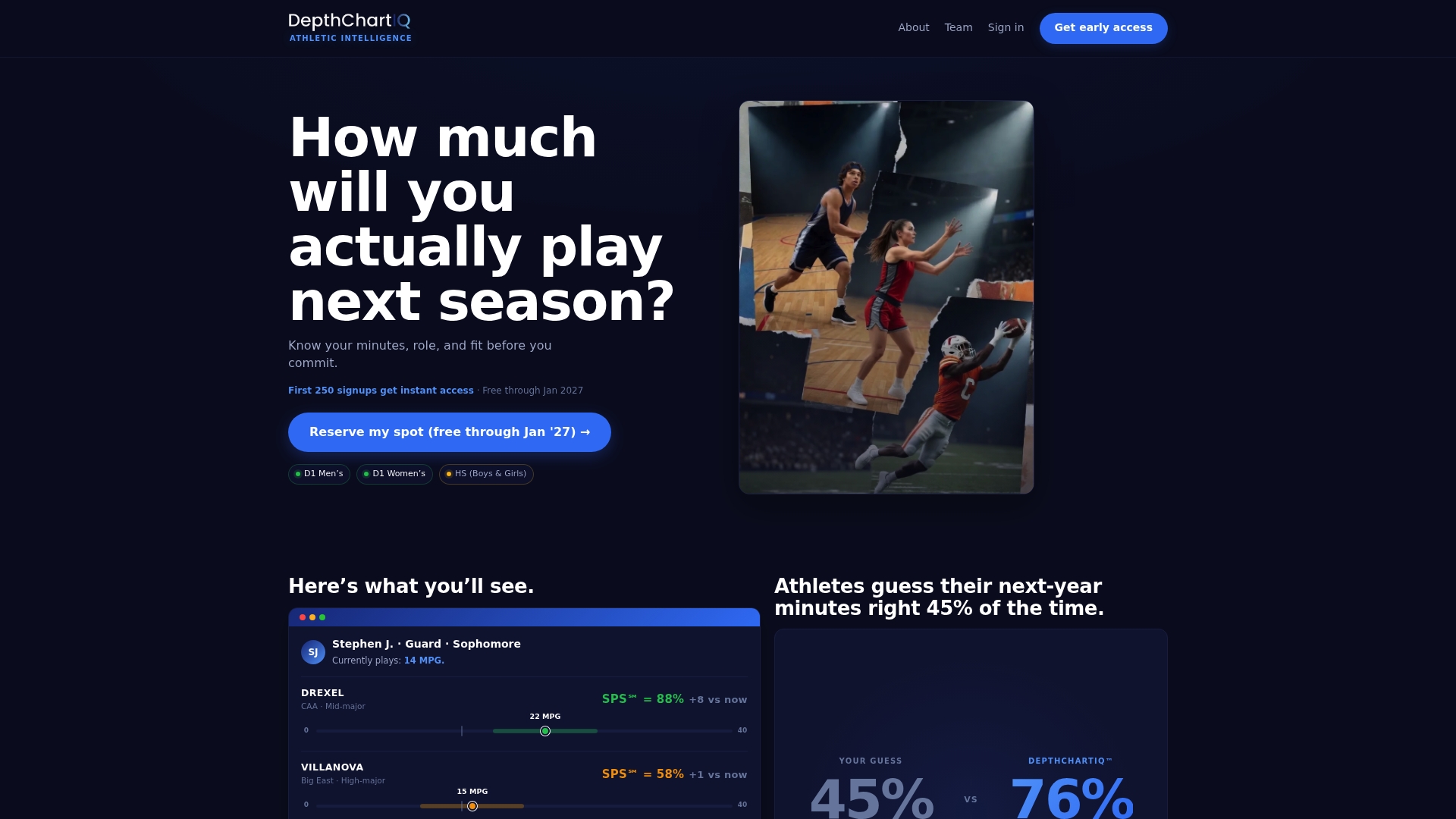
Visit DepthChartIQ Pro to see how your next move might actually play out.
FAQ
What happens if you enter the transfer portal and don’t get picked up?
You can often return to your original program if your scholarship status allows it and your name is withdrawn in time, though this depends on your school’s policies. Many athletes in this position also look at Division II, Division III, or NAIA programs, or use the offseason to prepare for the next transfer window.
Why are so many college players entering the transfer portal?
Research and reporting point to a mix of factors, with mental health and coach or team conflict ranking among the top reasons alongside playing time. High-profile NIL-driven moves get attention, but the available data does not show them as the majority driver behind portal entries.