
How Roster Changes Affect Athlete Opportunities in 2026
Discover how roster changes affect athlete opportunities in 2026. Understand transfers, limits, and eligibility to make smarter decisions.

DepthChartIQ
Athletic Intelligence

How Roster Changes Affect Athlete Opportunities in 2026

Roster changes are the single most powerful force reshaping athlete opportunities in college sports today. Every transfer, scholarship cut, and eligibility rule update directly alters who gets playing time, who earns a scholarship, and who builds a career. The NCAA’s 2026 roster limit enforcement, the explosion of transfer portal activity, and a new age-based eligibility model have combined to create the most fluid roster environment in college sports history. Athletes who understand how roster changes affect athlete opportunities will make smarter decisions about where to play and when to move.
How roster changes affect athlete opportunities right now
Roster changes fall into three categories: NCAA-mandated roster limits, transfer portal movement, and eligibility rule shifts. Each one reshapes the composition of a team and the competition for every spot on it. Understanding all three is the baseline for any athlete or recruit making a college sports decision in 2026.
The NCAA defines a roster change as any addition, removal, or reclassification of an athlete on an official program roster. These changes affect scholarship distribution, depth chart positioning, and long-term development pathways. Coaches, compliance offices, and the NCAA transfer portal are the three main entities that drive these shifts.

Playing time is the most direct casualty of roster instability. When a program adds three transfers at your position, your minutes shrink regardless of your performance. That reality makes roster awareness a survival skill, not just background knowledge.
What do the 2026 NCAA roster limits mean for athletes?
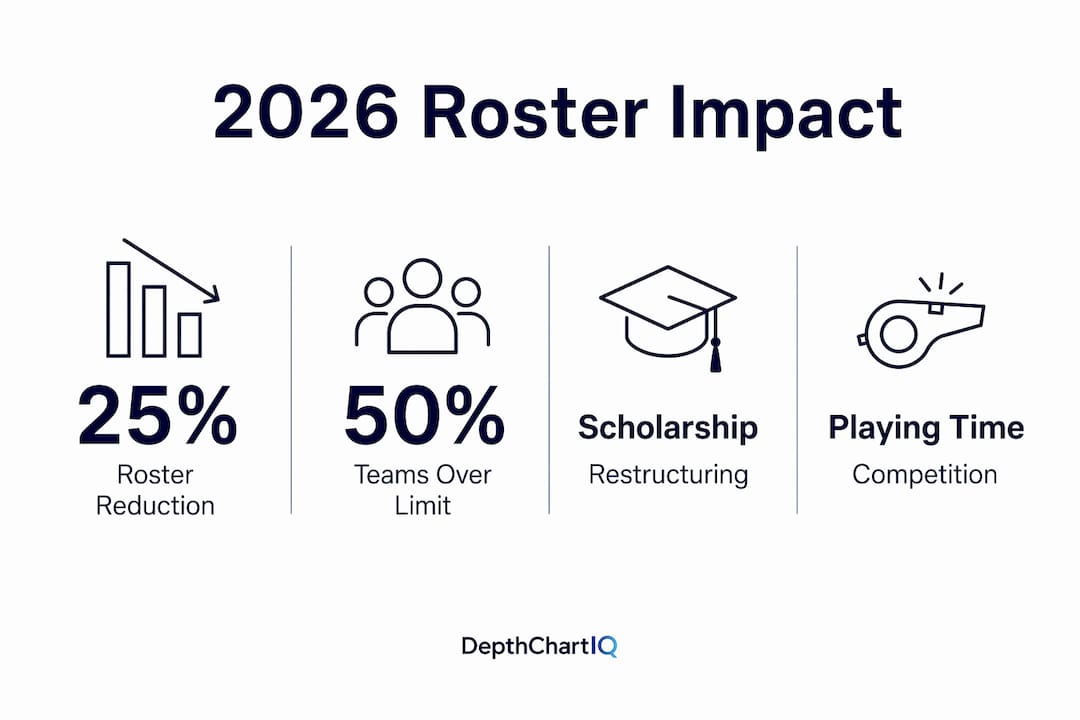
The 2026 NCAA roster limit rules are the most disruptive policy change in a generation. Over 50% of Division I teams currently exceed the new limits, forcing programs to cut athletes before the rules take full effect. That compliance gap translates directly into fewer available spots for incoming recruits and current walk-ons.
The scale of non-compliance is striking. 87% of football programs, 94% of baseball programs, and over 70% of soccer programs exceed the new roster caps, with programs facing roughly 25% roster reductions to comply. A 25% cut on a 100-person football roster means 25 athletes lose their spots.
The effects of roster shifts from these limits fall hardest on two groups:
- Walk-ons lose roster access first, as programs prioritize scholarship athletes when cutting numbers.
- Developmental recruits face longer odds, since coaches under roster pressure favor athletes who can contribute immediately.
The scholarship picture also changes. As roster limits shrink total headcount, programs can redirect scholarship money toward fewer, higher-impact athletes. That sounds positive, but it means fewer total scholarships are available across the roster. High school recruits should ask programs directly how the new limits affect their scholarship offer and roster security.
Pro Tip: Ask your recruiting coordinator for the program’s current roster count versus its 2026 limit. If the gap is large, your spot may be at risk before you ever play a game.
The role of enrollment management in athletics has grown significantly as programs work through these compliance challenges, making it a factor recruits should understand before signing.
How does the transfer portal reshape playing time and team dynamics?
The transfer portal has fundamentally changed how coaches build rosters and how athletes compete for minutes. Big Ten basketball data shows average year-over-year retention of only 35.3% of playing minutes, meaning nearly two-thirds of a team’s production turns over in a single offseason. That level of turnover makes long-term depth chart planning nearly impossible for athletes.
The numbers behind that turnover tell the full story. In one recent Big Ten offseason, 89 players entered the portal while 81 transfers came in versus only 49 new recruits. Coaches are replacing rosters through the portal faster than they recruit out of high school. That shift changes the calculus for every high school prospect evaluating a program.
Coaches favor transfers for a clear reason. Experienced transfers come with game film, physical maturity, and a proven track record, while freshmen recruits carry more uncertainty. Under pressure to win immediately, coaches choose the lower-risk option. That preference directly limits development time for incoming freshmen.
The impact on team dynamics is real and measurable:
- Returning athletes face direct competition from transfers at their exact position.
- Freshmen recruits may redshirt or sit behind portal additions for two or more seasons.
- Team chemistry suffers when rosters turn over at high rates, affecting performance for everyone.
- Athletes at mid-major programs who perform well face a specific risk: success can paradoxically increase transfer likelihood as larger programs with bigger NIL offers come calling.
Pro Tip: Before committing to a program, check how many transfers the coaching staff brought in at your position over the last two years. That number predicts your competition better than any recruiting ranking.
Athletes considering a move should review a transfer decision checklist before entering the portal, since the decision carries real risks alongside the potential rewards.
What do the new NCAA eligibility rules mean for your career?
The NCAA adopted an age-based eligibility model in 2026 that replaces the traditional redshirt system and sport-specific rules. Under the new framework, athletes who enroll within one year of their 19th birthday receive up to five years of eligibility. The old system tied eligibility to sport participation and redshirt decisions. The new system ties it to age at enrollment.
This change has three direct consequences for athletes:
- Redshirt years are eliminated as a standalone tool, removing a common development strategy coaches used to manage roster depth.
- Sport-specific eligibility rules disappear, creating a uniform standard across all Division I sports.
- Waiver requests for remaining eligibility must be submitted by July 31, 2026, meaning athletes with unusual circumstances face a hard deadline.
The five-year window sounds generous, but the elimination of redshirting removes a buffer that once protected developmental athletes. A freshman who previously could redshirt and develop for a year now burns eligibility from day one. Coaches who once used redshirts to manage roster size lose that tool entirely.
For high school recruits, the age-based model rewards early enrollment. Athletes who enroll at 18 maximize their eligibility window. Those who take a gap year or delay enrollment may lose a year of eligibility before they ever practice. That timing decision now carries more weight than it did under the old system.
How do roster shifts affect recruitment, development, and long-term career prospects?
The cumulative effect of roster limits, transfer portal activity, and eligibility changes is a college sports environment that rewards immediate impact over patient development. Programs increasingly build one-year rosters, evaluating every athlete annually for their roster spot rather than committing to multi-year development plans. Athletes who once expected four years to grow into a starting role now face annual auditions.
This shift hits non-revenue sports especially hard. Coaches in non-revenue programs cycle athletes yearly with less willingness to invest in long-term development, since the transfer portal gives them a faster path to experienced players. A swimmer or tennis player who needs two years to reach peak performance may not get that runway at a program under roster pressure.
The recruitment side of the equation has also changed. Coaches now use risk forecasting when evaluating recruits versus transfers. A transfer with two years of college film carries a known quantity. A high school recruit carries projection and uncertainty. That dynamic means high school athletes must arrive more prepared and more physically ready than previous generations.
There is a real upside to the new environment, though. Athletes now exercise unprecedented control over their careers through the transfer portal, NIL deals, and personal branding. An athlete who understands the roster landscape can use the portal proactively to find a better fit rather than waiting for a coach to make the decision for them. NIL has also enabled athletes to build financial platforms and public profiles that exist independently of any single program.
The athletes who thrive in this environment treat their careers as a business. They monitor their depth chart position, track incoming transfers, and make proactive decisions rather than reactive ones. Understanding the real reasons athletes enter the transfer portal helps both recruits and current athletes recognize when a move makes sense versus when it creates more risk than reward.
Key Takeaways
Roster changes directly determine athlete opportunities by controlling playing time, scholarship access, and development pathways, making proactive roster awareness the most important skill an athlete can develop in 2026.
| Point | Details |
|---|---|
| NCAA roster limits cut spots | Over 50% of Division I programs exceed 2026 limits, reducing walk-on and developmental roster spots. |
| Transfer portal drives turnover | Big Ten basketball retention averaged only 35.3% of playing minutes year over year, showing extreme roster fluidity. |
| Age-based eligibility changes timing | Athletes enrolling within one year of their 19th birthday receive up to five years of eligibility under the new model. |
| Coaches favor immediate contributors | Experienced transfers carry less risk than freshmen recruits, limiting development time for incoming players. |
| Athletes hold more career control | The transfer portal and NIL give athletes tools to move proactively and build careers beyond any single program. |
The uncomfortable truth about roster stability in 2026
I have watched athletes and families make college commitments based on a verbal promise of playing time, only to find the roster completely rebuilt by the time they arrive on campus. That gap between expectation and reality is the most preventable mistake in college sports recruiting.
The transfer portal has done something genuinely positive: it gave athletes leverage they never had before. But leverage only works if you use it with information. Entering the portal because you are frustrated is different from entering because you have analyzed the depth chart at three target programs and identified a real opening. The first is reactive. The second is a career decision.
What concerns me most is the developmental athlete in a non-revenue sport. A gymnast or cross-country runner who needs two or three years to peak physically is now competing in a system that evaluates them annually and replaces them with experienced transfers if they do not contribute immediately. That athlete needs to choose their program with extreme care, prioritizing coaches who have a documented history of developing younger athletes rather than cycling through portal additions.
The NIL era has also created a new risk for athletes at smaller programs. Perform well, and a larger program will notice. That visibility is a double-edged sword. It opens doors, but it also means your current program may lose you before you have finished building something there. Athletes and families need to think through that scenario before signing anywhere.
My practical advice: treat your roster spot as a one-year contract, not a four-year guarantee. Monitor your depth chart every offseason. Know who your program is recruiting at your position. And use tools that give you real data on roster pressure and playing time probability before you make any decision.
— John
How DepthchartIQ helps athletes read the roster before it’s too late
Roster decisions made without data are guesses. DepthchartIQ gives athletes and recruits a factual foundation for every transfer and commitment decision.
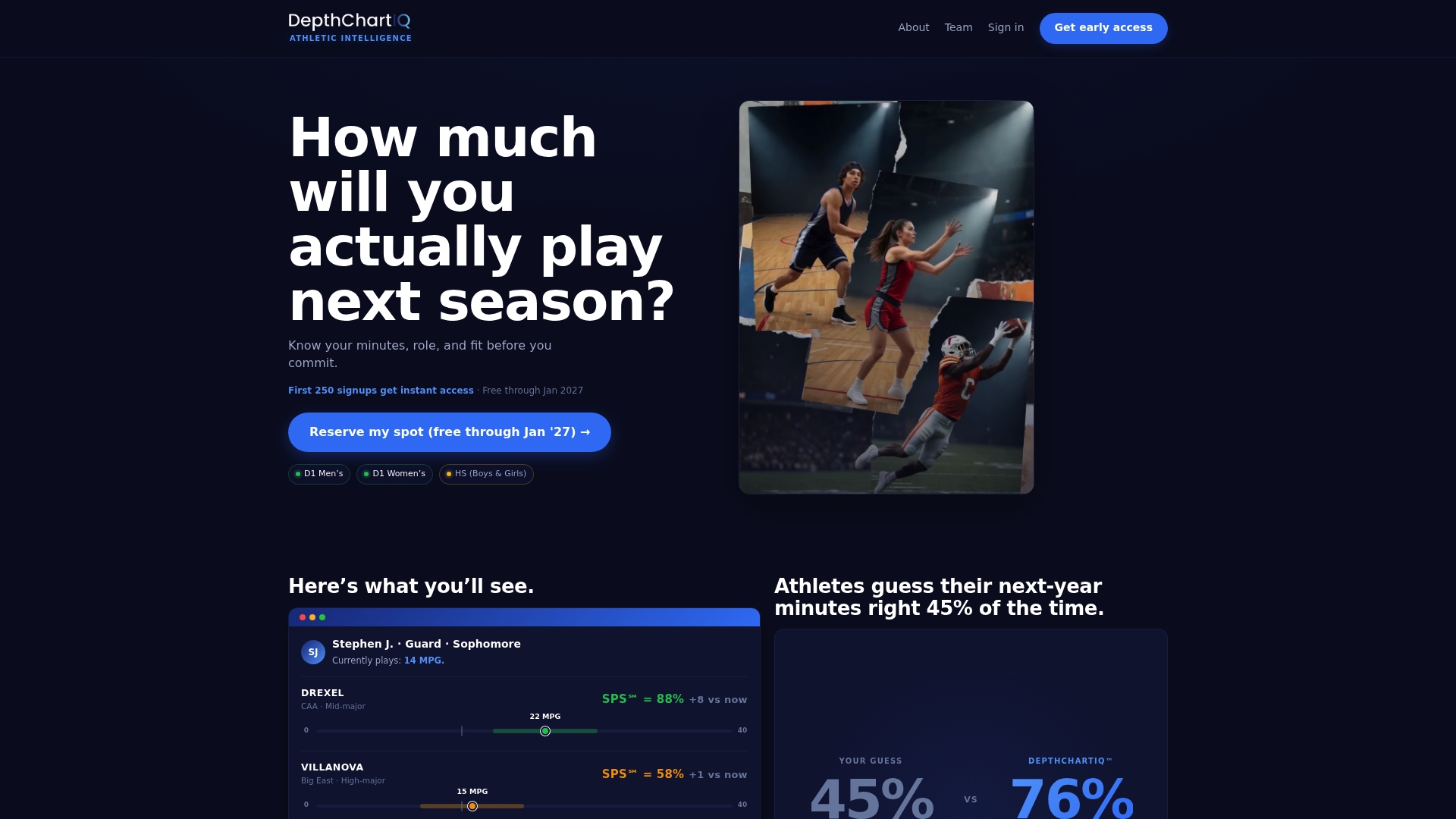
The platform uses advanced metrics and prediction algorithms to generate Success Probability Scores and Roster Pressure insights for athletes evaluating specific programs. With a 76% accuracy rate in predicting player outcomes, DepthchartIQ translates raw roster data into clear signals about where an athlete will actually play. Athletes can see real-time depth chart updates and assess how incoming transfers or roster cuts change their projected playing time. Explore the DepthchartIQ methodology to see exactly how the platform models roster dynamics, or visit DepthchartIQ to start evaluating your options with real data behind every decision.
FAQ
How do roster changes affect playing time for current athletes?
Roster changes directly reduce playing time when coaches add transfers at the same position. Programs building one-year rosters evaluate every athlete annually, meaning a strong offseason portal class can push a returning player down the depth chart regardless of past performance.
Can roster changes benefit athletes looking to transfer?
Yes. When a program loses multiple starters through the portal or graduation, it creates genuine openings that a transfer can fill immediately. Athletes who track depth chart gaps at target programs before entering the portal find significantly better opportunities than those who transfer without that research.
What is the impact of the 2026 NCAA roster limits on scholarships?
The new limits force programs to cut roughly 25% of their rosters in sports like football and baseball. As total headcount drops, scholarship money concentrates among fewer athletes, which can increase individual scholarship value but reduces the total number of athletes receiving aid.
How does the transfer portal affect high school recruits?
Coaches under pressure to win favor experienced transfers over freshmen recruits because transfers carry less performance risk. High school recruits competing for the same roster spots as portal additions face longer development timelines and less guaranteed playing time than previous recruiting classes experienced.
What does the new age-based eligibility model mean for planning?
Athletes who enroll in college within one year of their 19th birthday receive up to five years of eligibility under the 2026 NCAA model. The elimination of redshirt rules means athletes burn eligibility from their first year, making early enrollment and program fit more critical decisions than ever before.