
Summer Workouts and Roster Standing: What Athletes Must Know
Discover the role of summer workouts in roster standing. Learn how coaches evaluate athletes during this key period to shape team dynamics.

DepthChartIQ
Athletic Intelligence
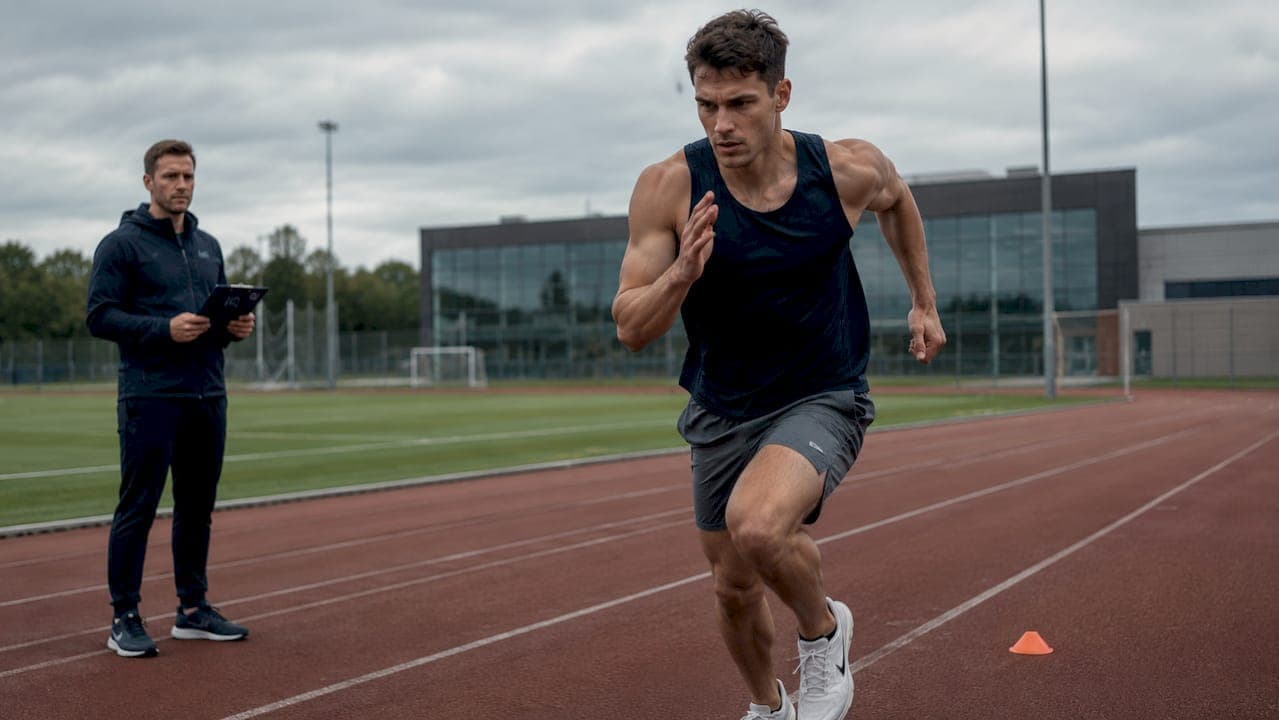
Summer Workouts and Roster Standing: What Athletes Must Know
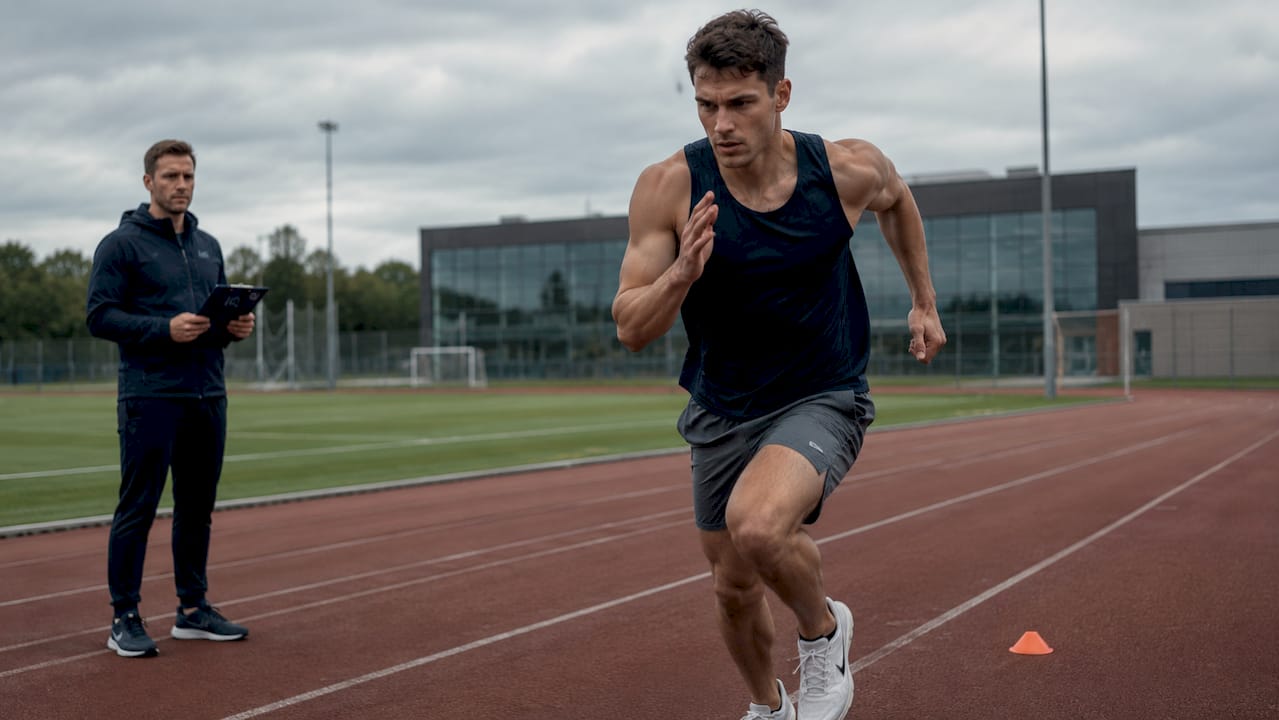
Summer workouts are the single most decisive evaluation period coaches use to set roster standing before a season begins. The role of summer workouts in roster standing goes far beyond fitness. Coaches watch how athletes absorb new systems, respond to corrections, and compete against teammates for spots. College basketball programs explicitly state that summer observations shape rotation decisions for opening day. Athletes who treat summer as optional lose ground to those who treat it as a competition.
How do coaches use summer workouts to decide roster spots?
Summer workouts give coaches something the regular season never can: uninterrupted time to watch athletes without the pressure of a scoreboard. Summer is an eight-week window where programs install systems, build chemistry, and evaluate every player on the roster. That evaluation directly influences who starts in November and who watches from the bench.
Coaches focus on three things during summer sessions:
- Physical readiness. Athletes who arrive in shape show they prepared on their own time. That signals discipline and self-motivation, two traits coaches value above raw talent.
- Skill development. Coaches track whether an athlete has improved since last season or since their recruitment visit. Stagnation is a red flag.
- Positional fit. Summer is when coaches test players in different roles and rotations. An athlete who can fill multiple positions becomes far more valuable to a roster.
The impact of summer training on team selection is especially sharp for programs dealing with roster turnover. Coach Mark Madsen has pointed out that player movement in college sports makes summer the critical window for new players to prove they belong and for returning players to defend their spots. That context matters because rosters now shift faster than ever through the transfer portal.
“Summer workouts have become a critical audition period where coaches assess not only current skill but potential for growth and integration into team systems.”
The word “audition” is the right frame. Every rep, every sprint, and every drill response is data that coaches store and use when they finalize depth charts.
Pro Tip: Keep a personal log of every summer workout session. Note what coaches corrected, what you improved, and what still needs work. Athletes who track their own progress show self-awareness, and coaches notice that.
What physical gains does summer training actually deliver?
The off-season is the only time an athlete can make real physical gains. In-season training maintains current fitness levels. It does not build them. That distinction is the foundation of every serious off-season development plan.
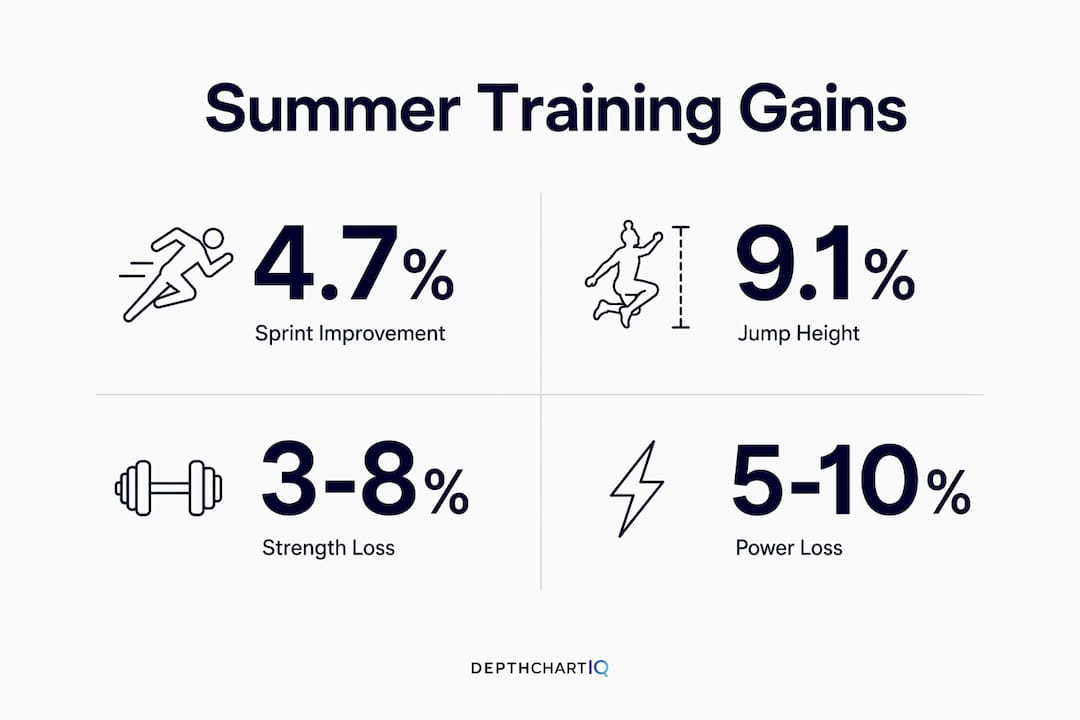
The numbers back this up clearly. Athletes following structured off-season resistance training can improve sprint times by 4.7% and jump height by 9.1%. Those are not marginal gains. A 4.7% improvement in a 10-meter sprint is the difference between beating a defender off the line and getting stopped.
The risk of skipping summer training is equally measurable. Athletes can lose 3–8% maximal strength and 5–10% peak power within just 4–6 weeks without resistance training. That means an athlete who coasts through june and july arrives at preseason weaker than they finished the previous season. Coaches see that regression immediately.
| Physical Quality | Off-season gain (structured training) | Loss without training (4–6 weeks) |
|---|---|---|
| Sprint speed (10m) | Up to 4.7% improvement | Measurable regression |
| Jump height | Up to 9.1% improvement | Measurable regression |
| Maximal strength | Significant gains possible | 3–8% loss |
| Peak power | Significant gains possible | 5–10% loss |
Performance experts advise treating the off-season as a foundation window for progressive overload and movement correction. That means building training load gradually across the summer rather than going all-out from day one. Athletes who peak too early in june burn out before preseason starts in august.
Pro Tip: Schedule a deload week every third or fourth week of summer training. Reduce volume by 40% and focus on mobility and recovery. You will come back stronger the following week and avoid the overuse injuries that sideline athletes right before camp.
How do coachability and team chemistry affect roster decisions?
Physical fitness gets you in the room. Coachability determines whether you stay. Accepting and applying corrections is one of the most valued traits coaches look for during summer workouts. An athlete who argues with feedback or repeats the same mistake signals a ceiling. An athlete who adjusts quickly signals potential.
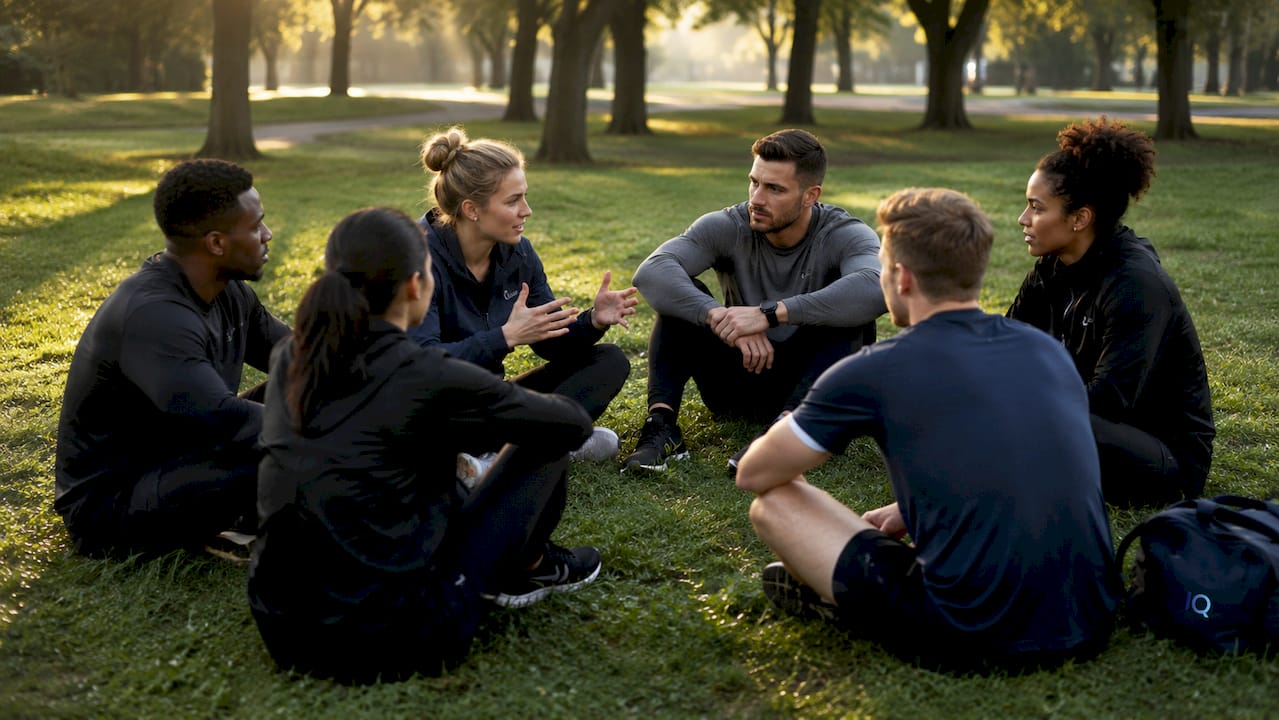
Team chemistry is harder to measure than sprint speed, but coaches weigh it just as heavily. Summer is when new players integrate into existing group dynamics. How an athlete communicates during drills, supports teammates during conditioning, and handles frustration under fatigue all feed into a coach’s overall picture of that player.
Showing progress and responsiveness during summer workouts signals long-term role potential beyond raw talent alone. A highly talented athlete who resists coaching is a liability. A slightly less talented athlete who improves week over week and fits the team culture is an asset. Coaches build rosters around assets.
Specific habits that register with coaching staff during summer include:
- Arriving early and staying late without being asked.
- Asking clarifying questions after receiving feedback, not before.
- Competing hard in every drill, including the ones that do not seem important.
- Supporting teammates publicly during conditioning tests.
These behaviors are visible during summer in ways they are not during a regular season game, where adrenaline and crowd noise mask a lot. Summer strips everything down to baseline character.
What summer workout strategies actually move the needle on roster spots?
Athletes who improve their roster standing through summer training follow a structure. They do not just show up and work hard. They plan the summer the same way a coach plans a season. Understanding how roster changes affect opportunities is the first step in building a plan that targets the right areas.
A practical summer training structure for high school and college athletes looks like this:
- Weeks 1–3: Baseline testing and foundation building. Run fitness tests at the start. Record your sprint times, vertical jump, and strength numbers. These benchmarks tell you where you are and give you targets to hit by preseason.
- Weeks 4–6: Progressive overload phase. Increase training volume and intensity week over week. Focus on the physical qualities most relevant to your sport and position. A point guard prioritizes lateral quickness and first-step speed. A linebacker prioritizes power and contact endurance.
- Weeks 7–8: Sport-specific conditioning. Shift from general strength work to movements that mirror game situations. This is where technical skill sessions combine with physical training to build competitive readiness.
- Deload weeks (every 3–4 weeks). Reduce volume intentionally. Recovery is not optional. It is when adaptation actually happens.
- Retest at the end. Compare your final numbers to your baseline. Documented improvement is something you can show a coach directly.
Athletes who enter preseason fitter and stronger from summer training outperform those who try to build fitness during compressed preseason periods. Preseason is too short and too intense to fix a summer of neglect. The athletes who use summer well arrive ready to compete on day one, and coaches remember who showed up ready.
Pro Tip: Use a simple spreadsheet to track your weekly training load, sleep hours, and soreness level. Patterns in that data will tell you when to push and when to back off before your body forces the decision.
Key Takeaways
Summer training is the most important period for building the physical base, team integration, and coachability that coaches use to finalize roster spots before the season starts.
| Point | Details |
|---|---|
| Summer is an evaluation period | Coaches use summer observations to set opening day rotations and depth charts. |
| Physical gains are only possible off-season | Structured summer training can improve sprint speed by 4.7% and jump height by 9.1%. |
| Skipping training causes regression | Athletes lose 3–8% maximal strength within 4–6 weeks without resistance work. |
| Coachability outweighs raw talent | Athletes who accept and apply corrections signal long-term roster value to coaches. |
| Structure beats effort alone | Periodized summer plans with baseline testing and deload weeks produce the best preseason results. |
Why summer training matters more now than it ever did
Roster turnover has accelerated faster than most athletes realize. The transfer portal means a program can add three new players in june and lose two veterans in the same week. That volatility compresses the timeline coaches have to evaluate who fits and who does not. Summer workouts are now the primary sorting mechanism.
What I have seen consistently is that athletes underestimate how much coaches decide during summer and overestimate how much they can recover during preseason. By the time fall camp starts, most coaches already know their top eight or nine. The remaining spots go to athletes who made a strong case in june and july, not athletes who peaked in week two of camp.
The other thing athletes miss is that coachability is evaluated just as seriously as athleticism during summer. I have watched talented players lose roster spots to less physically gifted teammates because they could not take feedback without getting defensive. Coaches are building a team for a full season. They need players who grow, not players who resist.
Comparing programs for athlete development is useful, but the real work happens in the gym and on the court during summer. No amount of program research replaces the impression you make when a coach watches you compete every day for eight weeks.
Summer is not preparation for the audition. Summer is the audition.
— John
DepthchartIQ gives athletes a clearer picture of where they stand
Understanding your roster position requires more than gut feeling. DepthchartIQ uses advanced metrics and prediction algorithms to give athletes a data-driven view of their playing time potential based on real roster dynamics.

The platform’s Success Probability Scores and Roster Pressure insights show athletes exactly where they stand relative to teammates and incoming recruits. That context makes summer training decisions sharper. When you know which position is under pressure, you know where to focus your off-season work. DepthchartIQ reports a 76% accuracy rate in predicting player outcomes, which means the insights athletes use to plan their summer are grounded in real data, not guesswork. Athletes who want a clearer picture of their roster standing can start at depthchartiq.ai.
FAQ
How do summer workouts affect roster standing?
Summer workouts give coaches an extended evaluation window to assess fitness, skill development, and coachability before the season starts. Programs explicitly use summer observations to set opening day rotations and depth chart positions.
What physical gains can athletes expect from summer training?
Structured off-season resistance training can improve 10-meter sprint times by 4.7% and jump height by 9.1%. These gains are only achievable during the off-season, since in-season training primarily maintains existing fitness levels.
What happens if an athlete skips summer workouts?
Athletes can lose 3–8% maximal strength and 5–10% peak power within 4–6 weeks without resistance training. Arriving at preseason weaker than the previous season is a clear signal to coaches that an athlete did not prioritize their development.
What do coaches look for beyond physical fitness in summer workouts?
Coachability is one of the most valued traits coaches assess during summer. Athletes who accept corrections, apply feedback quickly, and integrate well with teammates signal long-term roster value beyond raw athletic ability.
How should athletes structure their summer training program?
Athletes should periodize summer training across three phases: foundation building with baseline testing, progressive overload, and sport-specific conditioning. Planned deload weeks every 3–4 weeks prevent burnout and allow the body to adapt before preseason begins.