
Signs an Athlete Has Outgrown Their Current Program
Discover key signs an athlete has outgrown their current program. Learn to identify performance drops, injury risks, and more for better growth.

DepthChartIQ
Athletic Intelligence
Signs an Athlete Has Outgrown Their Current Program
An athlete program mismatch is defined as a gap between what a training program demands and what an athlete is actually capable of, or has already surpassed. Recognizing the signs an athlete has outgrown their current program is the difference between continued growth and a career stuck in neutral. The clearest indicators are measurable: a sustained performance drop, rising injury risk from a Readiness-Capacity Mismatch, and mental disengagement that shows up before any physical symptom does. Athletes who catch these signals early protect both their bodies and their career trajectories.
1. Signs an athlete has outgrown their current program: performance drops
Performance decline is the most objective signal of a training mismatch. A sustained 30% drop in output over multiple weeks is a primary red flag that the program is no longer calibrated to the athlete’s needs. Day-to-day fluctuations are normal. A multi-week downward trend is not.
The key distinction is trend versus noise. One bad practice session means nothing. Four consecutive weeks of declining sprint times, reduced lift numbers, or lower game output means the program has stopped working. Coaches and athletes who track session RPE (Rate of Perceived Exertion) alongside objective output catch this pattern faster than those relying on gut feel alone.
- Declining output across multiple weeks: Strength, speed, or skill metrics falling consistently over a 4–6 week window.
- Rising session RPE: The same workload feels harder week over week, signaling the body is not recovering or adapting.
- Motivation loss: Dreading practice, skipping optional sessions, or going through the motions without engagement.
- Stalled personal records: No new bests in 8–12 weeks despite consistent attendance and effort.
Pro Tip: Log RPE scores after every session using a simple 1–10 scale. If your average RPE climbs more than two points over four weeks without a corresponding increase in training load, flag it immediately.
2. How biomechanical and physiological mismatches signal the need for change

Physical readiness has two layers that rarely develop at the same pace: physiological capacity and biomechanical load tolerance. When these two fall out of sync, injury risk spikes. Adolescent athletes with a Readiness-Capacity Mismatch show a 48% injury rate compared to 31% for those whose physiological and biomechanical readiness align. That 17-point gap is not a rounding error. It is a structural warning.
The problem runs deeper than most standard testing reveals. 20.8% of athletes who pass standard physiological readiness tests still fail biomechanical screening. Physiology-based pass/fail models miss a significant portion of at-risk athletes entirely. A program that does not account for biomechanical readiness is flying blind on injury prevention.
| Readiness Type | Injury Rate | Key Risk Factor |
|---|---|---|
| Physiologically and biomechanically aligned | 31% | Baseline |
| Readiness-Capacity Mismatch present | 48% | Load exceeds biomechanical tolerance |
| Passed physiology, failed biomechanics | Higher than aligned group | Screening gap |
Athletes who are gaining strength and cardiovascular fitness faster than their joints and connective tissue can adapt are the most vulnerable. This is common in rapid growth phases for adolescent athletes and in collegiate athletes who add significant muscle mass in an offseason. If a program does not include regular biomechanical screening alongside physiological testing, it is missing a critical piece of the injury prevention picture.
3. Mental and motivational signs that point to outgrowing a program
Mental disengagement arrives before physical burnout in most cases. Loss of sustained attention by more than 23 minutes is an early burnout signal, often appearing before any physical symptom surfaces. For athletes, this shows up as brain fog during film sessions, inability to retain play calls, and dropped academic performance alongside athletic decline.
“Change done to people, not with them, leads to burnout, mistrust, stalled performance, and disengagement. When athletes have no voice in how their program evolves, they stop investing in it mentally long before they stop showing up physically.” Change Fatigue Research
Silent disengagement is the most dangerous form of mental mismatch. The athlete still attends practice. They still complete reps. But the internal commitment is gone. 73% of organizations experiencing change saturation report this pattern of performance plateaus paired with quiet resistance. In athletic programs, it looks like an athlete who stops asking questions, stops competing for reps, and stops caring about outcomes.
Watch for these mental and motivational warning signs:
- Increased excuses: Finding reasons to miss optional work, reduce effort, or avoid accountability.
- Lost spark: No visible excitement before competition or practice.
- Cognitive fatigue: Difficulty focusing during film, walkthroughs, or team meetings.
- Emotional flatness: Neither wins nor losses produce a strong emotional response.
4. How program culture and mentorship signal a growth ceiling
A program can look functional on paper while quietly capping an athlete’s development. Mentorship stagnation is one of the clearest signs of a developmental ceiling. When coaches stop pushing an athlete technically, stop offering individualized feedback, and start relying on that athlete to carry disproportionate team responsibility, the program has stopped serving the athlete’s growth.
The “bus factor” is a useful concept here. If a program’s quality depends entirely on one athlete carrying the load, that athlete is no longer being developed. They are being used. A healthy program distributes challenge and responsibility in ways that stretch every athlete, not just the most capable one.
Evaluate your program’s culture with these questions:
- Does your coach give you individualized feedback regularly? Generic corrections applied to the whole team signal a lack of personalized development.
- Are you being challenged technically? If you have not learned a new skill, concept, or technique in the past two months, the program has stopped pushing you.
- Do you carry disproportionate team responsibility? Being the athlete others rely on is not the same as being developed.
- Is there a clear path to the next level? Programs that cannot articulate how they will help you reach your next goal have a capped ceiling.
Evaluating program fit for your goals requires looking at culture and mentorship quality alongside performance metrics. Both matter equally.
5. Comparing signs of program mismatch and what to do next
Generic training programs fail intermediate athletes because they ignore individual recovery rates and unique physiology. Athletes who plateau are not lacking effort. They are lacking a program built for where they actually are in their development. Recognizing which category of mismatch applies to you determines the right next step.
| Sign Category | Specific Indicator | Recommended Next Step |
|---|---|---|
| Physical | 30%+ performance drop over 4+ weeks | Request program audit; adjust load and recovery |
| Physical | Pain lasting more than 48–72 hours, localized joint pain | Seek biomechanical screening immediately |
| Mental | Cognitive fatigue, brain fog, lost focus | Monitor for 2 weeks; if persistent, escalate to coach |
| Mental | Silent disengagement, emotional flatness | Initiate direct conversation with coaching staff |
| Cultural | Mentorship stagnation, no technical growth | Evaluate alternative programs with stronger development track records |
| Cultural | Carrying disproportionate team responsibility | Set boundaries; assess whether the program serves your goals |
The monitoring period before making a transition decision matters. Physical signs that persist beyond 5 weeks without program adjustment warrant a serious conversation about change. Mental and cultural signs that persist beyond 8 weeks without acknowledgment from coaching staff signal that the program is unlikely to self-correct. At that point, comparing programs for athlete development becomes a necessary step, not an optional one.
Pro Tip: Keep a two-week log of physical output, RPE scores, and one sentence describing your mental state after each session. Patterns become undeniable when they are written down.
Key takeaways
Athletes who recognize program mismatch early, using physical, mental, and cultural indicators, protect their development and reduce injury risk before the damage compounds.
| Point | Details |
|---|---|
| Performance drop threshold | A 30%+ decline over multiple weeks signals a programming mismatch requiring intervention. |
| Biomechanical screening gap | 20.8% of athletes pass physiology tests but fail biomechanical readiness, raising injury risk to 48%. |
| Mental signs arrive first | Cognitive fatigue and disengagement appear before physical burnout; track both simultaneously. |
| Culture and mentorship matter | Mentorship stagnation and lack of technical challenge indicate a capped developmental ceiling. |
| Act within a defined window | Physical signs persisting beyond 5 weeks and cultural signs beyond 8 weeks warrant a program change. |
What I’ve learned about athletes who wait too long to make a move
The athletes I have seen struggle most are not the ones who made the wrong decision. They are the ones who waited too long to make any decision at all. They kept hoping the program would adjust, the coach would notice, or the plateau would break on its own. It rarely does.
The hardest part of recognizing you have outgrown a program is that it can feel like disloyalty. You have relationships there. You know the system. Leaving feels like admitting something went wrong. But outgrowing a program is not a failure. It is evidence that you developed. The program served its purpose and now you need a bigger one.
The athletes who thrive long-term are the ones who treat their development as their own responsibility. They track their numbers. They notice when the mental engagement drops. They have the uncomfortable conversation with their coach before the situation becomes a crisis. And when the data points clearly toward a change, they act on it. Advocating for your own growth is not arrogance. It is the job.
— John
DepthchartIQ gives athletes the data to make confident program decisions
Knowing the signs is one thing. Having the data to act on them is another. DepthchartIQ uses advanced metrics and prediction algorithms to give athletes a clear picture of where they stand, where they fit, and where they have the best chance to develop and play.
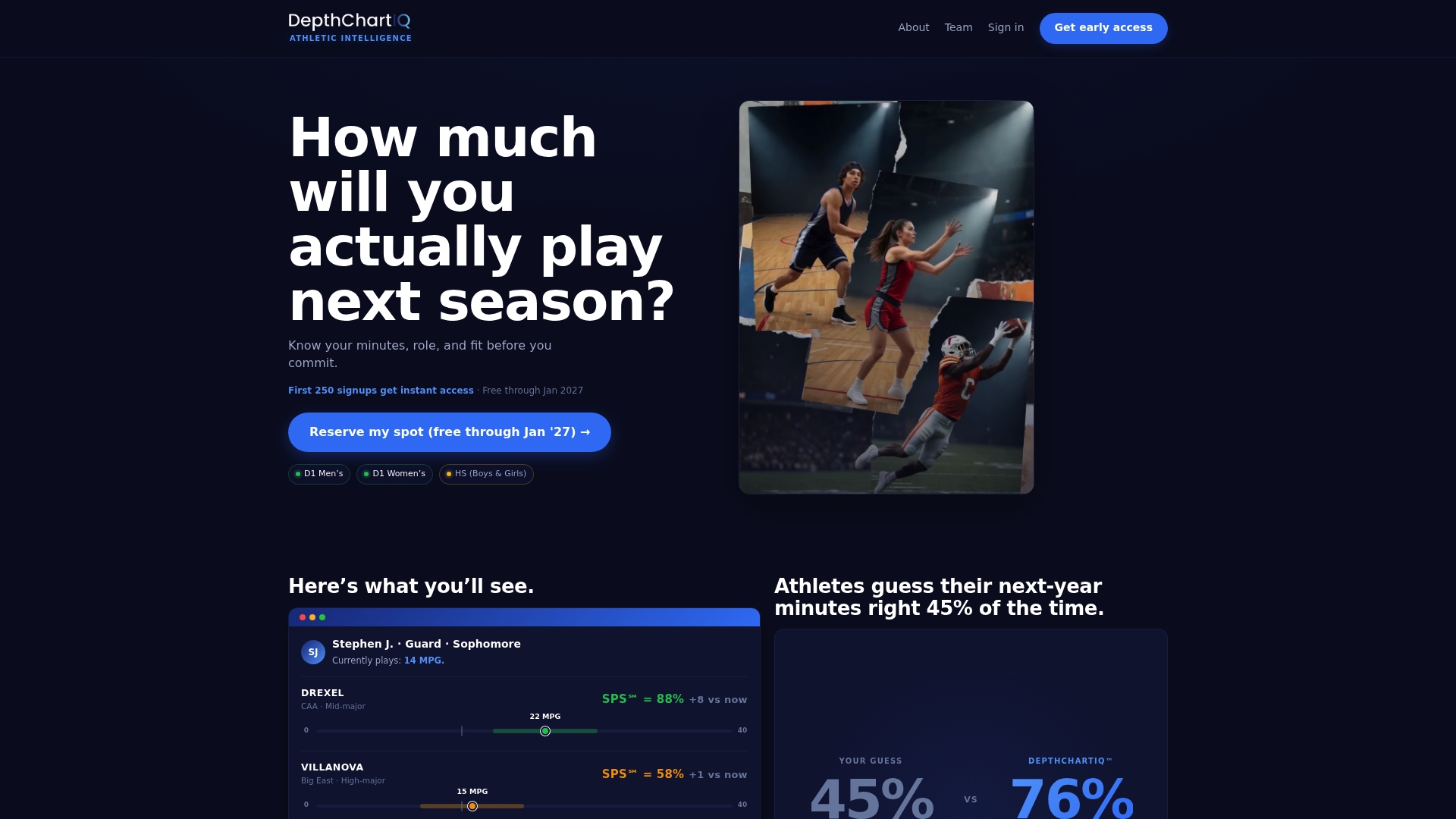
For collegiate athletes weighing a transfer and high school prospects evaluating program fit, DepthchartIQ’s Success Probability Scores and Roster Pressure insights cut through the guesswork. The platform’s 76% accuracy rate in predicting player outcomes means athletes make decisions based on real data, not assumptions. When the signs point toward a change, DepthchartIQ helps you find the right next program with confidence.
FAQ
What is a Readiness-Capacity Mismatch in athletes?
A Readiness-Capacity Mismatch occurs when an athlete’s physiological fitness outpaces their biomechanical load tolerance, or vice versa. Athletes in this state carry a 48% injury rate compared to 31% for those whose readiness levels align.
How long should a performance drop last before changing programs?
A performance drop lasting more than 4–5 consecutive weeks without program adjustment is a clear signal that intervention is needed. Day-to-day variation is normal; a sustained multi-week trend is not.
Can mental fatigue signal that an athlete has outgrown their training regimen?
Yes. Loss of focus lasting more than 23 minutes of sustained attention, brain fog, and emotional flatness are early burnout signals that often precede physical symptoms. These mental signs warrant the same attention as physical performance data.
What is the difference between program fatigue and athlete burnout?
Program fatigue means the training plan no longer matches the athlete’s capacity or needs. Athlete burnout is a deeper psychological and physical exhaustion. Changing programs often resolves program fatigue; burnout typically requires rest and broader recovery before any program change.
When should an athlete consider transferring to a new college program?
An athlete should seriously evaluate a transfer when physical performance has declined for more than 5 weeks without coaching adjustment, mental disengagement has persisted for 8 or more weeks, and the program shows no clear path to the athlete’s next developmental goal.