
How Athletic Department Data Integration Works
Discover how athletic department data integration works to unify performance, financial, and recruitment data for better decision-making. Enhance your...

DepthChartIQ
Athletic Intelligence

How Athletic Department Data Integration Works

Athletic department data integration is the process of unifying performance, compliance, financial, and recruitment data into one governed platform that gives coaches and administrators a consistent, real-time view of every athlete. Understanding how athletic department data integration works is no longer optional for programs that want to compete at the highest level. Departments that still rely on disconnected spreadsheets and siloed systems spend more time chasing data than using it. Unified platforms create a single source of truth by syncing data automatically across systems, reducing manual entry and improving consistency across every department.
How athletic department data integration works: the core model
Data integration in sports is the technical discipline of connecting separate data systems so they share information automatically and consistently. The industry term for the underlying architecture is a unified data layer, a governed execution environment that sits on top of existing tools and standardizes how data flows between them. Athletic departments deal with dozens of data sources at once, from GPS wearables to compliance databases, and without a unifying layer, each system speaks a different language.
The core model works in three steps. First, data from each source feeds into a central repository through automated connections, often called APIs. Second, a governance layer applies consistent metric definitions so that “sprint speed” means the same thing in the strength coach’s system as it does in the medical staff’s system. Third, role-based permissions control who sees what, so a recruiting coordinator sees prospect profiles while the athletic trainer sees injury risk scores without accessing raw medical records.

Performance analysts can query combined data without needing data engineers or manual spreadsheets. That capability alone removes a significant bottleneck in most athletic departments. The result is faster decisions grounded in consistent, trustworthy numbers.
What systems and data sources does an athletic department integrate?
Most collegiate athletic departments draw from a wider range of data sources than coaches realize. The full picture includes:
- Performance wearables: GPS trackers, heart rate monitors, and accelerometers that capture load, speed, and recovery metrics during practice and games
- Strength and conditioning logs: Lift volumes, velocity-based training outputs, and readiness scores from daily monitoring
- Nutrition and hydration tracking: Dietary intake records and body composition data from sports dietitians
- Medical and injury records: Treatment histories, return-to-play timelines, and injury risk flags from athletic trainers and team physicians
- Compliance and eligibility databases: NCAA eligibility certifications, transfer portal status, and academic standing records
- Recruiting and prospect profiles: Contact logs, visit records, offer histories, and evaluation scores from recruiting coordinators
- Financial data: Scholarship allocations, roster budget projections, and NIL-related financial records
- Fan engagement and ticketing data: Attendance patterns and donor activity that inform program-level budget decisions
Siloed data causes real inefficiencies. When a recruit’s academic standing lives in one system, their athletic evaluation in another, and their financial aid eligibility in a third, coordinators spend hours reconciling records manually. Top athletic departments use unified data models to update recruit profiles across nutrition, strength, and financial systems automatically. That automation is where the time savings become measurable.
Pro Tip: Map every data source your department currently uses before selecting an integration platform. Departments that skip this audit often discover duplicate systems or conflicting metric definitions after implementation, which creates more work, not less.
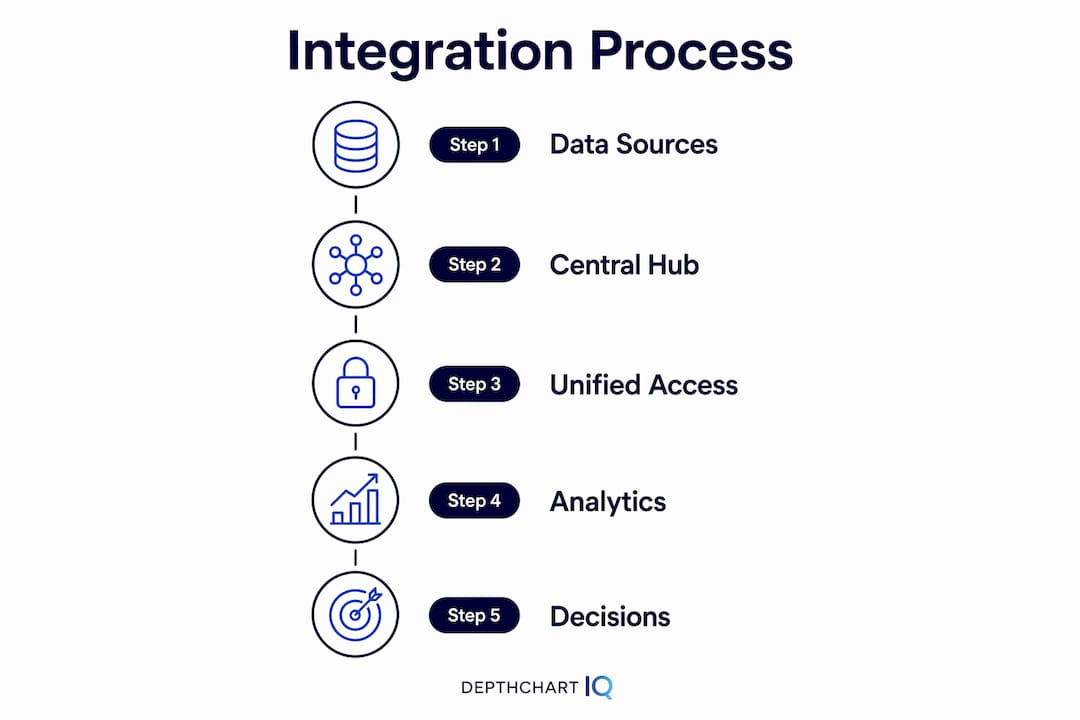
How do athletic departments achieve data integration technically?
The technical side of athletic data management follows a clear sequence. Departments that succeed treat integration as a governance process first and a technology project second.
- Audit existing systems. Catalog every tool, database, and spreadsheet currently in use. Identify which systems hold authoritative data and which are redundant.
- Define a data governance plan. NCAA 2026 recommendations require formal data management plans that define data ownership, storage locations, access authority, and permission levels before any integration begins.
- Assign role-based access. Tiered access levels should be assigned to roles including head coaches, sports scientists, medical staff, and administrators. A head coach needs performance summaries. A team physician needs clinical detail. Neither needs access to the other’s full dataset.
- Deploy a unified data layer. Rather than replacing legacy systems, most departments overlay a governed execution layer that connects existing tools. This approach unifies datasets and standardizes metric definitions without requiring a full system overhaul.
- Enable natural language querying. Modern integration platforms allow staff to ask questions in plain English and receive consistent answers drawn from the unified dataset. No SQL knowledge required.
- Validate and monitor. Run parallel checks between the old manual process and the new integrated system for the first 60–90 days to catch discrepancies early.
Architectural role-based access controls allow selective data sharing, such as sharing injury risk scores without exposing raw medical records. This is the technical feature that makes medical and performance data integration both safe and practical.
Pro Tip: Avoid building custom integration solutions from scratch unless your department employs dedicated data engineers. Off-the-shelf platforms with built-in governance frameworks cost less and deploy faster than custom builds, and they carry far fewer long-term maintenance risks.
What are the benefits of data integration for player management and recruitment?
The benefits of data integration show up fastest in two areas: daily player management and long-term recruitment decisions. When athlete profiles update automatically across nutrition, compliance, and performance systems, coaches and administrators stop spending time on data reconciliation and start spending it on decisions.
Integrating financial, performance, and fan data accelerates decision-making, allowing reports that once took hours or days to generate in minutes. That speed matters most during recruiting windows and roster management cycles when timing directly affects outcomes.
Kentucky Athletics built its BLUEprint database to centralize performance, financial, and personnel data for exactly this reason. The platform gives front-office staff concise, current insights for roster value assessments and budget decisions in real time. That is the practical outcome of integrating sports performance data at the program level.
| Benefit area | What integration delivers |
|---|---|
| Player management | Athlete profiles update automatically across all systems, reducing manual entry errors |
| Recruitment | Prospect data syncs across evaluation, compliance, and financial aid records for faster decisions |
| Compliance | Clear data ownership and tiered access reduce NCAA eligibility risk and audit exposure |
| Staff efficiency | Integrated platforms allow staff to focus on core roles rather than manual data work |
| Reporting speed | Cross-department reports generate in minutes instead of hours |
The compliance benefit deserves specific attention. When data ownership is clearly defined and access is tiered by role, departments reduce the risk of unauthorized data sharing and strengthen their position during NCAA audits. That governance structure is not just a technical feature. It is a compliance asset.
What challenges should athletic administrators know about?
Data integration in collegiate athletics fails most often for organizational reasons, not technical ones. The pitfalls are predictable, and most are avoidable with the right preparation.
- No written governance plan. Failing to establish official written data governance plans is the single biggest pitfall in sports data integration. Without documented ownership and access policies, departments end up with conflicting data views and no clear authority to resolve disputes.
- Inconsistent metric definitions. When the strength staff and the performance analysts define “training load” differently, integrated data produces contradictory reports. Standardizing definitions before connecting systems prevents this problem entirely.
- Building custom solutions without expertise. Custom-built integrations require ongoing data engineering support. Most athletic departments do not have that capacity in-house, and the maintenance burden grows over time.
- Skipping staff training. A platform that staff do not trust or understand will not be used. Adoption requires training, clear communication about what the system does, and visible support from department leadership.
- Treating integration as a one-time project. Data sources change. New wearables get added. Compliance rules update. Integration requires ongoing governance reviews, not a single implementation.
The largest value of integration platforms lies in consistent, governed metrics and the elimination of conflicting data views. Departments that invest in governance upfront spend far less time troubleshooting data quality problems later. The role of data in athletic decision-making only grows as programs add more data sources, which makes early governance investment compound in value over time.
Key Takeaways
Athletic department data integration works by connecting disparate systems through a governed data layer that enforces consistent metrics, role-based access, and automated synchronization across performance, compliance, recruitment, and financial data.
| Point | Details |
|---|---|
| Governance comes first | Write formal data ownership and access plans before connecting any systems or devices. |
| Role-based access is non-negotiable | Assign tiered permissions by role so medical, coaching, and administrative staff each see only what they need. |
| Unified layers beat full replacements | Overlay a governed data layer on existing tools rather than replacing legacy systems entirely. |
| Integration speeds up recruitment | Automatic profile syncing across compliance, evaluation, and financial systems accelerates recruiting decisions. |
| Adoption requires training | Staff must understand and trust the platform for integration to deliver real operational value. |
What I’ve learned from watching departments get this wrong
Athletic departments that struggle with data integration almost always make the same mistake. They buy a platform before they define a governance model. The technology is not the hard part. The hard part is getting the strength coach, the athletic trainer, the compliance officer, and the recruiting coordinator to agree on what a single metric means and who owns it.
I’ve watched programs spend significant budget on integration tools only to end up with three versions of the same athlete’s readiness score, each from a different system, each telling a different story. That is not an integration problem. That is a governance problem that technology cannot fix on its own.
The departments that get this right treat the governance plan as the product. The platform is just the delivery mechanism. They write down who owns each data type, who can see it, and what happens when two systems disagree. They do that work before they connect a single API. The NCAA 2026 data management guidelines push programs in exactly this direction, and the departments that were already there will have a clear advantage.
The other thing I’d emphasize is culture. Integration frees staff to do higher-level work, but only if they believe the data is trustworthy. That trust is built through transparency, training, and leadership that visibly uses the integrated data in real decisions. When a head coach pulls up an integrated report in a staff meeting instead of asking an analyst to compile one manually, the whole department’s relationship with data changes.
— John
DepthchartIQ’s approach to athletic data integration
Athletic administrators and coaches who want to put integrated data to work in recruitment and roster management have a direct path forward with DepthchartIQ.
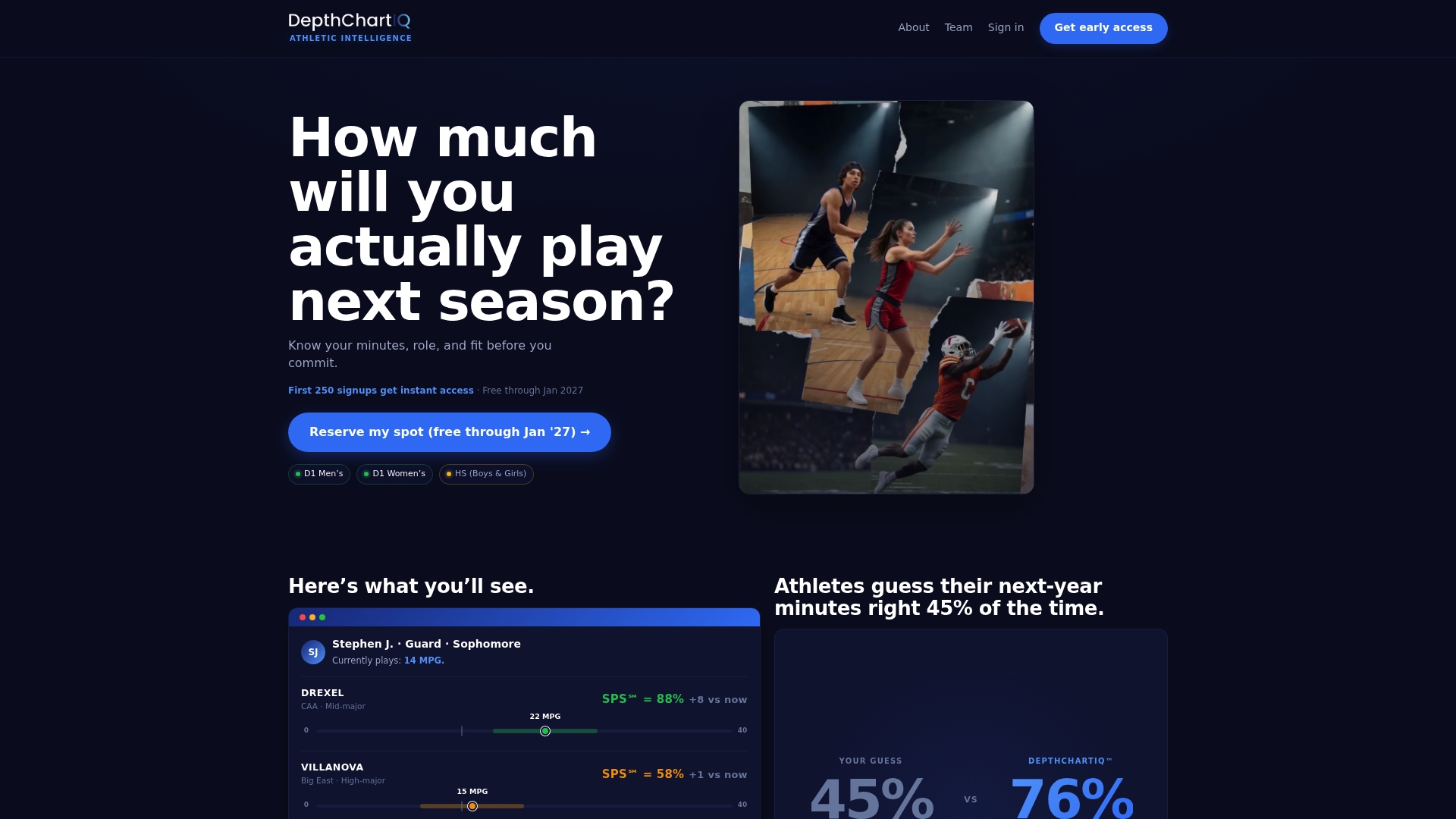
DepthchartIQ applies advanced metrics and prediction algorithms to deliver roster and recruitment insights that reflect real-time roster changes, transfer portal activity, and program-level dynamics. The platform’s Success Probability Scores and Roster Pressure insights give coaches and recruits a clear, data-grounded picture of playing time potential. With a 76% accuracy rate in predicting player outcomes, DepthchartIQ turns the kind of integrated athletic performance data analysis described in this article into decisions you can act on. Learn more about the DepthchartIQ platform and how it supports collegiate athletic departments.
FAQ
What is athletic department data integration?
Athletic department data integration is the process of connecting performance, compliance, financial, and recruitment systems into one governed platform that automatically syncs data across departments. The goal is a single, consistent source of truth for all staff.
Why do athletic departments need a data governance plan?
NCAA 2026 recommendations require formal written plans that define data ownership, storage, access authority, and permission levels before integration begins. Without this documentation, departments risk conflicting data views and compliance exposure.
How does role-based access work in sports data integration?
Role-based access assigns different data permissions to different staff roles, so a team physician sees clinical records while a recruiting coordinator sees prospect profiles. This protects sensitive medical data while keeping performance insights available to coaching staff.
How does data integration improve recruiting decisions?
Integrated systems sync prospect profiles automatically across evaluation, compliance, and financial aid records, so recruiting coordinators work from current, consistent data rather than manually reconciling multiple sources. That reduces errors and speeds up offer decisions.
What is the biggest mistake in athletic data integration?
The biggest mistake is connecting systems before writing a formal governance plan. Departments that skip this step end up with inconsistent metrics, conflicting reports, and no clear authority to resolve data disputes between staff.