
The Role of Data in Athletic Decision-Making
Discover the transformative role of data in athletic decision-making. Learn how analytics and real-time metrics enhance sports performance.

DepthChartIQ
Athletic Intelligence

The Role of Data in Athletic Decision-Making

Data-driven decision-making in sports is defined as the systematic use of performance metrics, predictive analytics, and real-time monitoring to inform coaching choices, recruitment, and competitive strategy. The role of data in athletic decision-making has moved far beyond basic statistics. Today, tools like Next Gen Stats, wearable sensors, and AI tactical engines give coaches and athletes a measurable edge in every phase of competition. Cal Athletics’ Winning Analytics Summit in early 2026 made clear that programs willing to unify their data systems are pulling ahead of those still relying on gut instinct alone. The question is no longer whether data belongs in sports. It’s how to use it well.
How does data improve evaluation and prediction of player performance?
Performance analytics, the recognized industry term for data-driven player evaluation, has transformed how coaches assess athletes at every level. The shift from watching film to processing multi-sensor data pipelines means coaches now see what the eye misses.
Modern performance evaluation draws from several distinct data streams:
- Movement tracking: GPS and optical systems measure acceleration, deceleration, distance covered, and positional tendencies during both practice and competition.
- Fatigue and load monitoring: Heart rate variability, session RPE scores, and sleep data reveal recovery status before a coach ever asks “how do you feel?”
- Biomechanical stress: Force plates and inertial measurement units flag asymmetries that predict soft tissue injuries weeks before symptoms appear.
- Cognitive and psychological metrics: Reaction time tests and stress biomarkers complete the picture of readiness.
Multi-modal analytics combining movement, fatigue, and physical stress metrics significantly improve match outcome predictions and injury risk forecasting. That means a coach deciding whether to start a player on Friday can base that call on objective load data rather than a subjective conversation in the locker room.
The Phoenix Mercury’s data scientist has noted that granular movement tracking moves teams beyond counting basic statistics toward understanding the causes behind game dynamics. That causal understanding is where real competitive advantage lives.

Pro Tip: Apply a “minimal, adequate, and accurate” (MAA) framework when selecting metrics. Unvalidated data tools waste resources and harm morale. Choose only metrics that are proven, relevant to your sport, and actionable within your current system.
What are the challenges of managing and integrating data systems?
The biggest obstacle to data-driven coaching is not a lack of data. It’s too much of it, scattered across systems that do not talk to each other.
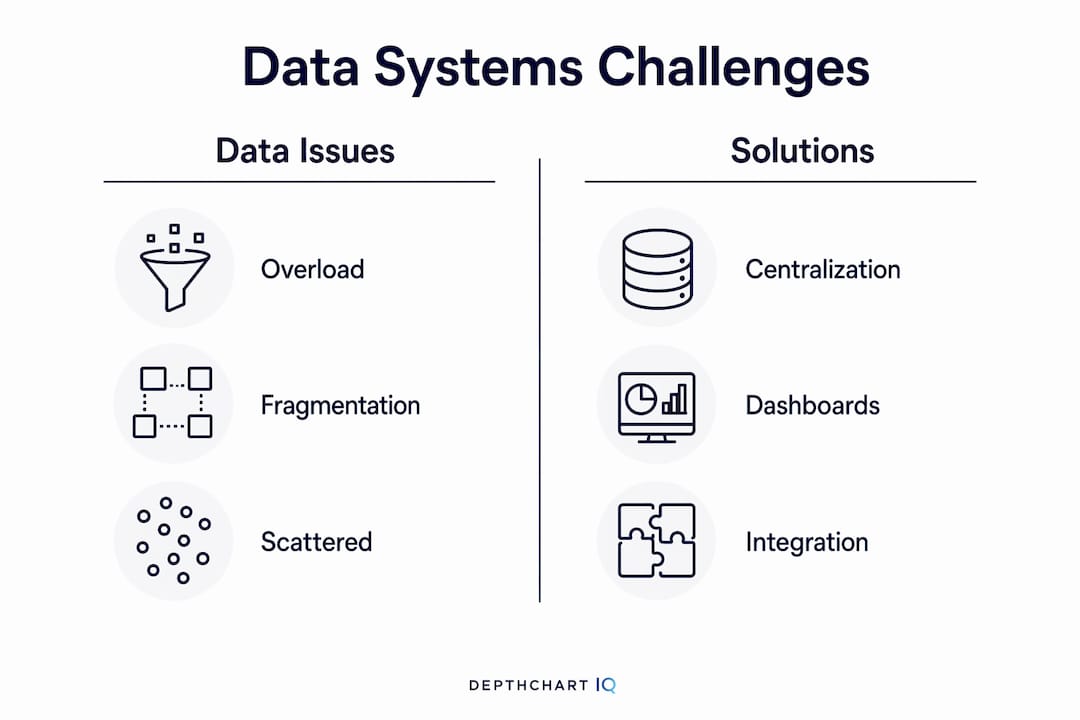
A UC Berkeley audit in Q1 2026 found that elite collegiate sports departments routinely operate dozens of disconnected technology systems across 30 sports and 20 support units. Coaches manage these platforms in addition to their primary roles. The result is that data exists but rarely reaches the right person at the right moment.
The practical consequences of fragmented data infrastructure include:
- Delayed decisions: When performance data lives in three separate apps, a coach cannot act on it during a training session.
- Cognitive overload: Coaches become accidental analysts, spending time on data entry and report generation instead of athlete development.
- Inconsistent baselines: Without a unified system, comparing an athlete’s current load to their historical norms becomes a manual, error-prone task.
- Vendor dependency: Coaching staff often lack formal analytics training and depend on black-box vendor metrics, which creates real risk of misinterpretation under competitive pressure.
The solution is centralization. Programs that consolidate data into a single platform with clear dashboards reduce the interpretation burden on coaches and make insights accessible during the moments that matter. For athletes evaluating programs, understanding a school’s data infrastructure is now a legitimate part of the college program evaluation process.
How is real-time data transforming coaching and tactical strategy?
The most significant shift in sports analytics over the past two years is the move from retrospective analysis to live decision support. Coaches used to review data after games. Now, data informs decisions during them.
- Pre-game scenario modeling: Tactical engines simulate thousands of game states before tip-off or kickoff, identifying optimal lineups and play calls based on opponent tendencies and current roster readiness.
- In-game substitution triggers: Predictive AI influences substitutions and play calls dynamically by Q2 2026, flagging fatigue thresholds before a player’s performance visibly declines.
- Continuous workload monitoring: Wearable tech transmits real-time load data to sideline tablets, allowing athletic trainers to intervene before an overuse injury develops.
- Post-session recovery optimization: Sleep quality scores and HRV data from platforms integrated with wearables feed directly into next-day practice intensity decisions.
Analytics moves beyond measurement to active decision orchestration, influencing game-day and training strategies in real time. This is a fundamental change in the role of data platforms in athletic management. Data is no longer a reporting tool. It is a decision partner.
Pro Tip: Treat AI tactical engines as a second opinion, not a final answer. The best coaching staffs use predictive outputs to stress-test their instincts, not replace them. When the data and your read of the game disagree, that tension is worth investigating.
The role of real-time data in athletic operations also extends to recruiting. Programs using live roster and playing-time data can show recruits exactly where they fit, rather than making promises that roster changes will later contradict.
How can athletes and coaches build genuine buy-in for data use?
Data only improves performance when athletes and coaches actually trust it. Without buy-in, even the most sophisticated analytics platform collects dust.
The core principle is that data complements human intuition, answering “what” and “why” while coaches determine the “how.” A sprint speed decline tells you something changed. It does not tell you whether the cause is fatigue, motivation, or a nagging hamstring. That interpretation still requires a coach who knows the athlete.
Three practical approaches build a data-positive culture:
- Transparency first: Coaches who explain data impact to athletes directly reduce feelings of surveillance and improve motivation. Show athletes their own metrics and connect those numbers to playing time and development goals.
- Athlete ownership: Give athletes access to their own dashboards. When they can see their load trends and recovery scores, they become partners in managing their readiness rather than subjects being monitored.
- Selective disclosure: Athletes experience a duality of agency when managing personal data, balancing autonomy with the cognitive load of interpreting metrics. Not every data point needs to reach every athlete. Filter for relevance.
“Athlete transparency with data builds trust and improves performance by helping them understand the link between metrics and personal improvement.” — Coaching 2.0, Leaderonomics
For athletes navigating transfer decisions, data literacy is now a career skill. Understanding your own performance metrics and how programs use them is part of any serious transfer decision framework in 2026.
Recruiting transparency follows the same logic. High school prospects who understand how programs evaluate and share data are better positioned to choose programs where they will actually develop. Resources like recruiting transparency guides help prospects ask the right questions before committing.
Key takeaways
Data-driven athletic decision-making works when integrated systems, real-time analytics, and athlete transparency operate together within a framework that keeps human coaching judgment at the center.
| Point | Details |
|---|---|
| Multi-modal data improves predictions | Combining movement, fatigue, and stress metrics significantly sharpens injury forecasting and match outcome accuracy. |
| Fragmented systems undermine decisions | Disconnected platforms create cognitive overload for coaches and delay the timely insights that drive results. |
| Real-time data enables live decisions | Tactical engines and wearable tech now influence substitutions, play calls, and recovery plans during competition. |
| Transparency drives athlete buy-in | Sharing metrics directly with athletes reduces surveillance anxiety and connects data to personal development goals. |
| MAA framework prevents data waste | Selecting only minimal, adequate, and accurate metrics keeps focus sharp and protects team morale. |
Why data alone will never win a championship
I’ve spent years watching programs chase the next analytics platform the way they used to chase the next five-star recruit. The pattern is familiar. A department invests in a new system, generates impressive dashboards, and then watches coaches ignore the outputs because nobody translated the numbers into practice decisions.
The programs that actually benefit from data are the ones that treat it as a conversation starter, not a verdict. When a load monitoring system flags an athlete as high-risk, the best coaches use that as a prompt to have a direct conversation, not a reason to bench someone without explanation. The data surfaces the question. The coach answers it.
What concerns me most right now is the growing gap between what analytics vendors promise and what coaching staffs can realistically interpret. Many coaches are handed black-box scores with no explanation of the underlying model. Under competitive pressure, that leads to either blind trust or complete dismissal. Neither serves the athlete.
The programs I respect most are building internal data literacy alongside their analytics infrastructure. They train coaches to ask better questions of the data, not just read outputs. They involve athletes in understanding their own metrics. And they are honest about what the models cannot predict, which is still quite a lot.
Data will keep getting better. The human judgment required to use it well is not optional.
— John
See how DepthchartIQ uses data to support your athletic decisions
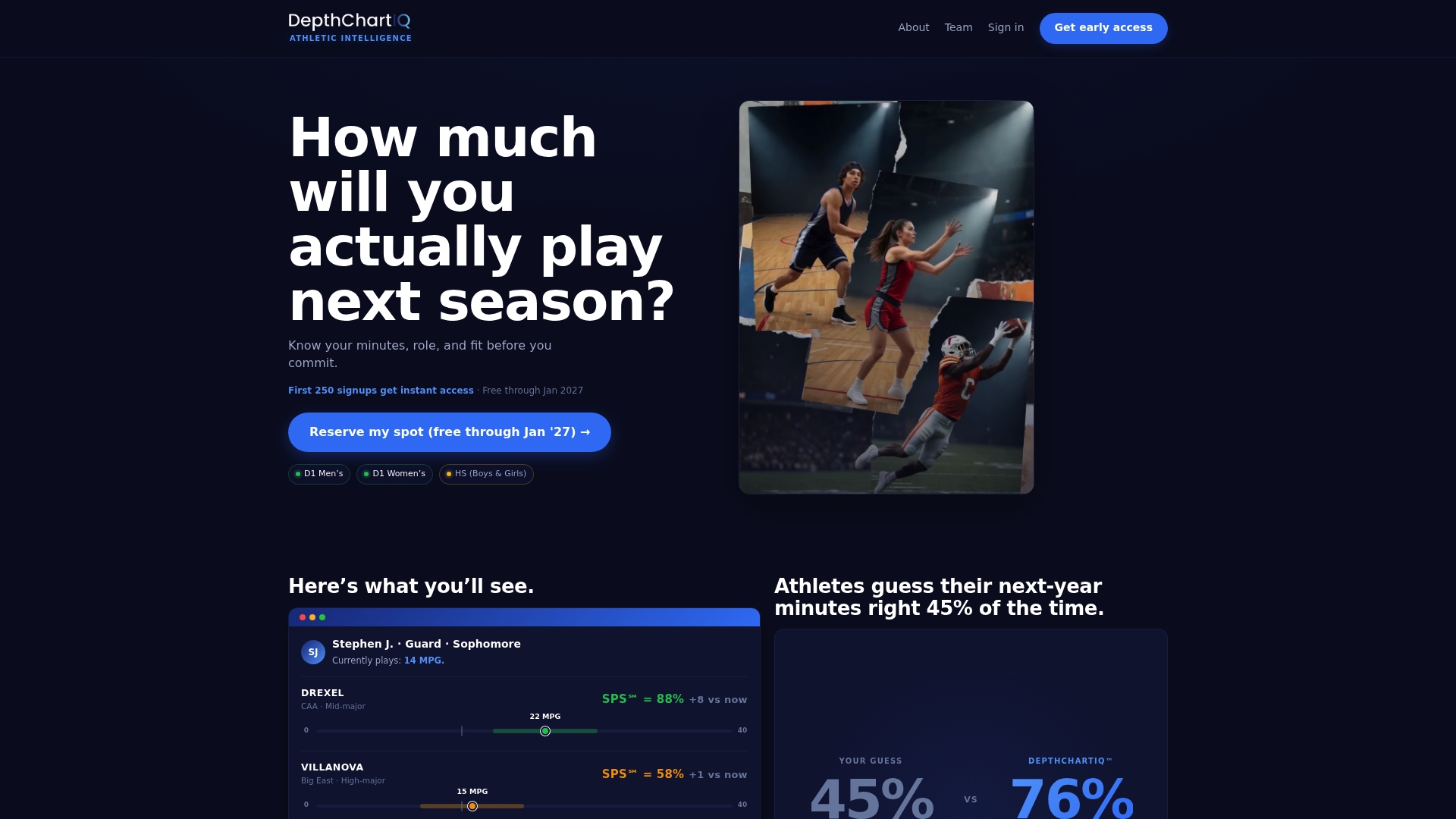
DepthchartIQ applies the same principles this article describes to one of the most consequential decisions an athlete faces: where to play and how much you will actually play. The platform’s performance analytics methodology combines roster pressure analysis, Success Probability Scores, and real-time depth chart updates to give college athletes and high school recruits a clear, data-backed picture of their fit at any program. With a 76% accuracy rate in predicting player outcomes, DepthchartIQ delivers the kind of specific, timely insight that generic recruiting advice cannot. Visit DepthchartIQ to see how integrated athletic data can sharpen your next career decision.
FAQ
What is the role of data in athletic decision-making?
Data in athletic decision-making provides objective, evidence-based insights that inform performance evaluation, recruitment, injury prevention, and in-game strategy. It complements coaching intuition by answering “what” and “why,” while coaches determine the “how” in implementation.
How does real-time data affect coaching decisions during games?
Real-time data allows tactical engines to simulate thousands of game scenarios and flag athlete fatigue thresholds before performance visibly declines. By Q2 2026, predictive AI actively influences substitution timing and play calls during live competition.
What is the biggest challenge in using data for sports decisions?
The primary challenge is fragmentation. Elite programs often operate dozens of disconnected technology systems, forcing coaches to act as analysts and delaying the timely insights that drive results. Centralizing data into a unified platform with clear dashboards is the most direct fix.
How can coaches get athletes to trust performance data?
Transparency is the most effective approach. Coaches who explain what specific metrics mean and how they connect to playing time and development goals reduce athletes’ feelings of surveillance and increase motivation. Giving athletes direct access to their own dashboards accelerates buy-in further.
What is the MAA framework for sports data?
The “minimal, adequate, and accurate” (MAA) framework is a selection standard for performance metrics. It directs teams to use only validated, relevant, and actionable data points, avoiding the morale and resource costs of tracking metrics that do not improve decisions.