
Early Signing Period in Basketball: 2026 Recruit Guide
Learn what is early signing period basketball and how it impacts 2026 recruits. Get key dates and insights to navigate your college decisions.

DepthChartIQ
Athletic Intelligence

Early Signing Period in Basketball: 2026 Recruit Guide

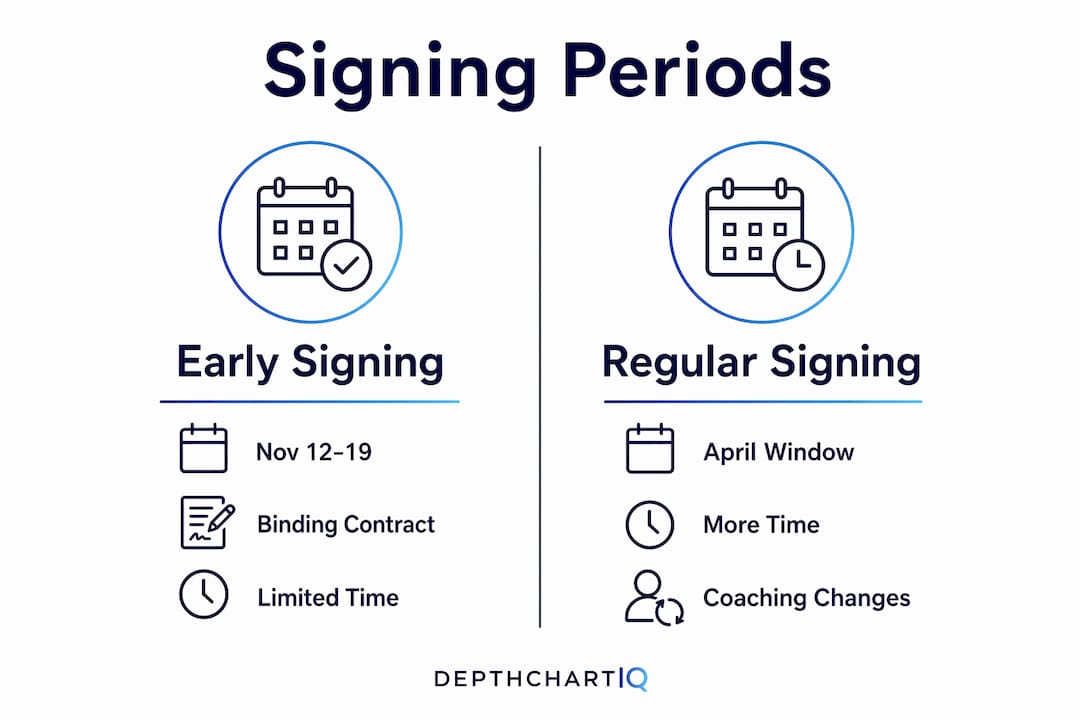
The early signing period in basketball is a designated, NCAA-governed window during which high school recruits sign formal, binding agreements committing them to a college program. It runs for one week each november, and for the 2026 class, the dates are november 12–19, 2025. Understanding what is early signing period basketball means knowing that this window is not a formality. It is the moment a verbal commitment becomes a legal contract, and the decision carries real consequences for your college career.
What is the early signing period in basketball?
The early signing period is the first of two official windows when high school basketball recruits can sign with a college program. The second window, the regular signing period, opens in april and runs into may. Most top-100 elite prospects complete their formal signing in the november window each year. That pattern reflects how competitive recruiting has become at the highest level: elite programs want commitments locked in before the spring.

The document recruits sign is typically the National Letter of Intent, or NLI. The NLI is a binding legal contract that obligates the athlete to the institution for at least one academic year. Signing it means the school is required to provide the agreed scholarship, and the athlete is required to attend. Neither side can walk away without consequences.
One critical distinction every recruit and family must understand: a verbal commitment is not the same as signing. Verbal commitments are informal and non-binding. A recruit can verbally commit in the spring and still change their mind before november. The early signing period is when that informal agreement becomes official and legally enforceable.
How does the early signing period work?
The process follows a clear sequence. A recruit receives a scholarship offer, visits the campus, evaluates the program, and then decides whether to sign during the november window or wait until the regular period in the spring.
The typical steps look like this:
- Receive a scholarship offer. Most initial offers arrive between a recruit’s sophomore and junior year. The recruiting timeline from first offer to signing spans 18–24 months for elite prospects.
- Make official visits. NCAA rules allow recruits to take official paid campus visits during their junior and senior years.
- Give a verbal commitment. This signals intent but carries no legal weight.
- Sign during the early signing period. For the 2026 class, that window is november 12–19, 2025.
- Receive the financial aid agreement. The scholarship terms are confirmed in writing alongside the NLI.
Pro Tip: Never treat a verbal commitment as a done deal. Coaches change jobs, rosters shift, and programs evolve. Nothing is final until you sign the paperwork.
The benefits of signing early are real. You secure your roster spot before the spring, you remove the stress of an ongoing recruitment, and your program can plan around you. For recruits who are certain about their choice, signing early makes sense. The uncertainty of waiting can also invite other programs to keep recruiting you, which adds pressure rather than reducing it.
What are the differences between early and regular signing periods?
The two signing windows serve different types of recruits. Understanding which one fits your situation is part of making a good decision.
| Factor | Early signing period | Regular signing period |
|---|---|---|
| Timing | November 12–19 (annually) | April through May |
| Typical recruit profile | Top-100 elite prospects, high-major programs | Mid-major recruits, developmental players, late offers |
| Primary benefit | Locks in roster spot early, reduces uncertainty | Allows time to evaluate coaching changes and late offers |
| Risk | Less time to react to program changes | Longer period of uncertainty and active recruitment |
| Transfer portal impact | High, as coaches build rosters via portal too | Moderate, but portal activity peaks in December and May |
Waiting for the regular signing period is a valid strategy, not a fallback. Recruits who are evaluating coaching stability, hoping for a late offer from a higher-level program, or simply not ready to commit benefit from the extra time. The regular period gives you room to react to changes that happen between november and april.
The transfer portal has changed the calculus for both recruits and coaches. NIL and the transfer portal have made the early signing period more dynamic. Coaches now fill roster spots through the portal at a higher rate than before, which means the urgency to sign a high school recruit early has shifted. Some programs are more patient. Others push harder for early commitments to protect their class. Recruits need to read each program’s situation carefully.
What are the rules and legal implications of signing?
Signing during the early period is a legal act. The NLI is not a letter of intent in the casual sense. It is a contract, and breaking it has consequences.
Here is what you need to know before you sign:
- One-year obligation. The NLI binds you to the school for one academic year. If you leave without a release, you lose one year of eligibility at any Division I or Division II school.
- Scholarship guarantee. The school must honor the financial aid agreement attached to the NLI for one academic year.
- Program paperwork is changing. The College Athletes’ Bill of Rights and state-level legislation have led some conferences and schools to replace the traditional NLI with new financial and athletic agreements. Verify exactly what document your program uses.
- Verbal commitments offer no protection. If a coach leaves after your verbal commitment and before you sign, you are free to reopen your recruitment. But if you have already signed, the situation is more complicated.
- Read the financial aid agreement carefully. The scholarship terms, including what is covered and for how long, are spelled out in this document. Do not assume anything is included.
Pro Tip: Before you sign anything, sit down with a trusted advisor, your high school counselor, or an attorney familiar with NCAA rules. One hour of review can prevent years of regret.
Coaches and families consistently emphasize that signing should only happen after a full review of the financial and athletic terms. The pressure to sign quickly is real, but the legal finality is permanent.
How should recruits and families prepare for the early signing period?
Preparation starts well before november. The 18–24 month recruiting timeline means most recruits are deep in the process by the time signing day arrives. The families who handle it best treat the process like a research project.
Key steps to take before signing:
- Evaluate the coaching staff. Coaches leave. Check the head coach’s tenure at the school and their history of player development.
- Understand roster composition. How many players at your position are already on the roster? How many are seniors? Use tools like DepthchartIQ to analyze roster pressure and playing time projections before committing.
- Compare scholarship offers. A full scholarship is not always equal across programs. Room, board, tuition, and fees vary. Use a scholarship equivalency guide to compare real dollar values.
- Assess program fit beyond basketball. Academic support, campus culture, and proximity to home all affect your four-year experience.
- Track the transfer portal’s effect on your target school. If a program relies heavily on portal additions, your path to playing time as a freshman may be narrower than it appears.
The recruits who sign with confidence are the ones who have done the work. They have visited the campus, spoken honestly with current players, and reviewed the financial terms line by line. Signing day should feel like a conclusion, not a leap.
Key Takeaways
The early signing period is a binding, one-week NCAA window each november that converts verbal commitments into legal contracts, and recruits who prepare thoroughly make better decisions.
| Point | Details |
|---|---|
| Signing period dates | The early window runs november 12–19 annually; the regular period opens in april. |
| Legal weight of signing | The National Letter of Intent binds you to the school for at least one academic year. |
| Verbal vs. written commitment | Verbal commitments are non-binding; only signed paperwork creates legal obligations. |
| Who signs early | Top-100 elite prospects at high-major programs sign most often in the november window. |
| Preparation is the key | Evaluate coaching stability, roster fit, and scholarship terms before signing anything. |
The early signing period is more complicated than it used to be
The early signing period used to be straightforward. A top recruit committed in the spring, signed in november, and that was the end of it. That simplicity is gone.
The transfer portal changed everything. Coaches now build rosters through portal additions as much as through high school recruiting. That means a program that looks set in october can look completely different by january. I have seen recruits sign in november only to find that three portal transfers arrived in december, pushing them down the depth chart before they ever stepped on campus.
My honest advice: do not let the pressure of the november window rush you into a decision you have not fully researched. The program comparison process matters more now than it did five years ago. You need to know not just where you stand today, but where you will stand after the portal cycle runs its course.
NIL adds another layer. Some programs use NIL to attract portal players over high school recruits. If a school is offering you a scholarship but spending its NIL budget on transfers, your actual support system may be thinner than the offer letter suggests. Ask direct questions. Get answers in writing when possible.
The recruits who thrive are the ones who treat signing day as the result of a thorough process, not the start of one.
— John
How DepthchartIQ supports your signing decision
Making a confident signing decision requires more than gut instinct. You need data on roster composition, playing time projections, and how transfer portal activity affects your position group.
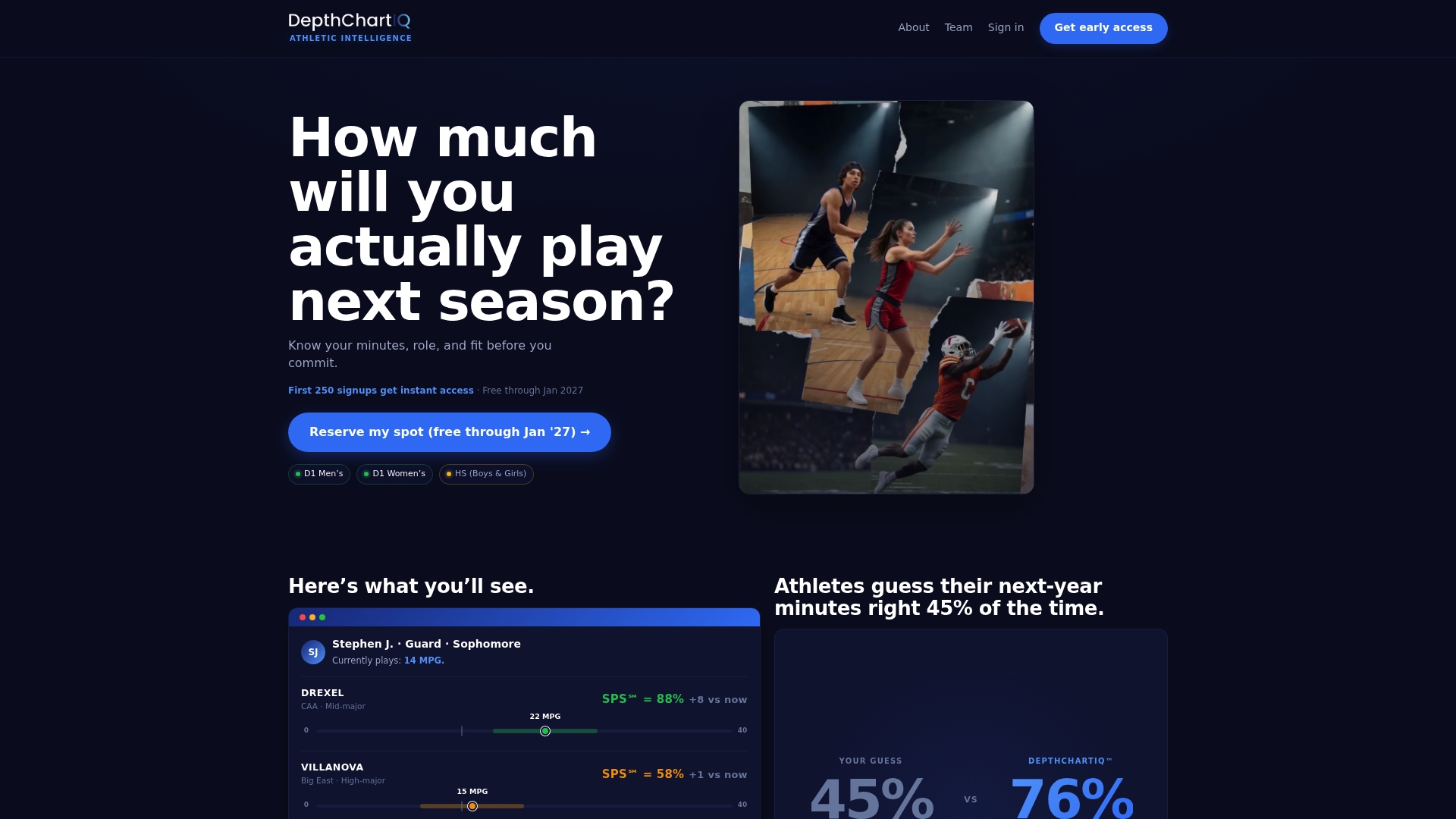
DepthchartIQ gives recruits and families exactly that. The platform’s Success Probability Scores and Roster Pressure insights show you where you realistically fit within a program’s depth chart, both now and after the portal cycle. With a 76% accuracy rate in predicting player outcomes, DepthchartIQ turns raw roster data into clear, usable intelligence. Before you sign, use the platform to evaluate your program options and understand what your playing time path actually looks like.
FAQ
What is the early signing period in college basketball?
The early signing period is a one-week NCAA window, typically in november, when high school recruits can sign binding agreements with college programs. For the 2026 class, it runs november 12–19, 2025.
When does the early signing period start?
The early signing period opens in mid-november each year. The exact dates are set annually by the NCAA, with the 2026 class window opening november 12, 2025.
Is signing during the early period legally binding?
Yes. Signing the National Letter of Intent or an equivalent financial agreement creates a legal obligation for at least one academic year. Breaking the agreement without a release results in a loss of eligibility at Division I and Division II schools.
What happens if I wait for the regular signing period?
The regular signing period opens in april and gives recruits more time to evaluate coaching changes, late offers, and roster shifts. Waiting is a valid strategy, particularly for non-elite recruits or those monitoring program stability.
What is the difference between a verbal commitment and signing?
A verbal commitment is informal and non-binding. Either party can walk away without penalty. Signing the formal paperwork during the early or regular signing period is what creates a legal commitment.