
How Player Fit Scores Assist Coaches: A Practical Guide
Discover how player fit scores assist coaches in building winning teams. Use data-backed metrics to enhance player selection and performance.

DepthChartIQ
Athletic Intelligence

How Player Fit Scores Assist Coaches: A Practical Guide

Player fit scores are defined as quantitative metrics that measure how well an athlete aligns with a specific tactical role, team system, and physical demands. Understanding how player fit scores assist coaches is the difference between building a squad that works on paper and one that performs under pressure. These scores go far beyond traditional ratings by capturing role compatibility, load tolerance, and team integration. DepthchartIQ applies this methodology with a reported 76% accuracy rate in predicting player outcomes, giving coaches a data-backed foundation for decisions that used to rely on gut feel alone.
How player fit scores are calculated and what they measure
Player fit scores are built from role-specific attribute filters, not generic ability ratings. That distinction matters because an anchor midfielder and a box-to-box midfielder play the same position but require fundamentally different skills. Role-specific attributes for an anchor midfielder center on positioning and tackling, while a box-to-box midfielder demands stamina and work rate. A generic rating collapses those differences into one number and loses the information coaches actually need.
The inputs behind a fit score typically fall into three categories:
- Physical performance metrics: Total distance covered, high-speed running distance, and acceleration counts tracked against a player’s personal rolling weekly averages. Individualized workload tracking improves performance and reduces injury risk by measuring output relative to each athlete’s own baseline, not a team average.
- Tactical and technical metrics: Passes completed under pressure, off-ball movement, decision-making speed, and positioning data generated through video analysis. Tactical metrics like these measure player progress far better than goal or assist counts alone.
- Team integration data: Player Impact scores, which range from -100 to +100, reflect the points difference when a player is on versus off the field. This captures team chemistry and system fit, not just individual brilliance.
AI models weight these inputs differently depending on the role being evaluated. A study of 512 professional football coaches found that AI-based performance feedback carries a path coefficient of 0.74 in predicting coaching effectiveness and tactical awareness improvement. That is a strong predictive relationship, meaning AI-assisted fit scores are not experimental. They are proven tools for improving coaching outcomes.
Pro Tip: When reviewing fit scores with your staff, always check which attribute category is driving the score. A high physical score with a low tactical score tells a very different story than the reverse.
What advantages do fit scores offer over traditional ratings?
Traditional player rating systems use broad ranges to classify performance. Standard scales label scores of 6.0–6.5 as replacement level, 6.5–7.5 as solid above average, and 8.5–9.5 as outstanding. Those ranges tell coaches how a player performed in general. They do not tell coaches whether that player fits the specific role they need filled.
Fit scores solve that problem in four concrete ways:
- Role alignment: Coaches can match player strengths to tactical demands rather than forcing a player into a role that does not suit their natural attributes. A player rated 7.2 overall may score a 9.1 fit for a wide pressing role and a 5.4 fit for a deep-lying playmaker role. The overall rating hides that gap entirely.
- Injury risk management: By tracking individual load metrics against personal baselines, fit scores flag when a player is approaching overload before an injury occurs. Coaches who act on that data protect their rosters across a full season.
- Tactical flexibility: Fit scores reveal which players can adapt to multiple roles and which are specialists. That knowledge shapes substitution decisions and rotation planning with real evidence behind them.
- Player development targeting: Coaches can identify exactly which attributes a player needs to improve to raise their fit score for a target role. That specificity makes development conversations productive instead of vague.
“High-impact scores reflect player integration and team chemistry, not just raw technical skill. Recruiters who prioritize tactical fit and role compatibility build more effective squads than those focusing on headline skill numbers.”
The coach-player relationship also deepens when fit scores are used well. Celebrating role-relevant stats like defensive blocks or pressing triggers builds player buy-in because athletes see that the data reflects what they actually do on the field.
How coaches integrate fit scores into recruitment, training, and game day decisions
Fit scores touch every phase of a coach’s work. The practical applications are specific and immediate.
Recruitment
Role-specific attribute filters prevent the most expensive mistake in squad building: signing a talented player who does not fit the system. Using generic position filters instead of role filters causes scouting errors because different roles demand different attribute floors. A coach building a high-press system needs fit scores filtered for pressing intensity and recovery speed, not just passing accuracy.
Pro Tip: Build a fit score threshold for each role before you start scouting. Reject candidates who fall below the threshold on the two or three attributes that define the role, regardless of their overall rating.
Training customization
| Training Application | Fit Score Input | Coaching Outcome |
|---|---|---|
| Load management | Individual rolling weekly averages | Reduced injury risk, sustained output |
| Tactical drills | Role-specific attribute gaps | Targeted skill development |
| Position rotation | Multi-role fit scores | Flexible squad depth |
| Recovery planning | High-speed running and acceleration data | Optimized readiness for match day |
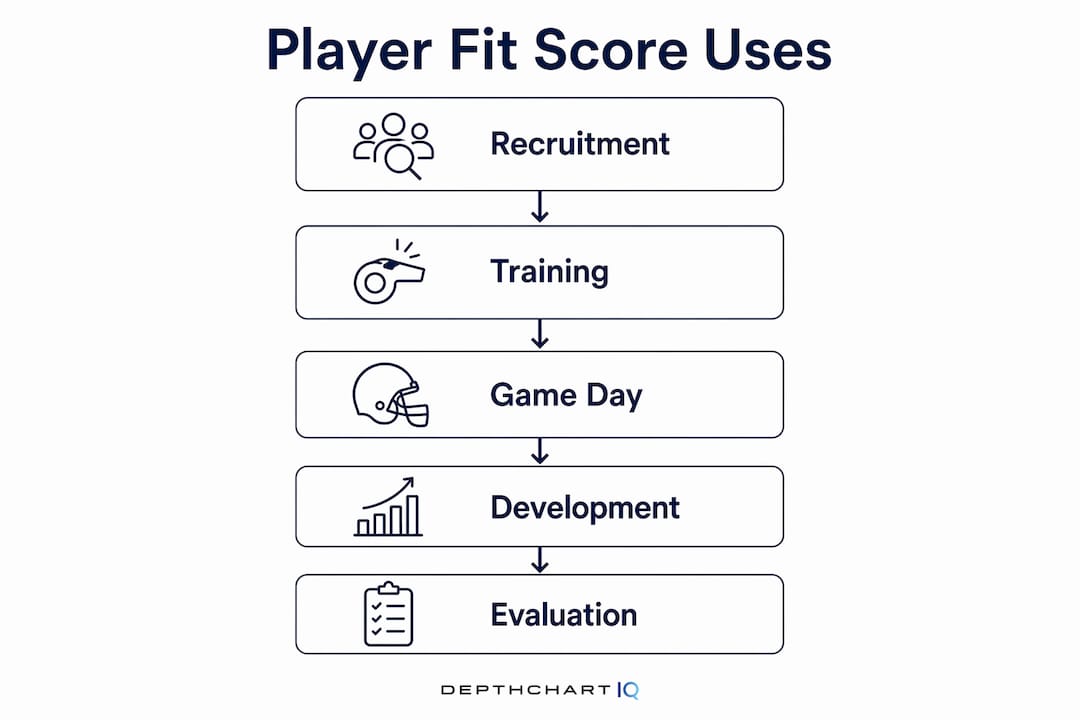
Coaches who use data in athletic decision-making consistently report that training becomes more purposeful when athletes understand which metrics connect to their role. Players train harder on the right things when they see the numbers.
Game day decisions
Fit scores inform rotation and substitution choices with evidence rather than instinct alone. A player with a high fit score for a specific opponent’s defensive shape becomes a logical choice for a tactical substitution. Coaches can also use fit scores to identify which players are physically ready based on their current load data versus their personal baseline.
Using fit scores for evaluation on game day also means tracking whether tactical changes are working. If a player’s in-game fit metrics drop after a positional shift, the data signals the adjustment is not working before the scoreboard does.
Common pitfalls coaches should avoid with fit scores
Fit scores are powerful tools. They are also easy to misuse. These are the four mistakes coaches make most often:
- Treating fit scores as a replacement for judgment. Fit scores inform decisions. They do not make them. Meta-dimensions like emotional stability, adaptability, and judgment under pressure influence player success in complex tactical systems more than some visible raw stats. No score captures those qualities fully.
- Ignoring role-specific nuance. A coach who reads a fit score without knowing which attributes drive it will draw the wrong conclusions. A player with a high fit score built on physical metrics but weak tactical scores may struggle in a system that demands constant decision-making.
- Overrelying on short-term data. A two-week sample of load data or tactical metrics does not represent a player’s true fit. Coaches need at least a full training block of data before drawing conclusions about role compatibility.
- Skipping the conversation with the player. Fit scores work best when coaches share them with athletes. Evaluating whether a school or program fits athlete goals is a two-way process. Players who understand their own fit metrics take ownership of their development and respond better to role-specific feedback.
The coaches who get the most from fit scores treat them as a shared language between staff and athletes, not as a private evaluation tool.
Key takeaways
Player fit scores give coaches a role-specific, data-backed framework for recruitment, training, and game day decisions that generic ratings cannot match.
| Point | Details |
|---|---|
| Role-specific scoring | Fit scores measure attribute alignment to a specific role, not overall ability. |
| AI-backed accuracy | AI-based feedback models show a 0.74 path coefficient for coaching effectiveness improvement. |
| Load management integration | Individual workload tracking reduces injury risk by measuring output against personal baselines. |
| Recruitment precision | Role-specific filters prevent costly mismatches that generic position filters miss. |
| Player buy-in matters | Sharing fit metrics with athletes builds trust and improves development outcomes. |
What I’ve learned from watching fit scores change coaching decisions
Coaches who adopt fit scores often expect the technology to do the thinking for them. That expectation is the first thing that needs adjusting. The data does not replace the coach. It sharpens what the coach already sees.
What I have observed consistently is that fit scores change the quality of conversations, not just the quality of decisions. When a coach can point to a specific metric and say, “Your pressing trigger rate is the one thing holding your fit score back for this role,” the player has something concrete to work on. That specificity is rare in traditional coaching feedback, and athletes respond to it.
The coaches who struggle with fit scores are usually the ones who treat a low score as a verdict rather than a starting point. A player with a low tactical fit score for their current role might have a high fit score for a different role the team needs. That reframe turns a problem into a solution.
My honest advice: use fit scores to start conversations, not end them. The number is a signal. The coach’s job is to interpret it in context, factor in what the data cannot see, and make a call. That combination of evidence and experience is what separates good coaching from great coaching.
— John
DepthchartIQ’s approach to player fit scoring
DepthchartIQ applies the same principles coaches need most: role-specific metrics, real-time data updates, and prediction algorithms built for individual circumstances. The platform’s Success Probability Scores and Roster Pressure insights give coaches and athletes a shared framework for evaluating fit at any program level.
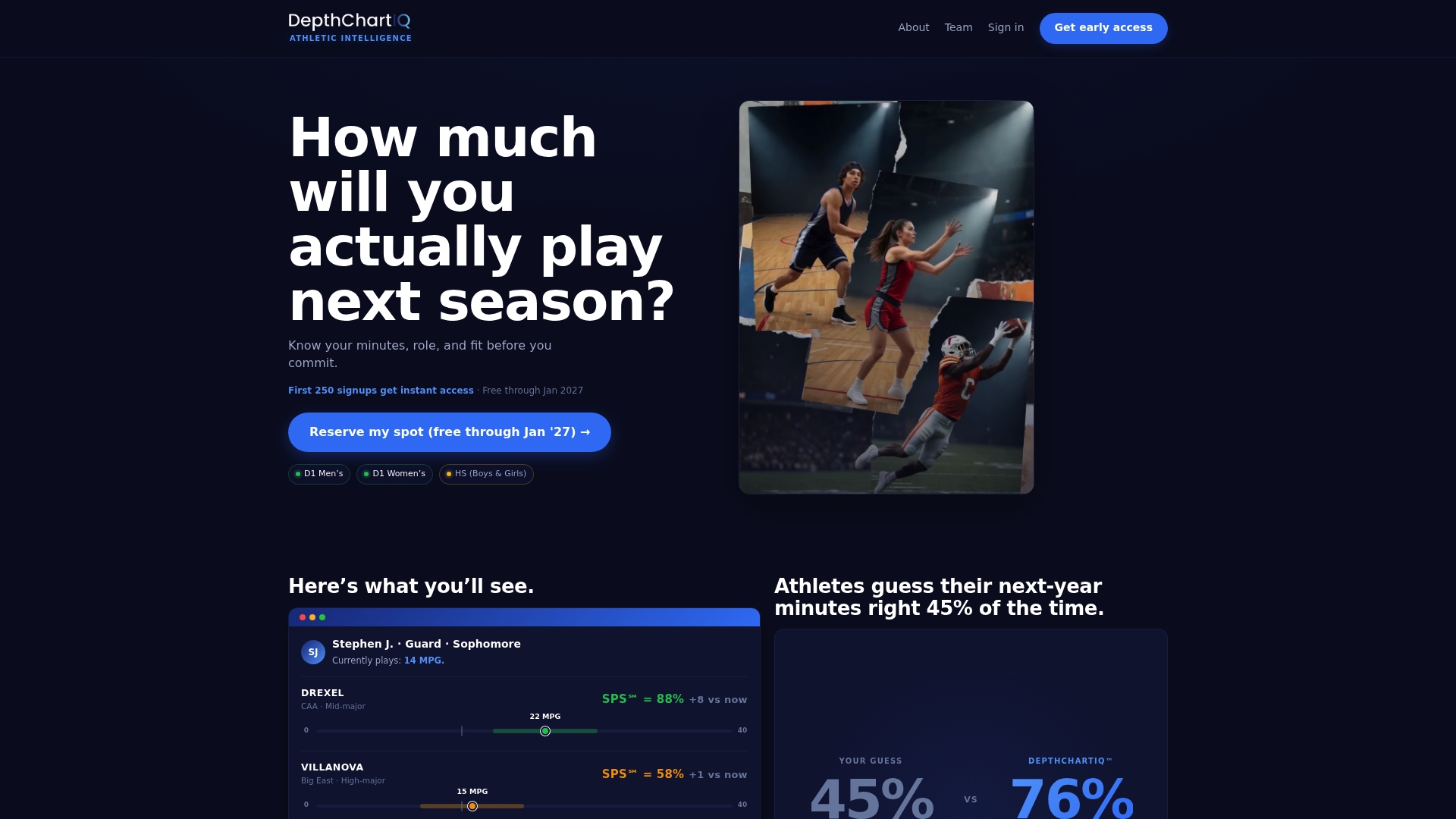
For coaches working with college athletes or high school recruits, DepthchartIQ’s fit score methodology translates complex roster data into clear, role-specific predictions. The platform’s 76% accuracy rate in predicting player outcomes means the numbers coaches see are grounded in real results. Coaches who want to understand how the scoring model works can review the full approach at DepthchartIQ and apply it directly to their current roster decisions.
FAQ
What is a player fit score?
A player fit score is a metric that quantifies how well an athlete’s attributes align with a specific tactical role and team system. It differs from a general player rating by weighting role-specific skills rather than overall ability.
How do fit scores improve recruitment decisions?
Role-specific fit scores prevent coaches from signing players whose general ratings look strong but whose attributes do not match the demands of the role. Filtering by tactical fit rather than position alone reduces costly squad mismatches.
Can fit scores help with player development?
Fit scores identify exactly which attributes a player needs to improve for a target role, making development plans specific and measurable. Coaches can track progress against those metrics across a training block.
How does DepthchartIQ use fit scores for athletes?
DepthchartIQ generates Success Probability Scores and Roster Pressure insights using advanced metrics and prediction algorithms, giving athletes and coaches a clear picture of playing time potential and program fit with a reported 76% prediction accuracy.
What is the biggest mistake coaches make with fit scores?
The most common mistake is treating a fit score as a final verdict rather than a starting point for conversation. Fit scores work best when coaches use them alongside direct player feedback and contextual judgment.