
Athlete Recruiting Tips for Parents: A Basketball Family Guide
Practical recruiting tips for parents of basketball players: how to support without pressuring, read NCAA rules, plan visits, and ask about playing time.
 DepthChartIQ14 min read
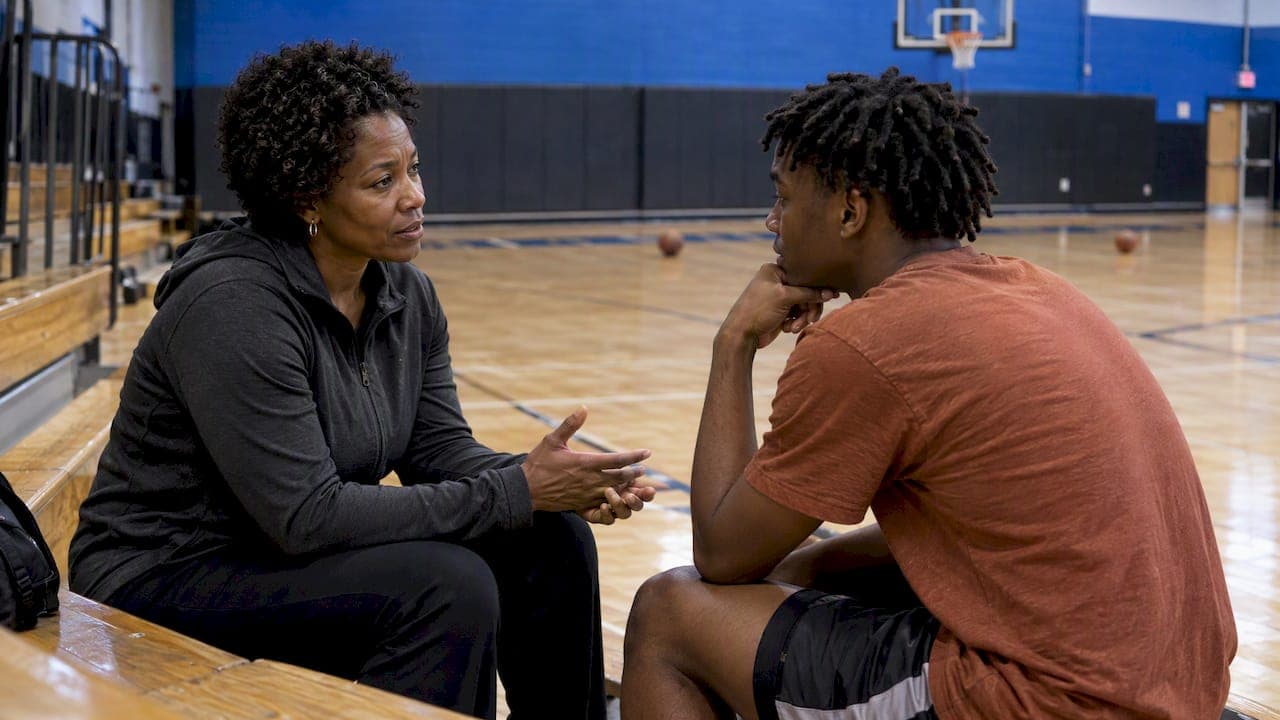

The best thing a parent can do in recruiting is run the logistics and ask good questions while your athlete owns the decisions. That means keeping deadlines and paperwork in order, learning the NCAA rules, and pushing every conversation toward one question: where will my child actually play? This guide covers each step for basketball families, from the first honest assessment to the commitment decision.
TL;DR
- Be the organizer and sounding board. Let your athlete write the emails, do the talking and make the call.
- Learn the rules early: eligibility, contact periods, visits and scholarship limits. Each division works differently.
- Judge schools on playing time, academics and culture together, not on the logo or the offer letter alone.
- On visits, ask coaches direct questions about role, roster and development, and listen to the answers.
- Roster crowding at your child’s position is often the deciding factor. Look at it before you fall for a school.
Table of Contents
- Your role: support, don’t steer
- Start with an honest read of where your athlete stands
- Know the rules before the first phone call
- Build the profile: resume, film and outreach
- Research schools beyond the logo
- The question most families skip: playing time
- Official and unofficial visits
- Keeping the balance: school, stress and the decision
- Our perspective
- How DepthChartIQ fits into your family’s process
- FAQ
- Sources
Your role: support, don’t steer
Recruiting can turn a family dinner table into a war room. The research on parent involvement is consistent about what helps. The Positive Coaching Alliance advises parents to act as a steady sounding board and helper with logistics and organization, while the athlete owns the process. It also points to healthy family communication, a focus on the whole college experience, and validating your child’s own goals instead of pushing a specific outcome or prestige.
In practice, that looks like this:
- You keep the calendar. Track coach emails, questionnaire deadlines, camp dates and visit plans in one shared document.
- Your athlete writes and sends their own messages. Coaches can tell when a parent wrote an email, and they are recruiting the player, not the family.
- You ask questions in private afterward. Debrief in the car, not in the coach’s office.
- You separate your hopes from theirs. If you dreamed of a Power conference school and your child lights up about a smaller program with a clear role, take that seriously.
Meetings with coaches deserve special care. USA Football’s guidance on what parents should never tell college coaches includes the line “My son has to go to your school,” and it recommends letting your child do the talking. The advice comes from football, but it applies to basketball just as well. A coach who hears a parent push hard may wonder how the player handles adversity on their own.
Start with an honest read of where your athlete stands
Before you contact a single school, get a realistic picture of your child’s level. Ask their high school and club coaches, and ask more than one. A planning guide from the Urban School of San Francisco recommends casting a wide net across divisions, associations, regions and levels, based on realistic evaluations of the athlete’s abilities.
A simple self-audit helps. Rate your athlete on:
- Physical profile and skills at their position, compared with current players at the levels they are considering
- Game film and the level of competition it shows
- Academics: GPA, core course progress and test status
- Character and coachability, which coaches ask about constantly
- Time: how many years of development you can reasonably expect
This exercise often reveals that the right level is not the one the family first imagined. Division I is not the only road to a good basketball career. Division II, Division III, NAIA and junior college programs all play real seasons with real minutes. If your child is unsure about level, our guide to college tryouts for unrecruited athletes and the article on how walk-ons can earn scholarships show that there are several paths in.
Know the rules before the first phone call
Recruiting rules are where families trip up. A few anchor points:
Academics come first. The NCAA’s guide for the college-bound student-athlete says admission to the university is separate from athletic recruitment: athletes must still meet the school’s academic standards and go through the official admissions process. The same guide tells families to research both admissions requirements and the academic eligibility standards for the division. For a walk-through, see our NCAA Eligibility Center guide.
Scholarships differ by division. According to the NCAA, Division I and II schools offer athletics scholarships, and Division III schools do not. Basketball also has roster and scholarship limits that shape how many spots open each year. We explain them in scholarship limits in basketball.
Contact periods vary. Division II rules, for example, say telephone calls and in-person off-campus recruiting contacts may not be made before June 15 immediately preceding the athlete’s senior year of high school. Division I men’s and women’s basketball have their own calendars, and they change. Check our basketball recruiting calendar and the NCAA’s current rules rather than relying on what another parent heard at a tournament. Your athlete can reach out to coaches at any time. Coaches are what the rules restrict, and until a contact period opens they may only be able to send general information back.
Dead periods. During a dead period, in-person recruiting contact is off the table. Read up on them in our NCAA dead period explainer so a quiet inbox does not worry you.
NAIA is different. The NAIA describes its recruiting approach as student-driven, with more direct, less restricted communication between prospective athletes and coaches. If your child is looking at NAIA schools, the timing rules you learned for the NCAA do not carry over.
Signing paperwork. Before anyone signs anything, read our overview of National Letter of Intent rules. If your athlete is already in college and thinking about transferring, portal tampering rules cover who may talk to whom, and when.
Build the profile: resume, film and outreach
Your athlete’s recruiting package is small, and it should be tight. A coach with hundreds of prospects will give it a minute or two.
The athletic resume
One page. Include:
- Name, graduation year, height, weight, position, and wingspan if known
- High school and club or AAU team, with coaches’ names and contact information
- GPA, core course progress, and test scores if they exist
- Key stats and honors, stated plainly
- A link to film
- Your athlete’s own email and phone number
Keep the numbers honest. Coaches check, and an inflated line costs more trust than a modest one.
Film
Basketball coaches want to see decisions: reading the floor, defending without the ball, finishing through contact. Put your best plays first, lead with the player’s number and position, and include at least some full-game footage if you can. Highlight clips alone can hide weaknesses, and coaches know it.

Filming is also a logistics problem parents can solve. If you are filming at outdoor sessions or camps, it helps to know the college recruiting video requirements so the footage you capture is usable the first time.
Reaching out to coaches
Your child sends the message. A good first email is short:
- A subject line with graduation year, position and height
- Two sentences on who they are and why this program interests them, with a specific detail about the school
- Upcoming games or events where the coach can watch
- The film link and the resume
Spotter, our assistant for athletes, can help your child research schools and draft messages to coaches. It is a starting point to revise in their own words, because coaches can spot a template. You can see it at Spotter.
Expect many replies to be generic questionnaires and camp invitations. Fill out the questionnaires anyway. They tell a staff your child is interested, even if you do not hear back for a while.
Research schools beyond the logo
The Penn Graduate School of Education notes that a child’s goals for the college experience, such as wanting a large campus or an urban setting, shape which schools a family targets. Start there, then add basketball questions. A useful comparison sheet has one row per school and these columns:
| Factor | What to find out |
|---|---|
| Academics | Does the school offer your child’s intended major? What are the admission requirements? |
| Roster | How many players are at your child’s position? How many are returning? |
| Scholarship | Is the program in a division that offers athletics scholarships? Is the offer for one year or multiple years? |
| Development | How do the coaches handle players who are not yet in the rotation? |
| Culture | How do current players talk about the staff and each other? |
| Cost | What does attendance cost after aid, including travel home? |
| Distance | Can the family realistically get to games? |
Treat athletic scholarships and academic aid as two pieces of one financial picture, and ask each school to explain both.
The question most families skip: playing time
Most families compare programs by prestige, facilities and the coach’s pitch. The quieter question is where your child fits on the roster. A great school with four returning players at your child’s position can mean years on the bench. A less famous school with an open rotation spot can mean the opposite.
Some ways to study it yourself:
- Look at each program’s current roster by position and class year.
- Note who is graduating, who is likely to enter the portal, and who the staff is also recruiting at the same spot.
- Ask the coach directly where your child would fit in year one and year three.
- Read about roster bubble players so you can recognize the role your child might be offered.
That last point matters. Programs sometimes carry a player they like at the end of the roster, and a pitch can make that spot sound better than it is.
Official and unofficial visits
Visits are where recruiting becomes real, and where families are most tempted to get swept up. The NCAA’s guide says families should prepare by researching the campus and program beforehand and ask coaches about playing time, coaching philosophy, academic support and team culture. Official visits go through the institution and fall under NCAA payment rules.
Some details from the NCAA’s 2025-26 guide: a school may pay for an official visit’s transportation, lodging and meals for the athlete and specified family members, plus entertainment costs of up to $60 per person in Division I, $50 in Division II and $40 in Division III. Division II also limits an institution to financing only one visit to its campus, and an official test score must be presented before the athlete arrives. Limits can change, so confirm them with the school’s compliance office. Our guide to official visit rules in college basketball goes deeper on the basketball side.
Questions to bring
Write them down before you go. Your athlete asks the basketball questions, and you can ask about money and academics:
- Where do you see me in the rotation next season? In two years?
- How many players at my position are returning, and who else are you recruiting?
- What does a typical week look like in season and in the offseason?
- What academic support do athletes get, and what majors do players choose?
- What happens to my scholarship if the coaching staff changes?
- Why did players who left recently leave?
Talk to current players away from the coaches. Ask how honest the staff was with them about playing time during recruiting. Their answers will tell you more than the brochure.
Keeping the balance: school, stress and the decision
Recruiting can run alongside a heavy school year and a full basketball schedule. Keep three things steady.
Grades. Eligibility and admissions both depend on them, and a strong transcript widens every option. Treat homework as part of the recruiting plan.
Well-being. Silence from coaches is normal, and so is a rejection. Help your athlete see a no from one program as information, not a verdict. The Positive Coaching Alliance’s guidance keeps the athlete’s values, well-being and voice at the center of the process. If stress is affecting sleep, mood or schoolwork, bring in a school counselor or your pediatrician.
The long view. The NCAA says that a degree and the student-athlete experience will serve athletes far beyond their final competition. Few players go on to professional basketball, so choose a school your child would be glad to attend if an injury ended the season in October.
Don’t rush the commitment
Exploding offers and pressure to commit fast are common. A good program will answer your questions and give your athlete time. If a coach will not, that tells you something about how they treat players later. Sleep on it, talk it through as a family, and let your athlete say the final yes or no.
Our perspective
We built DepthChartIQ for athletes and their families, because we kept seeing the same pattern: big decisions about transferring, staying or committing made on gut feel and a coach’s pitch. The pitch is usually sincere, but it is the coach’s view, not a comparison across schools.
For parents, our view is simple. The most useful thing you can bring to recruiting is a clear picture of the minutes your child is likely to see at each program they are weighing. Offers are exciting, but the day-to-day experience of college basketball is decided by role. A player who never leaves the end of the bench has a very different four years from a player in the rotation, even at the same school.
Projections are estimates, not promises, and we never want a family to treat them as guarantees. Use them as a range to weigh alongside conversations with coaches, current players and your own research. Let your athlete drive, and let the numbers back them up.
How DepthChartIQ fits into your family’s process
For each program your athlete is considering, DepthChartIQ shows a projected minutes-per-game range for next season, a Success Probability Score (the chance of gaining minutes) and a Roster Pressure Score (how crowded their position is at that school), plus best-fit programs. It covers incoming high school and junior college players, college transfers, and athletes deciding whether to stay. Take a look at a sample program page, such as Portland Pilots Women’s Basketball, to see how the information is laid out.
DepthChartIQ is built for athletes and families, not coaching staffs, and it is free during Early Access. Create a profile for your athlete at DepthChartIQ and bring the results to your next family conversation.
FAQ
How can parents help with recruiting without taking over?
Take the organizer’s role: manage the calendar, paperwork, travel and budget. Let your athlete write the emails, talk to coaches and make the final choice. Offer your opinions in private, after meetings, as a sounding board.
When do college coaches start contacting basketball recruits?
It depends on the division and the sport, and the dates change. Division II, for instance, bars calls and in-person off-campus contact before June 15 before the senior year. Your athlete can contact coaches at any time, so check the current NCAA calendar for the division you are targeting.
Does Division III offer athletic scholarships?
No. According to the NCAA, Division I and II schools offer athletics scholarships and Division III schools do not. Division III athletes can still receive academic and need-based aid, so ask each school’s financial aid office what is available.
What should we ask on a recruiting visit?
Ask about playing time, coaching philosophy, academic support and team culture. Get specifics on how many players share your child’s position and where the staff sees your athlete in year one. Then talk to current players privately for an unfiltered view.
Sources
- Supporting Your High School Athlete Through the College Recruiting Process, Positive Coaching Alliance
- Parent/Caregiver Tips, Positive Coaching Alliance
- What parents should never tell college coaches, USA Football
- Planning Guide for the College-Bound Student-Athlete, Urban School of San Francisco
- NCAA Guide for the College-Bound Student-Athlete 2026-27
- NCAA Guide 2025-26
- NCAA Division II Best Practices and Essential Rules Reference Guide
- Helping your student-athlete navigate recruiting, Penn GSE
- Parents, NAIA