
How to Get Out of an NLI (and What Replaced It)
The NLI is gone. Here's what a signed athletics aid agreement still locks in, how to ask for a release, and what to check before a basketball transfer.
 DepthChartIQ12 min read

You probably don’t need to “get out of” an NLI anymore, because the National Letter of Intent no longer exists in Division I. The NCAA eliminated the program in October 2024, and written offers of athletics aid took its place. What’s left is a signed athletics aid agreement. If you signed one and want to go somewhere else, the practical step is to ask your school for a release from the contact prohibition, then deal with your scholarship and eligibility questions before you move.
This guide is for basketball players and families who signed (or are about to sign) and are now asking what that signature really binds. It covers what changed, how to request a release, what happens if the answer is no, and how to judge the move itself.
TL;DR
- The NLI program is gone. A signed athletics aid agreement replaced it, and the old penalty that cost athletes eligibility did not carry over.
- Signing still triggers a recruiting prohibition: other schools generally can’t contact you until you are released from it.
- A release from contact does not by itself let your school cut or cancel your aid, and it is not the same as entering the transfer portal.
- Read your own agreement and call your school’s compliance office before you sign anything new.
- Before you commit anywhere else, compare the minutes you can realistically expect at each program, not just the pitch you heard.
Table of Contents
- What the NLI was and why people want out of it
- What changed when the NCAA ended the NLI
- What a signed aid agreement still does
- How to request a release
- What happens if the school says no
- Can your school cut your scholarship if you ask to leave?
- Release is not the same as transfer
- What to verify before you decide
- Our perspective on leaving a signed commitment
- Compare the schools before you ask for the release
- FAQ
- Sources
What the NLI was and why people want out of it
For roughly 60 years, the National Letter of Intent was a voluntary agreement between a recruit and a school. The athlete committed to attend that school for one academic year, and other schools that honored the program stopped recruiting the athlete. The sting was the basic penalty: sign, then go elsewhere, and you could lose seasons of eligibility.

That is why “how do I get out of my NLI” was such a common search. Players changed their minds because a coach left, a roster shifted, or a better role opened up. Releases were granted or denied by the school, and the stakes were high.
If you want the full history of how the old letter worked, we break it down in our guide to National Letter of Intent rules.
What changed when the NCAA ended the NLI
The NCAA’s Division I Council approved changes that moved NLI protections into the rules around written athletics aid, effective immediately. Beginning with the 2024-25 academic year, Division I and II schools use a signing model tied to the athletic scholarship itself, which removes the former NLI from the process.
Here is the difference in plain terms.
| Old NLI | Athletics aid agreement today | |
|---|---|---|
| Document | National Letter of Intent plus aid agreement | Written athletics aid agreement |
| Other schools’ recruiting | Stopped once you signed | Still prohibited after you sign |
| Penalty for not attending | Eligibility consequences (the basic penalty) | No NLI-style eligibility penalty in the new legislation |
| Release | Requested from the school | Requested from the school, for the contact prohibition |
The short version: the recruiting ban survived, and the eligibility deterrent did not. According to a law firm summary of the legislation, the new rules also touched financial aid, eligibility, recruiting, amateurism and playing-season rules, so it’s worth reading beyond the headline.
What a signed aid agreement still does
Signing is not meaningless. After a prospect signs a written offer of athletics aid, other schools offering athletics aid are prohibited from recruiting communications with that prospect. Schools describe this the same way on their own compliance pages. USC, for example, says that after a prospect signs an Athletics Financial Aid Agreement, other schools’ athletics staff and boosters may no longer contact the prospect.
What that means for you:
- A coach at another school who texts you after you sign may be breaking a rule, and that can cost you the relationship. Our guide to portal tampering rules explains where the lines sit.
- Your own school is under no obligation to help you leave, but the rules no longer attach an NLI-style eligibility penalty to leaving.
- Specific terms can vary by school and division, so your written agreement is the document that governs your situation.
How to request a release
A prospect may ask for a release from the aid agreement, but the release covers the contact prohibition only. It doesn’t automatically let the school reduce or cancel the aid agreement. In other words, a release opens the door to conversations with other programs. It doesn’t rewrite your scholarship.
A clean process looks like this:
- Read the agreement. Find the term, the amount, any conditions, and the school’s stated process. Keep a copy.
- Contact compliance, not just the coach. Many schools route the request through an office such as athletic compliance. USC’s page says a prospect may request release by contacting its Office of Athletic Compliance. Your school may use a similar office.
- Put the request in writing. Email creates a record. Say what you are asking for: release from the contact prohibition so you can speak with other programs.
- Ask what the school will do with your aid. Ask in the same email whether your scholarship is affected, and get the answer in writing too.
- Wait for the answer before talking to other schools. Contact before release is the thing that creates trouble.
- Keep your options organized. Note which schools you want to hear from and why, so you can move quickly once you are free to talk.
If you’re a high school recruit who signed with a school and the head coach has since left, that’s a good reason to ask, and compliance will have seen the situation before. Be polite and factual. You are asking for permission, not making an accusation.
What happens if the school says no
This is the part families worry about most. Two things can be true at once: your school can decline to release you from contact, and you still aren’t trapped the way an NLI signer once was, since the eligibility penalty is gone.
If the school denies the request, you have a few paths:
- Ask why, and ask what would change the answer. Sometimes timing is the issue, not principle.
- Ask about appeal or review options in the school’s athletics or compliance materials. USC’s page says that when a reduction, cancellation or non-renewal is approved, the athlete has the right to appeal under NCAA rules. Your school will have its own policy.
- Talk to the conference office or NCAA staff through your compliance office if you believe a rule is being applied wrongly.
- Do not go around the process by quietly talking to other staffs. Unauthorized contact is where athletes get hurt.
A Division III reference point is useful because it shows how a written request can work. Under NCAA Division III bylaw 13.1.1.2, if a student-athlete submits a written request to let another school make contact about transferring, the institution must grant or deny it within seven business days, and if it doesn’t respond in that time, permission is granted by default. If permission isn’t granted, the second school can’t encourage the transfer. That’s a Division III rule, so don’t assume it applies to a Division I scholarship, but it shows why putting requests in writing matters.
Can your school cut your scholarship if you ask to leave?
This is the question behind most family anxiety, and it’s worth asking directly. Schools can reduce, cancel or not renew athletics aid only on limited grounds. USC lists certain eligibility, misconduct and rules-violation grounds, and the athlete may appeal. Your school’s published policy and your signed agreement are what count.
One division-specific detail: in Division II, after a student-athlete gives written notice of transfer, the current school may not reduce or cancel athletics aid during the award period, but may reduce or cancel an agreement signed for the next academic year. If you are in Division II, that distinction affects your timing.
For the scholarship side generally, see our overview of scholarship limits in basketball.
Release is not the same as transfer
A signed prospect asking for a release is one process. A current college player entering the portal is another. Mixing them up wastes weeks.
For athletes already enrolled, the Division I Council shortened the basketball notification-of-transfer window from 45 days to 30. The window sits in the spring, after the season, and the NCAA publishes exact dates each year, so check the official calendar for the current cycle. Our basketball recruiting calendar pulls the key periods together.
Once your name is permissibly in the Transfer Portal, a four-year transfer may sign an athletics scholarship with a new school, and a law firm summary notes four-year transfers may sign an aid agreement at any time if their names are in the portal.
A few related points families ask about:
- Immediate eligibility. The NCAA’s guide for four-year transfers says a Division I transfer can generally seek immediate eligibility if you leave academically eligible, in good standing, and meet progress-toward-degree requirements at the new school. Our piece on the one-time transfer rule covers how the rule evolved, and midyear transfer eligibility covers moving in the middle of a season.
- The eligibility clock. In Division I you have five calendar years to play four seasons, and that clock keeps running when you transfer, redshirt or take a semester off.
- Division II timing. For Division II undergraduate transfers, the Transfer Module and notification have a June 15 deadline, after which compliance places the athlete in the portal within seven consecutive calendar days.
- Graduate moves. If you are finishing a degree, see graduate transfer admissions.
What to verify before you decide
Before sending a release request or committing elsewhere, run through this list with your family:
- Your agreement: length, amount, conditions, and who signed for the school.
- Your compliance office: a named person who confirms in writing what your release does and doesn’t cover.
- Your division and conference: rules and deadlines differ, so don’t rely on a rule from a different division.
- Your eligibility clock: how many seasons you have left and what a move does to them. Our NCAA eligibility guide is a good starting point.
- Your academics: whether credits transfer and whether you’d meet progress-toward-degree requirements at the new school.
- Dead periods and contact rules: who can talk to you and when. See NCAA dead period.
- The role you’d actually have: this is the one most families skip, and it’s the reason most players want to move in the first place.
Our perspective on leaving a signed commitment
Most players who ask how to get out of a commitment are really asking a different question: will I play? The paperwork is a process. The harder call is whether the school you’d go to instead is any better for you.
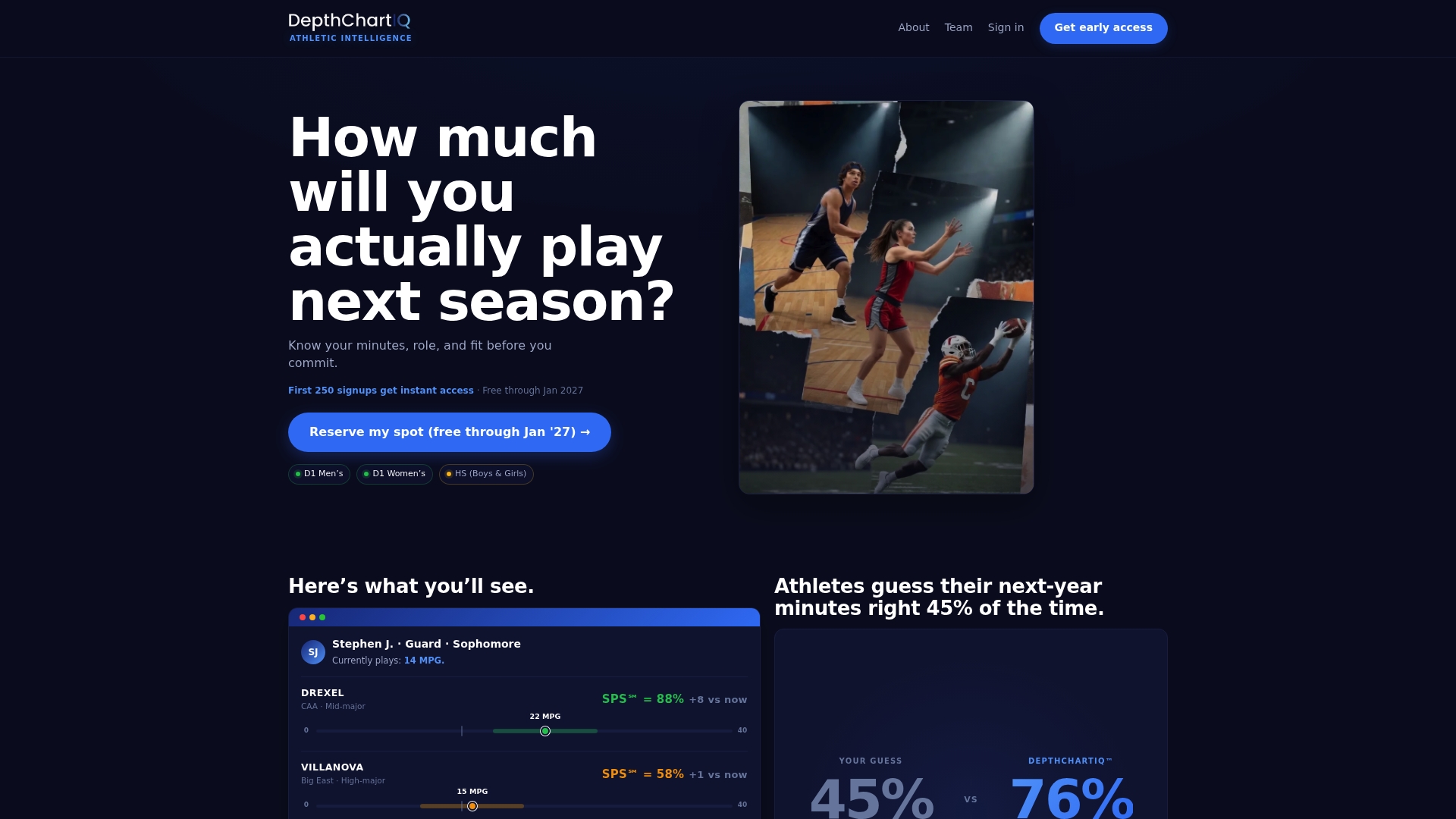
Most athletes make these calls on gut feel and a coach’s pitch. A coach’s promise of a role is a conversation, not a number, and rosters change after you arrive. We built DepthChartIQ so athletes and families have something to weigh beyond that pitch: for each program you are considering, a projected minutes-per-game range for next season, a Success Probability Score (the chance of gaining minutes), and a Roster Pressure Score (how crowded your position is at that school).
Those are estimates with ranges, not guarantees, and we say so plainly. But a range is a better starting point for a family conversation than a hunch. It helps you decide whether to stay, whether to ask for a release, and which programs deserve a call once you are free to make them. DepthChartIQ is built for athletes and their families, not coaching staffs.
Compare the schools before you ask for the release
The best time to look at playing time is before you send the request. If you’re deciding between staying and going, or between several programs once you’re free to talk, DepthChartIQ lets you enter your profile and see, program by program, a projected minutes-per-game range, a Success Probability Score, a Roster Pressure Score and best-fit programs. It covers college transfers, athletes deciding whether to stay, and incoming high school and junior college players.
DepthChartIQ is free during Early Access, and you can start on the DepthChartIQ site. To research schools and draft messages to coaches once you’re cleared to contact them, Spotter is available now.
FAQ
Is the NLI still a thing in college basketball?
No. The NCAA eliminated the NLI program at the Division I level in October 2024, and written offers of athletics aid replaced it. A signed aid agreement still carries a recruiting prohibition for other schools.
Can I lose eligibility for not attending the school I signed with?
The old NLI basic penalty, which carried eligibility consequences, is not part of the new legislation. Your specific agreement and your school’s compliance office are the places to confirm how your case is handled, and you should get the answer in writing.
Who do I ask for a release?
Start with your school’s compliance office, not only the coach. Send a written request for release from the contact prohibition, and ask in the same message how your scholarship is affected. Some schools, like USC, name an Office of Athletic Compliance for this.
Does a release mean I can sign with another school right away?
Not automatically. A release covers contact. A four-year transfer can sign a new athletics scholarship once their name is permissibly in the Transfer Portal, and eligibility depends on factors like academic standing and progress toward your degree.
Sources
- DI Council approves changes to notification-of-transfer windows and eliminates the NLI (NCAA)
- NCAA Eliminates National Letter of Intent Program (Husch Blackwell)
- Athletic Scholarship signing materials (NCAA)
- USC Athletic Scholarship Information
- NCAA Division III bylaw 13.1.1.2
- Guide for Four-Year Transfers (NCAA)