
How College Athletic Departments Support Athletes
Discover how college athletic departments support athletes through integrated programs in academics, health, and career development. Enhance your choices!

DepthChartIQ
Athletic Intelligence

How College Athletic Departments Support Athletes

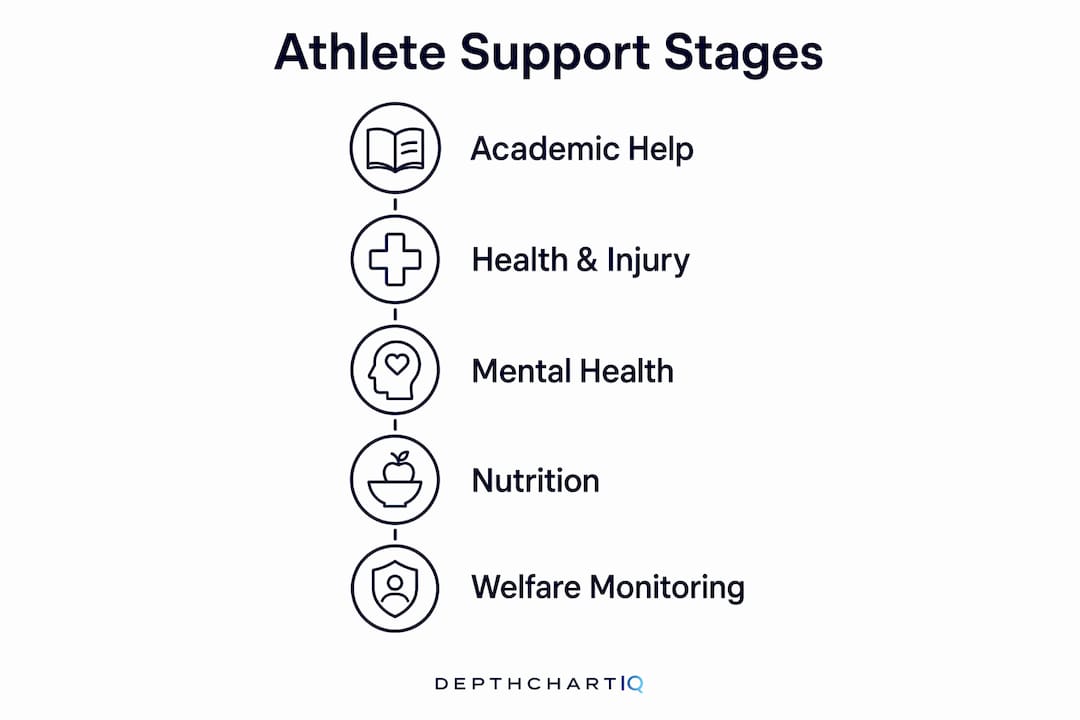
College athletic departments support athletes through a structured, integrated system that connects academic advising, sports medicine, mental health counseling, nutrition, and career development into one coordinated program. This is not a loose collection of optional perks. Programs like Dartmouth’s DP2 and Washington State University’s academic services model treat athlete support as a formal operational framework, one that runs parallel to practice schedules and competition calendars. Understanding how college athletic departments support athletes gives you a real advantage when choosing a program, evaluating a transfer, or simply knowing what resources you are entitled to use.
How college athletic departments support athletes academically
Academic support is the most visible pillar of athlete services, and the best programs treat it with the same discipline as training. Dedicated academic counselors work exclusively with student-athletes, managing course selection, eligibility tracking, and faculty communication around travel schedules. This is not the same as the general campus advising office. These counselors know NCAA eligibility rules, understand sport-specific time demands, and intervene before problems escalate.
Washington State University’s model is one of the clearest examples of structured academic support in practice. WSU schedules up to six hours of mandatory in-person study sessions per week, pairing athletes with tutors and writing advisors on a fixed schedule. The logic mirrors athletic training: consistency beats cramming. Treating academic support like practice removes the decision fatigue of figuring out when to study after a long travel week.
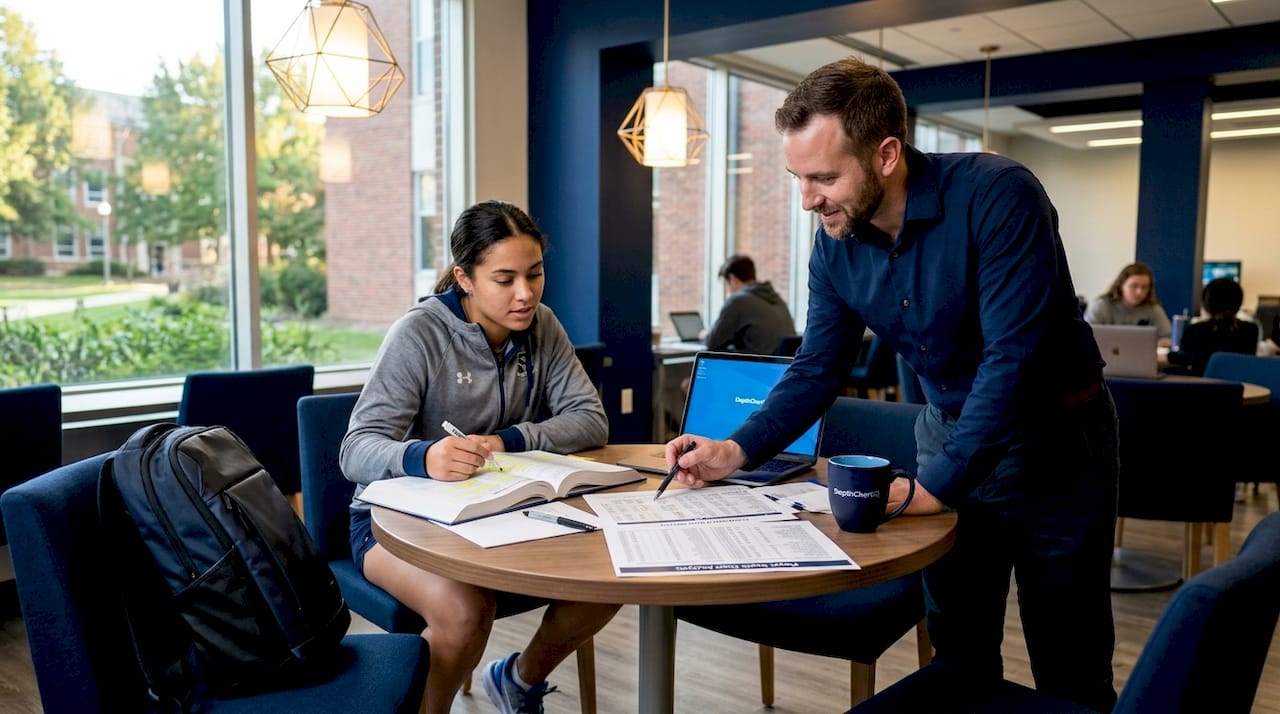
Cal State Fullerton’s Athletics Academic Services team adds another layer through eligibility monitoring. The program tracks GPA in real time and triggers intervention plans when a student-athlete’s GPA drops below 2.5. That threshold is not arbitrary. It reflects the NCAA’s academic progress standards and gives the department enough runway to course-correct before eligibility is at risk.
Here is what a well-funded academic support program typically includes:
- Assigned academic counselors who specialize in NCAA compliance
- Mandatory weekly tutoring blocks in writing, math, and subject-specific areas
- Summer bridge programs to orient incoming athletes before classes begin
- Faculty liaison services to manage missed class time during road trips
- NIL education and career preparation workshops for post-graduation planning
Pro Tip: Ask your recruiting contact specifically whether the program assigns a dedicated academic counselor to athletes or routes you through the general advising office. The difference in responsiveness is significant.
How do athletic departments handle physical health and injury management?
Sports medicine is the second major pillar, and it operates on a non-negotiable standard set by the NCAA. Under NCAA concussion protocols, any athlete suspected of a concussion must be removed from activity the same day and cannot return without clearance from a licensed physician. This staged return-to-play process is standard across Division I, II, and III programs. It protects athletes from the compounding neurological risk of returning too early.
What separates elite programs from adequate ones is what happens after the initial injury response. Dartmouth’s DP2 model demonstrates this clearly. When an athlete sustains a concussion, athletic trainers notify academic staff immediately so that testing accommodations and tutoring adjustments are in place before the athlete even leaves the training room. The injury response does not stop at the body. It extends to the classroom.
Physical health services in a full-service athletic department typically cover:
- Certified athletic trainers available at all practices and competitions
- Sports medicine physicians for diagnosis, treatment, and return-to-play decisions
- Strength and conditioning coaches who design sport-specific training programs
- Performance technology for monitoring workload, recovery, and injury risk
- Rehabilitation programs that integrate physical therapy with conditioning
The use of performance technology is expanding rapidly. Wearable load monitoring, force plate testing, and movement screening tools are now common in Power Four programs and increasingly available at mid-major schools. These tools give strength and conditioning staff objective data to reduce overtraining injuries before they happen.
What mental health and nutrition resources do college athletic departments offer?
Mental health is the fastest-growing area of athlete support services, and the data from University of Nebraska Omaha makes the case plainly. Over 50% of UNO student-athletes actively use mental health services offered through the athletics department. That figure reflects a broader cultural shift. Mental health utilization is now tracked and normalized within athlete support programs, with administrators treating it as a performance variable rather than a personal weakness.
Licensed sports psychologists and counselors embedded within athletic departments provide a different service than campus counseling centers. They understand the psychology of competition, identity tied to sport, performance anxiety, and the emotional weight of injury. Athletes are more likely to engage with a counselor who speaks their language. Programs like Dartmouth’s DP2 integrate mental performance staff directly into the 31-person support team, running team exercises focused on leadership, resilience, and cohesion alongside individual counseling.
Nutrition support has followed a similar trajectory. UNO’s program provides food stations and fueling plans tailored to training loads and competition schedules. Registered dietitians work with athletes on hydration strategies, pre-competition meals, and recovery nutrition. This is not a cafeteria upgrade. It is a performance tool.
Key mental health and nutrition services you should expect from a well-resourced program:
- Licensed sports psychologists available for individual and team sessions
- Proactive mental health screenings integrated into the athletic calendar
- Registered dietitians who build individualized fueling plans
- Hydration stations and athlete-specific food access in training facilities
- Crisis intervention protocols with clear referral pathways
Pro Tip: When visiting a campus, ask to see the athlete nutrition facility and ask whether a sports psychologist is on staff full-time or contracted part-time. Full-time staff signals genuine institutional investment.
How do athletic departments measure and ensure student-athlete welfare?
Measuring welfare is where many programs separate intention from execution. The most effective departments use data-driven triggers rather than waiting for athletes to self-report problems. GPA monitoring with intervention thresholds is the clearest academic example. When a student-athlete’s grade point average crosses a defined threshold, the system automatically routes them to targeted tutoring and counseling. The athlete does not need to ask for help. The department acts first.
The same proactive logic applies to physical welfare. Dartmouth’s multidisciplinary integration model connects coaches, athletic trainers, academic coordinators, and mental performance staff through regular communication protocols. When an athlete misses practice due to injury, the chain of communication triggers academic accommodations within the same day. That coordination prevents the common scenario where an injured athlete falls behind academically because no one connected the two departments.
Here is how the monitoring and coordination system typically functions across a well-run athletic department:
| Area | Monitoring method | Trigger for intervention |
|---|---|---|
| Academic eligibility | GPA tracking software | GPA falls below 2.5 threshold |
| Physical health | Trainer assessments and wearable data | Injury or abnormal load metrics |
| Mental health | Scheduled screenings and counselor check-ins | Self-report or counselor flag |
| Nutrition | Dietitian consultations and fueling logs | Significant weight change or fatigue patterns |
Regular communication between coaches, academic staff, and medical personnel is the mechanism that makes this system work. WSU’s model of scheduled counselor meetings and mandatory study blocks reflects the same principle. Predictable, structured touchpoints reduce the number of crises that require emergency intervention.
Key takeaways
College athletic departments that deliver genuine student-athlete welfare combine proactive data monitoring, multidisciplinary staff coordination, and scheduled support structures across academics, health, mental wellness, and nutrition.
| Point | Details |
|---|---|
| Academic support is structured | Programs like WSU mandate six hours of weekly tutoring, treating study time like practice. |
| Injury response crosses departments | Dartmouth’s DP2 model notifies academic staff the same day an injury occurs to adjust accommodations. |
| Mental health is tracked, not optional | Over 50% of UNO athletes use mental health services, reflecting normalized, integrated care. |
| GPA thresholds trigger intervention | Cal State Fullerton routes athletes to tutoring automatically when GPA drops below 2.5. |
| Nutrition is a performance tool | Registered dietitians and athlete-specific food stations are standard in well-resourced programs. |
What most athletes miss about the support system around them
I have spent years watching athletes arrive at college with a vague sense that “support is available” and leave four years later having used maybe 20% of what was on offer. The problem is not access. It is awareness and framing.
The biggest misconception I see is that using academic counseling or mental health services signals weakness or lack of preparation. That framing is exactly backwards. The athletes who use these systems most aggressively tend to be the ones who last longest, stay eligible, and perform most consistently. The holistic performance model that programs like Dartmouth have built is not a safety net for struggling athletes. It is a performance infrastructure for serious ones.
The second thing most athletes miss is how much coordination happens behind the scenes. When your athletic trainer files an injury report, that document can and should trigger academic accommodations, mental health check-ins, and nutrition adjustments simultaneously. Most athletes do not know to ask whether that chain of communication is actually happening. You should ask. Specifically. Before you sign.
The programs that get this right treat support as a system, not a menu. WSU’s mandatory study blocks are not optional enrichment. They are scheduled like film sessions because the department understands that predictable academic structure is what keeps athletes eligible and mentally stable through a 30-game season. If the program you are evaluating cannot describe a specific, structured support system, that tells you something important about how they will treat you when things get hard.
— John
See how DepthChartIQ connects athlete data to real decisions
Understanding the support system at a program is one piece of the puzzle. Knowing whether you will actually get playing time there is another.
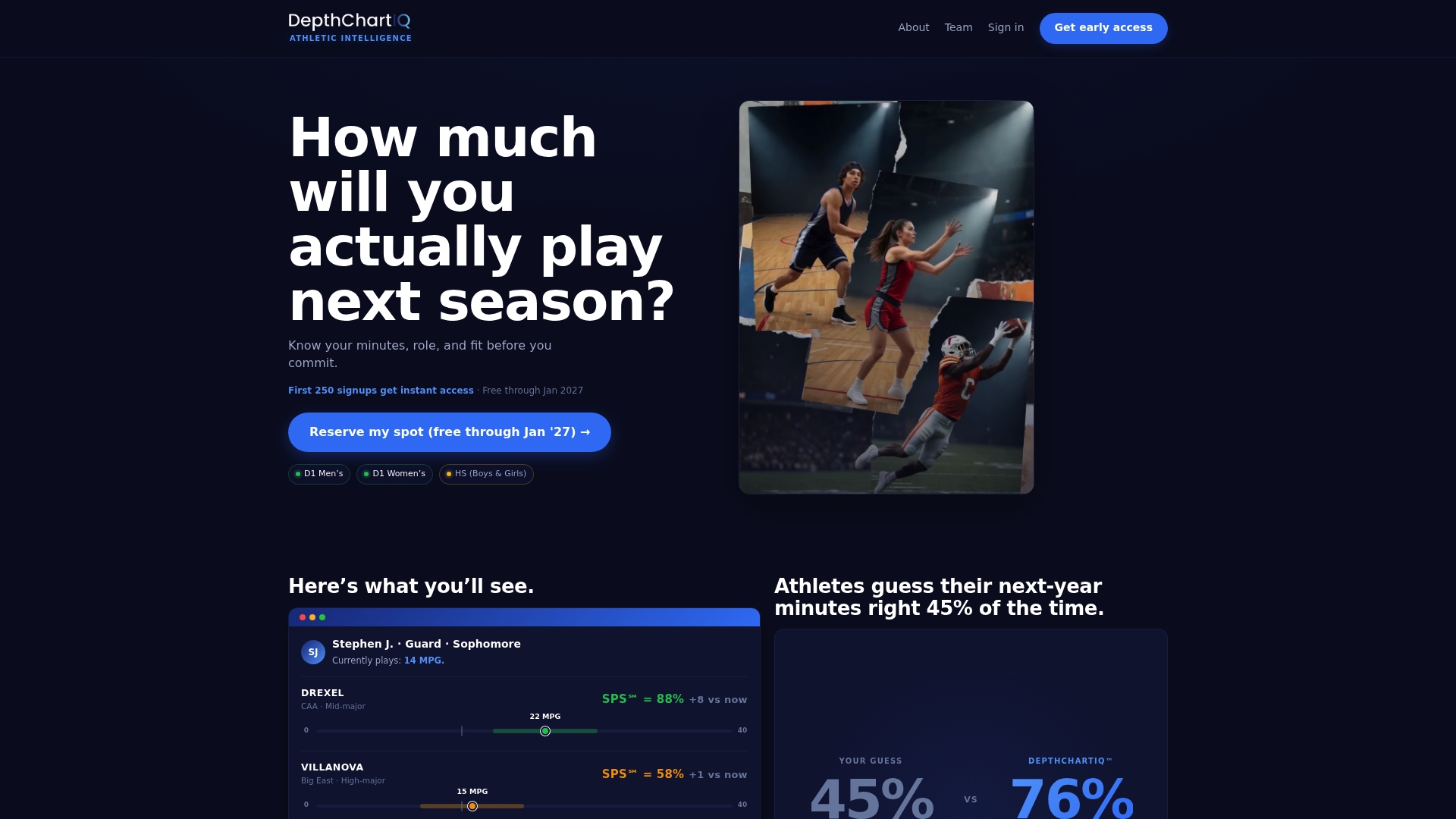
Depthchartiq uses advanced metrics and prediction algorithms to show college basketball players exactly where they stand on a depth chart, factoring in roster changes, transfer activity, and program-specific dynamics. With a 76% accuracy rate in predicting player outcomes, the platform gives you the kind of concrete, data-driven picture that a campus visit alone cannot provide. Whether you are a high school recruit weighing your options or a current player considering a transfer, Depthchartiq helps you evaluate fit before you commit. Pair that with a strong understanding of athlete support services at each program, and you are making decisions with real information.
FAQ
What academic services do athletic departments provide?
Athletic departments provide dedicated academic counselors, mandatory tutoring sessions, eligibility monitoring, faculty liaison services, and career preparation support. Programs like Washington State University schedule up to six hours of weekly in-person study time for student-athletes.
How do athletic departments handle concussions?
NCAA rules require same-day removal of any athlete suspected of a concussion, with a licensed physician required to clear the athlete before return to play. Programs like Dartmouth also notify academic staff immediately to arrange testing and tutoring accommodations.
Do college athletic departments offer mental health support?
Most Division I programs employ licensed sports psychologists or counselors embedded within the athletics department. At the University of Nebraska Omaha, over 50% of student-athletes actively use mental health services, reflecting how normalized this support has become.
How do programs monitor student-athlete academic eligibility?
Programs like Cal State Fullerton use GPA tracking software that triggers automatic intervention when an athlete’s grade point average falls below 2.5. This proactive approach routes athletes to targeted tutoring before eligibility is at risk.
What nutrition support do athletic departments provide?
Registered dietitians in athletic departments build individualized fueling plans based on training load and competition schedules. Many programs, including the University of Nebraska Omaha, provide athlete-specific food stations and hydration resources directly within training facilities.