
Conference Transfer Restrictions 2026: Rules, Windows, and Roster Fit
Review NCAA transfer rules, notification windows, academic requirements, and questions to confirm with your school's compliance office.
 DepthChartIQ8 min read

Conference transfer restrictions no longer decide whether you can play right away. That job now belongs to the NCAA, and three things matter: you left your old school academically eligible, in good standing, and you meet your new school’s progress-toward-degree rules. What actually trips athletes up in 2026 isn’t a conference rule at all. It’s missing a sport-specific portal window or getting caught in a “ghost transfer” that never got entered into the system.
TL;DR:
Conference transfer restrictions no longer determine eligibility; NCAA rules now focus on academic standing, good conduct, and progress toward degree.
Transfer windows in sports like basketball and wrestling are sport-specific, with basketball’s 15-day window opening after championship rounds in 2026.
Most conferences have abolished internal transfer bans, but institutional residency timing and aid policies still vary between schools.
Immediate eligibility depends on verified academic eligibility, absence of disciplinary suspensions, and meeting progress requirements, verified in writing before transfer.
Ghost transfers, where a program adds an athlete without portal entry, will face severe penalties including coach suspensions and fines in 2026.
What Are the Current Conference Transfer Restrictions?
Almost all of the old conference-level barriers are gone. A decade ago, leagues could force you to sit out a year just for moving to a rival school in the same conference. That’s mostly history now. The NCAA transfer rules and eligibility framework governs immediate eligibility for the overwhelming majority of transfers, and it hinges on three criteria you can check yourself before you ever talk to a coach.
Run through this before you assume anything about your situation:
-
Academic eligibility at your previous school. You need to have been eligible to compete there, not just enrolled.
-
Good standing. No active disciplinary suspension tied to your departure.
-
Progress-toward-degree at your new school. Credit hours, GPA, and major-specific requirements have to line up with the new institution’s academic calendar.
-
Division matters. Division I relies on the criteria above; Division II adds a required educational module and a seven-day portal-entry expectation; Division III layers in permission-to-contact rules that don’t exist at the DI level, per the NCAA’s four-year transfer guide.
-
Confirm your status directly with compliance. Don’t rely on a coach’s assurance. Get your academic standing and disciplinary record verified in writing before you enter the portal.
None of this touches conference rules. It’s all NCAA and institutional.
When Do Transfer Windows Open in 2026?
Timing is the real gatekeeper now, and it’s sport-specific. Miss your window and immediate eligibility gets complicated fast, regardless of how clean your academic record is.
Basketball, wrestling, and several other sports got new windows for 2026. The Division I Cabinet adopted new transfer windows in several sports, and the changes are specific enough that a generic “transfer season” mental model will get you in trouble.
-
Basketball now runs on a 15-day window that opens after the championship rounds conclude.
-
Wrestling shifted to a 30-day window beginning April 1, replacing its old calendar.
-
Ice hockey, golf, and softball each picked up sport-specific adjustments tied to their competitive calendars.
-
Head-coach-departure windows exist separately: if your coach leaves for another job, a defined window opens regardless of the sport’s normal calendar.
A midyear transfer and an offseason transfer are not the same animal. A basketball player entering the portal outside the 15-day window after the tournament faces a much narrower set of options than one who times entry correctly. Coach-departure windows can actually work in your favor if you catch them, opening recruiting conversations that would otherwise be closed. Track the exact 2026 dates for your sport in DepthChartIQ’s breakdown of transfer portal windows before you make a move.
How Do Conference Rules Still Affect Transfers?
Conference rules haven’t disappeared. They’ve shrunk to a supporting role, and most conferences deferred entirely to NCAA guidelines years ago. The Southland Conference is a clean example: it eliminated its intraconference transfer policy in 2021 and committed to following NCAA one-time transfer exceptions instead of maintaining its own barrier. Most Power Five and mid-major conferences followed a similar path.
That shift is exactly why intra-conference movement has picked up so much, as detailed in players’ roster notations on Players A–Z: D — Card Values | Ripbin. Analysis of transfer patterns shows conferences increasingly function as active roster pipelines rather than closed systems, with athletes moving between league rivals at a rate that would have been unthinkable under the old sit-out rules.
Where conferences and individual schools still matter:
-
Residency and timing nuances some institutions build into their own compliance calendars beyond the NCAA baseline.
-
Athletics-aid expectations, since aid renewal decisions are made at the institutional level, not the conference level.
-
Sport-specific quirks, particularly in Olympic sports where conference scheduling can interact with NCAA windows.
Check your current and target school’s compliance page directly. The NCAA transfer rules and eligibility page requires institutions to publish this information, so it’s usually a quick search away.
What Happens to Your Scholarship and Facility Access?
Entering the portal triggers real, immediate consequences at your current school, and they don’t wait for you to actually leave.
-
Athletics aid can be affected the moment you enter the portal. Some schools cancel or decline to renew aid once you’ve signaled intent to leave; others hold it through the semester. This varies by institution, so ask directly.
-
Facility access and academic support services are often the first things withdrawn, sometimes before your paperwork with a new school is finalized.
-
Compliance offices at your new school check transcripts and progress-to-degree standing before certifying you, a process that can take days to weeks depending on how complete your records are.
Pro Tip: Get written confirmation, not verbal assurances, on three things before you commit: whether your current aid stays intact through the transfer window, what facility access you retain, and your target school’s expected certification timeline. The NCAA’s four-year transfer guide specifically flags financial-aid implications as a common blind spot for athletes who assume aid simply carries over.
What Are the Penalties for Ghost Transfers?
A “ghost transfer” is when a program adds or plays an athlete who never actually entered the Transfer Portal. It’s more common than most fans realize, and the NCAA closed the loophole hard for 2026.
The Division I Cabinet finalized automatic penalties for programs that circumvent portal rules, and the penalties are steep enough to change coaching behavior:
-
Head coach suspension for 50% of the season.
-
A fine equal to 20% of that sport’s annual budget, with escalating consequences if the program fails to self-report the violation.
-
Rules took effect for transfers on or after February 25, 2026, per the DI Cabinet’s ghost-transfer enforcement update.
Staying inside the portal protects you directly. If your move never gets logged correctly, you’re the one whose eligibility ends up in question when compliance catches the mismatch, not just the coach who recruited you.
What Is the Step-by-Step Transfer Process?
Follow this sequence and you’ll avoid the two most common failure points: missing a notification deadline and showing up to a new campus without the paperwork compliance needs.
-
Talk to your current compliance office first. Confirm your academic standing and disciplinary status before you tell a coach anything.
-
Notify your school of your intent to transfer. For Division I, the school must enter you into the Transfer Portal within two business days of notification; Division II allows seven calendar days.
-
Enter the Transfer Portal within your sport’s window. Check the 2026 dates specific to your sport, since basketball, wrestling, and several other sports moved off the old generic calendar.
-
Contact prospective coaches, keeping written permission-to-contact documentation if your sport or division requires it.
-
Request written confirmations covering athletics aid, facility access, and your certification timeline from any school you’re seriously considering.
-
Submit transcripts and academic records to your new school’s compliance office for certification.
-
Save every document. Aid offer letters, certification letters, portal-entry confirmation, and transcripts should all be in your own files, not just your coach’s inbox.
For a walkthrough tailored to specific transfer paths, DepthChartIQ’s NCAA transfer eligibility checklist covers division-specific documentation requirements in more detail, and the transfer decision checklist is worth printing out before you start making calls.
Compare Roster Fit With DepthChartIQ Pro Before You Transfer
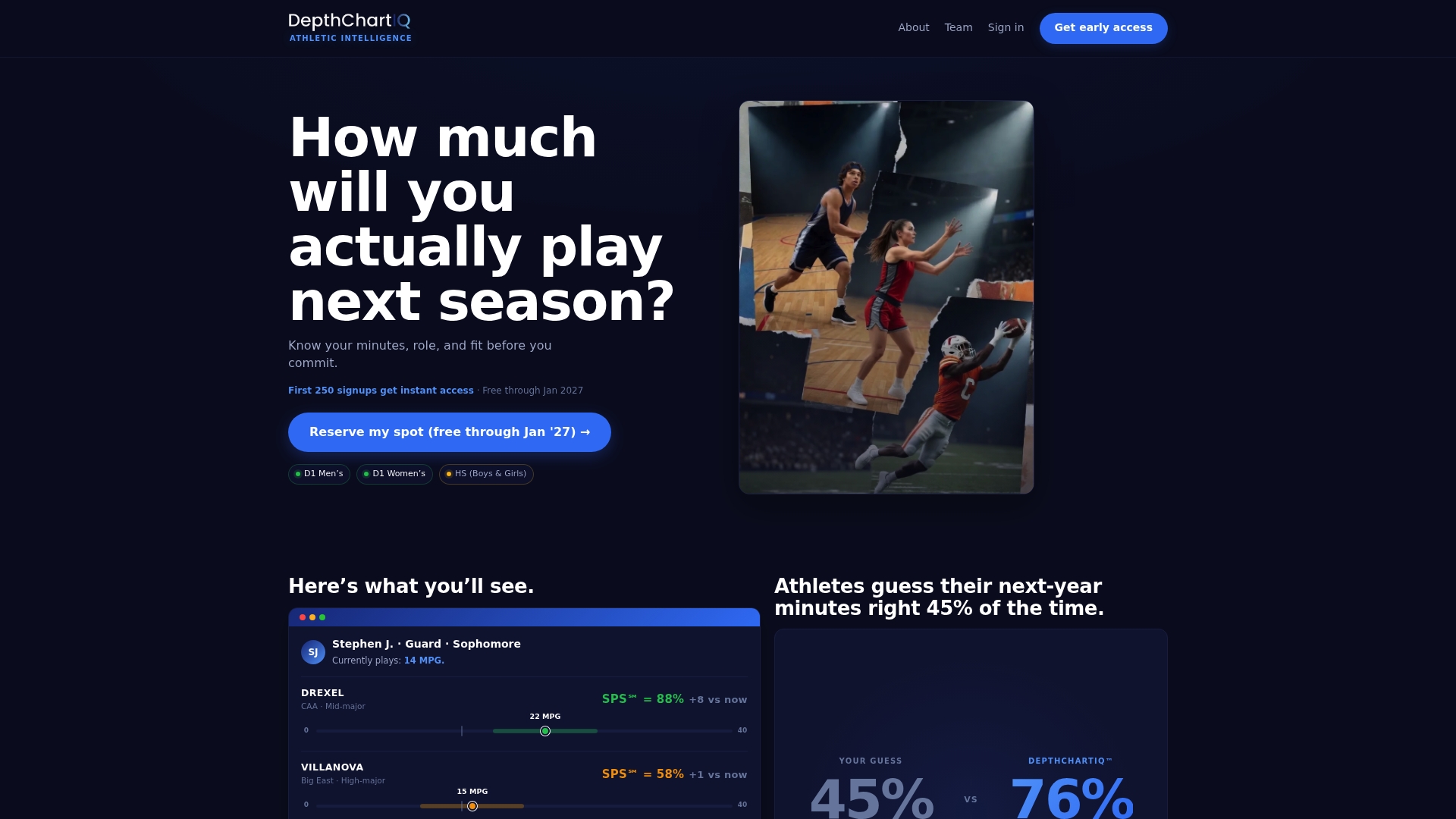
Use it early, when you’re scanning ten possible landing spots and need to cut that list down fast, and again right before you commit, once your target school’s roster has shifted with its own incoming transfer class. Check your options at DepthChartIQ Pro before you make a call you can’t easily undo.
Sources
FAQ
Do conference transfer restrictions still exist in 2026?
Most conferences dropped their internal sit-out restrictions years ago and now defer to NCAA rules, as the Southland Conference’s 2021 policy change illustrates. What still varies by conference is limited to residency timing quirks and aid expectations, not blanket transfer bans.
What are the three NCAA criteria for immediate eligibility?
You must leave your previous school academically eligible, be in good standing with no active disciplinary suspension, and meet your new school’s progress-toward-degree requirements, according to the NCAA’s transfer eligibility rules.
What happens if a program plays a “ghost transfer”?
The program’s head coach faces a suspension for 50% of the season and a fine equal to 20% of the sport’s annual budget, under rules the DI Cabinet finalized for ghost-transfer violations. Penalties escalate if the school fails to self-report the violation.
When does the basketball transfer window open in 2026?
Basketball’s window runs 15 days starting after the championship rounds conclude, one of several sport-specific changes the DI Cabinet adopted for 2026. Wrestling moved to a separate 30-day window beginning April 1.
Does DepthChartIQ tell me if I’m eligible to transfer?
DepthChartIQ gives D1 men’s and women’s basketball athletes projected minutes-per-game ranges, a Success Probability Score, a Roster Pressure Score, and best-fit programs. Confirm transfer eligibility with your school’s compliance office.