
Academic Support Programs for College Basketball Players
Discover effective academic support programs for college basketball players that enhance NCAA eligibility, boost skills, and promote degree completion.

DepthChartIQ
Athletic Intelligence
Academic Support Programs for College Basketball Players
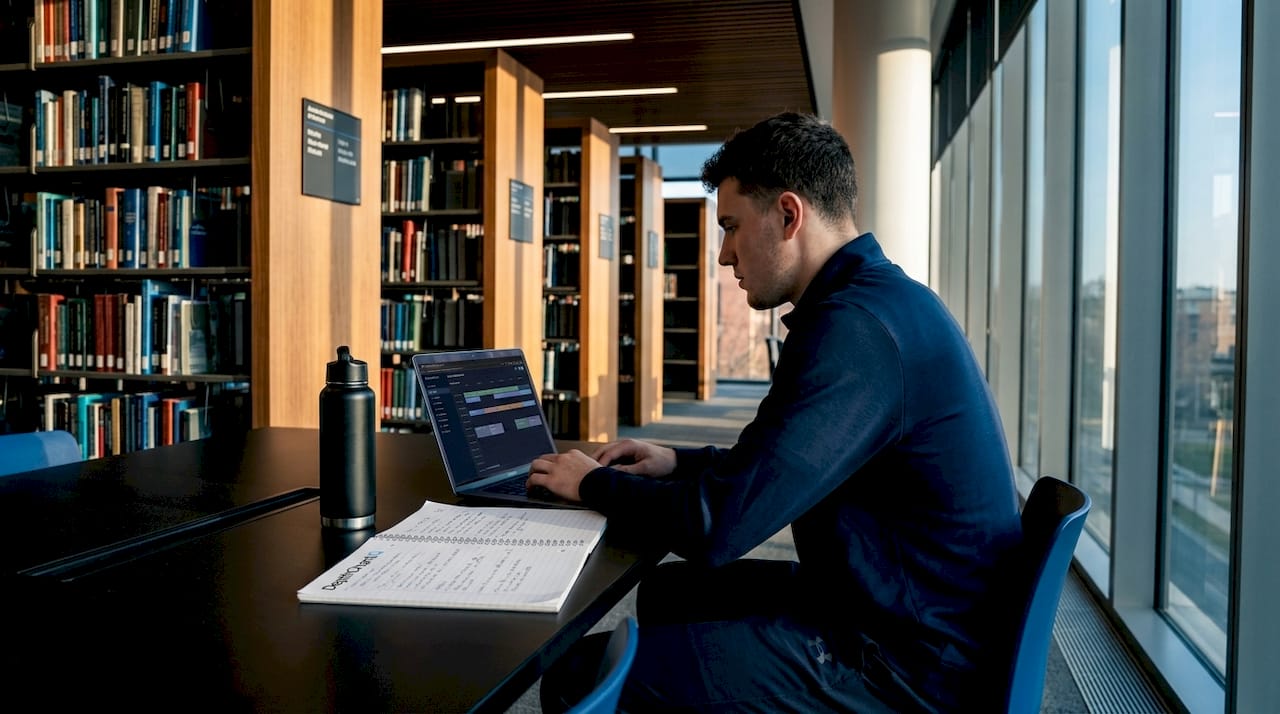
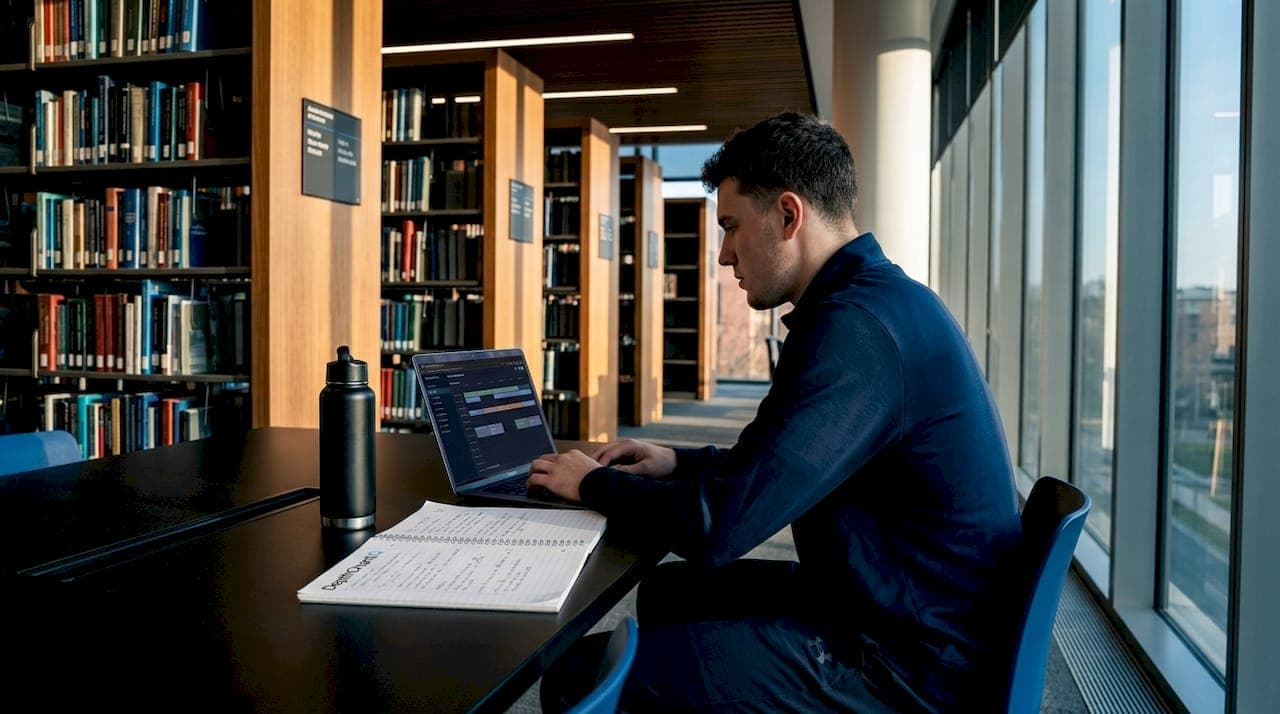
Academic support programs for college basketball players are structured, institution-run systems designed to protect NCAA eligibility while building genuine academic skills through advising, tutoring, and continuous progress monitoring. These programs are formally called student-athlete academic support services, and they operate at nearly every Division I program in the country. Since the NCAA’s Academic Progress Rate system launched, over 11,000 basketball student-athletes have returned to campus to complete their degrees. That number tells you everything about what consistent, structured academic support actually produces.
1. What makes academic support programs effective for college basketball
The most effective academic support programs for college basketball share four non-negotiable features: personalized advising, structured study requirements, proactive eligibility monitoring, and direct communication between academic staff and coaches. Programs that treat these as optional extras consistently underperform compared to those that embed them into the athletic culture itself.
Goal-setting sits at the center of every high-performing program. One-on-one advising sessions at the start of each semester give players a concrete academic plan tied to their schedule, travel calendar, and course load. Proactive planning and progress monitoring are the two factors most consistently linked to academic success in basketball student-athletes. Without a written plan reviewed regularly, players default to reactive cramming when the season gets heavy.
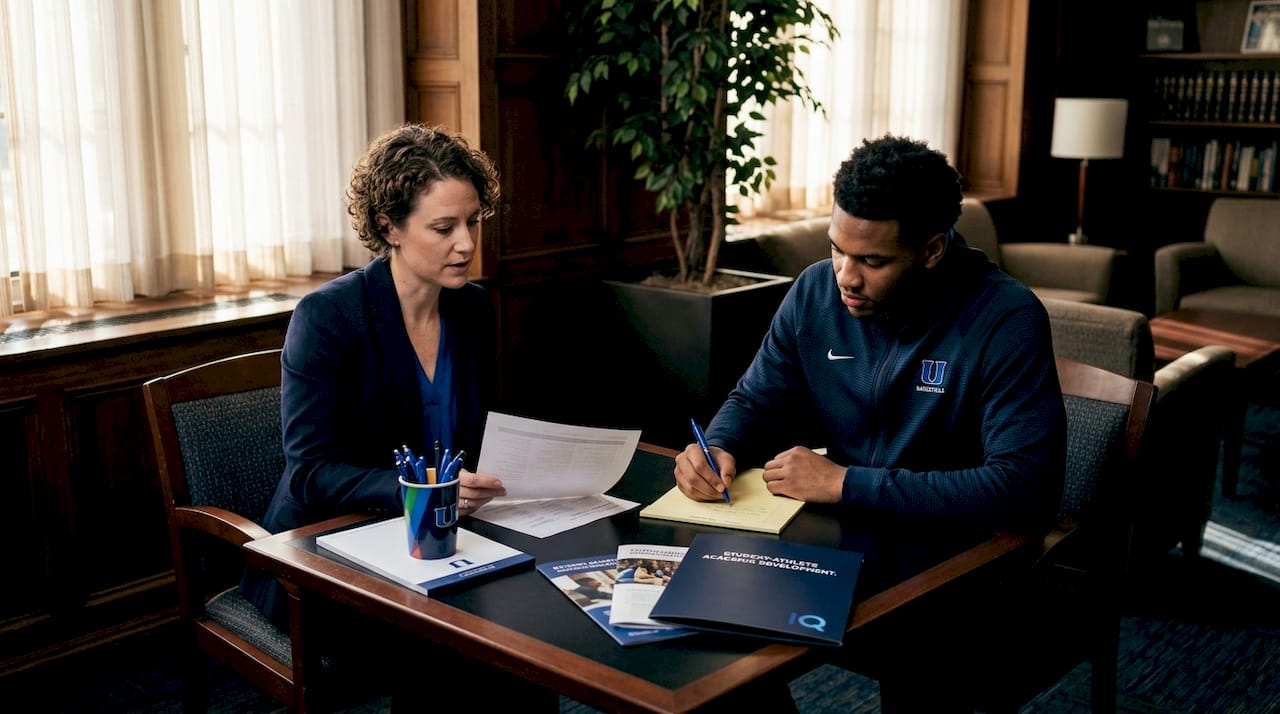
Structured study halls are not punishment. They are the single most reliable way to protect your GPA during road trips and tournament stretches. Programs that require mandatory study hours, particularly for freshmen and at-risk players, produce measurably better outcomes than those offering optional tutoring services. The difference is accountability built into the schedule, not left to individual discipline.
Pro Tip: Ask your academic advisor at the start of every semester to map your exam dates against your travel schedule. Getting ahead of conflicts by three weeks instead of three days changes your entire semester.
The third pillar is eligibility monitoring tied to the NCAA’s APR tracking system, which evaluates your academic standing every single term. Programs that monitor this in real time can intervene before a problem becomes a penalty. The fourth pillar, coach-academic staff communication, is the one most players underestimate. When your position coach gets a weekly update from your academic advisor, missed assignments get addressed in 48 hours instead of six weeks.
2. Top academic support programs at leading college basketball schools
Three programs stand out in 2026 for their structure, resources, and measurable results. Each takes a different approach, and understanding what makes them work helps you evaluate what your own school offers.
University of Northern Colorado: SAASC
The Student-Athlete Academic Success Center at the University of Northern Colorado provides personalized advising, study halls, and progress monitoring built specifically around NCAA eligibility requirements. Its Summer Bridge Program is one of the most underrated features in college basketball academic support. Incoming freshmen complete the program before their first semester begins, which means they arrive knowing how to manage a college course load alongside a practice schedule. The SAASC also coordinates class planning around practice and travel, so scheduling conflicts get resolved before they become grade problems.
Cal State Fullerton: Athletics Academic Services
Cal State Fullerton’s AAS Learning Center offers tutoring in writing and math, mentoring, free printing, and weekly meetings between academic staff and coaches. That last feature is the one that separates Fullerton from programs with similar resources. Academic staff meet weekly with coaches so that when a player misses a deadline or falls behind on a project, the coaching staff knows within days and can follow up directly. The result: student-athletes averaged a combined 3.13 GPA in spring 2025, exceeding the program’s own targets.
James Madison University: Academic Success Program
JMU’s Academic Success Program runs on a structured three-checkpoint model. Players complete a first meeting at the start of the semester, a mid-semester check-in, and a final check-in to close out the term. Structured peer advising with mandatory workshops and LASSI assessments (a learning strategies inventory) gives players a data-driven picture of their own study habits. This is not a program you drop into when you’re struggling. It functions more like a compliance requirement, with strict adherence to meetings and assessments built into the athlete’s schedule from day one.
3. How NCAA metrics shape academic support program design
The NCAA’s Academic Progress Rate is the single most powerful external force shaping how college basketball programs design their academic support services. Understanding how APR works gives you a clearer picture of why your program requires what it requires.
APR is calculated as points earned divided by points possible, multiplied by 1,000, integrating both eligibility and retention scores across a rolling four-year window. Each player on your roster contributes two points per term: one for staying eligible, one for staying enrolled. A team’s multiyear APR reflects the cumulative academic performance of every scholarship athlete over four academic years.
The critical threshold is 930 out of 1,000. Teams scoring below 930 face strategic academic penalties, which can include scholarship reductions and postseason bans. That consequence is why programs invest heavily in proactive monitoring rather than waiting for grades to slip. Ohio State posted a multiyear APR of 991 in 2024-25, with nine programs scoring a perfect 1,000. That result does not happen without a deeply embedded academic support infrastructure.
| APR Score | Status | Consequence |
|---|---|---|
| 1,000 | Perfect | No penalties; benchmark for elite programs |
| 930-999 | Compliant | No sanctions; standard eligibility maintained |
| Below 930 | At risk | Strategic penalties including scholarship loss and postseason bans |
“APR penalties incentivize programs to embed academic support into athletic culture rather than treat it as a separate administrative function.” — NCAA Academic Progress Rate framework
The practical implication for you as a player: every semester you stay eligible and enrolled, you contribute positively to your team’s APR. Every semester you don’t, you cost your teammates future opportunities. That shared accountability is by design.
4. Proactive vs. reactive: comparing academic support models
Not all basketball team study programs operate with the same philosophy. The most important distinction is between proactive programs that monitor and intervene before problems develop, and reactive programs that respond only after grades or eligibility are already at risk.
| Feature | Proactive model | Reactive model |
|---|---|---|
| Advising frequency | Weekly or biweekly | On request only |
| Study hall requirement | Mandatory for all or at-risk players | Optional |
| Coach communication | Weekly staff-to-coach updates | Semester-end reports |
| Intervention trigger | Early warning alerts | Grade thresholds |
| Assessment tools | LASSI, progress tracking | Grade checks only |
Proactive programs treat academic support as a continuous monitoring process aligned with NCAA term-by-term eligibility tracking. Reactive programs wait for a problem to surface before acting. The gap in outcomes between these two models is significant, particularly during the season when your schedule leaves little margin for recovery.
Peer advising is another variable that separates strong programs from average ones. Programs like JMU’s ASP use trained peer advisors who have navigated the same academic-athletic balance you face. That lived experience makes the advice more credible and more specific than generic counselor guidance. Workshops on time management, note-taking, and test preparation add structure that optional tutoring alone cannot replicate.
5. How to get the most out of your academic support resources
The resources exist. The question is whether you use them strategically or treat them as a box to check. Players who extract real value from college athlete academic support do five things consistently.
-
Show up before you need to. Waiting until you’re failing a class to visit your academic advisor is the most common mistake. Schedule your first meeting in week two of the semester, not week ten.
-
Set written goals with your advisor. A verbal conversation about “doing better” produces nothing. A written plan with specific grade targets and weekly study hours produces accountability.
-
Use tutoring for math and writing proactively. These are the two subjects where basketball players most commonly fall behind during road stretches. Programs like Cal State Fullerton’s AAS Learning Center offer subject-specific tutoring precisely because the need is predictable.
-
Communicate with your coaches about academic pressure. One-on-one meetings between coaches and players triggered by academic staff alerts improve accountability and performance. Your coach cannot advocate for you if they don’t know you’re struggling.
-
Understand your APR contribution. Every term you stay eligible and enrolled adds to your team’s score. Treating your academic standing as a team metric, not just a personal one, changes how seriously you take the support available to you.
Pro Tip: If your program offers a LASSI assessment or any learning strategies inventory, take it in your first semester. The results will show you exactly where your study habits break down under pressure, which is information worth having before the season starts.
Key takeaways
The most effective academic support programs for college basketball combine mandatory structure, proactive monitoring, and direct coach-academic staff communication to protect eligibility and build real academic skills.
| Point | Details |
|---|---|
| APR drives program design | Teams scoring below 930 face penalties, so programs invest heavily in proactive academic monitoring. |
| Structure beats optional access | Mandatory study halls and required advising meetings produce better outcomes than optional tutoring alone. |
| Coach communication is critical | Weekly updates between academic staff and coaches create accountability that improves player performance. |
| Start early, not late | Engaging with academic advisors in week two rather than week ten is the single most effective habit change. |
| Peer advising adds real value | Programs like JMU’s ASP use trained peer advisors whose experience mirrors the athlete’s own challenges. |
Why academic support programs deserve more respect than they get
I’ve spent years watching college basketball players treat academic support programs as an obligation to survive rather than a tool to use. That framing costs them more than they realize, and not just in GPA points.
The programs that produce the best academic outcomes, places like Ohio State with a 991 APR and Cal State Fullerton with a 3.13 team GPA, are not successful because they have more tutors. They’re successful because they’ve built a culture where academic accountability is treated with the same seriousness as film study. The coach who gets a weekly update from the academic advisor and follows up with a player about a missed assignment is not micromanaging. That coach is modeling exactly the kind of proactive accountability that makes programs win in March.
What I find consistently underappreciated is the Summer Bridge Program model. Players who arrive on campus having already navigated one structured academic experience are measurably better prepared for the semester-season overlap. The University of Northern Colorado’s SAASC figured this out. More programs should copy it directly.
The other thing worth saying plainly: the LASSI assessment that programs like JMU use is not a formality. It is a diagnostic tool that shows you, specifically, where your learning strategies fail under pressure. Most players take it once and forget the results. The players who revisit those results mid-season and adjust their study approach are the ones who don’t fall apart academically in February.
Treat your academic support program like a coaching staff for your GPA. Show up, engage, and hold yourself accountable to the plan. The structure is there. The question is whether you use it.
— John
Track your academic and athletic progress with DepthchartIQ
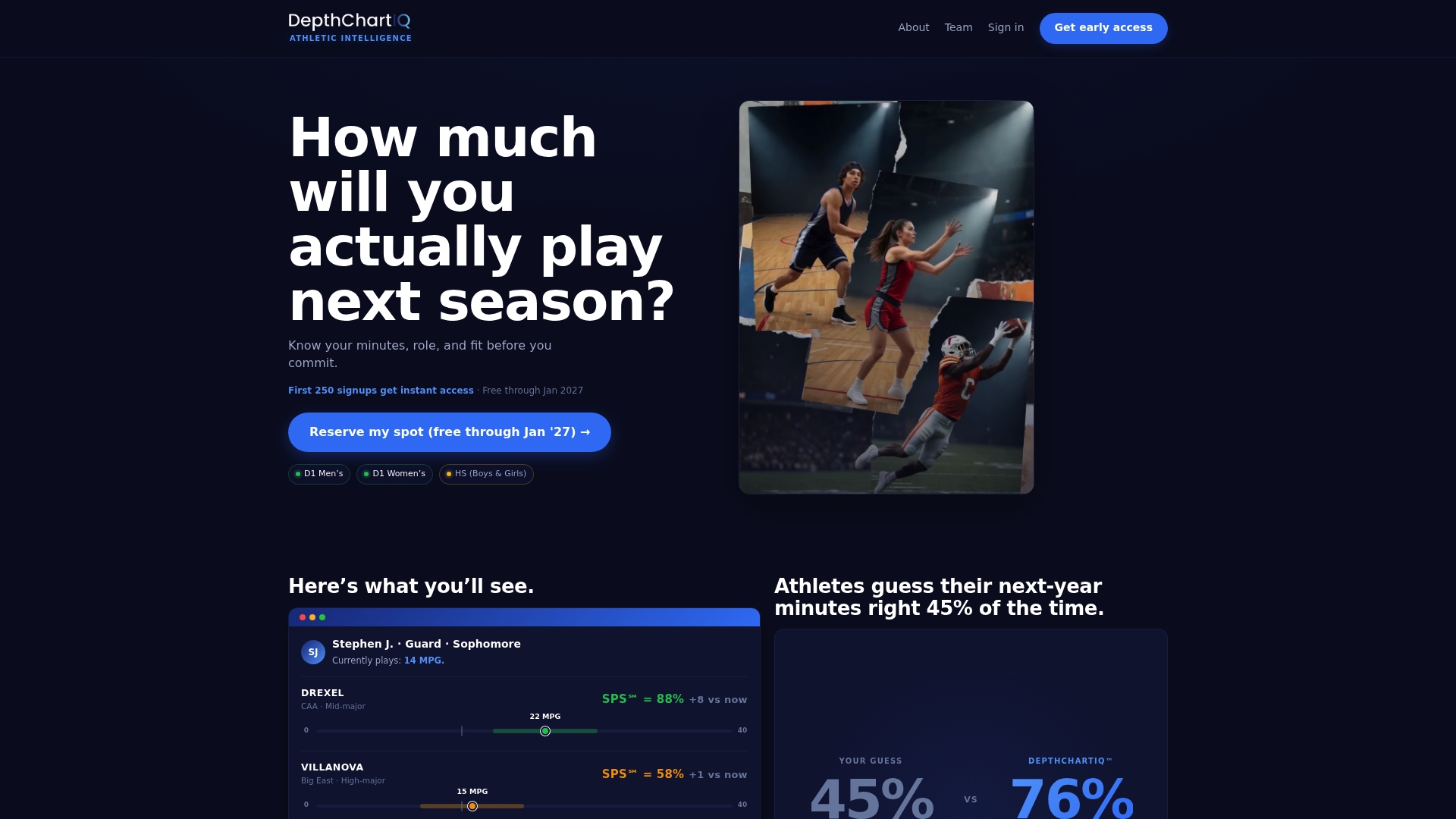
DepthchartIQ gives college basketball players a data-driven edge in understanding their athletic standing, and that same analytical mindset applies directly to academic performance. Just as DepthchartIQ’s prediction methodology tracks roster changes and playing time probabilities with 76% accuracy, you can apply structured monitoring to your academic progress. Knowing where you stand, whether on the depth chart or in the classroom, before a problem develops is what separates reactive players from strategic ones. Visit DepthchartIQ to explore tools built for college basketball players who want to manage every dimension of their college career with the same precision they bring to the game.
FAQ
What are academic support programs in college basketball?
Academic support programs in college basketball are structured services provided by universities to help student-athletes maintain NCAA eligibility and succeed academically through advising, tutoring, study halls, and progress monitoring.
What is the NCAA APR and why does it matter to players?
The NCAA Academic Progress Rate is calculated as points earned divided by points possible, multiplied by 1,000, and teams scoring below 930 face sanctions including scholarship reductions and postseason bans. Every player’s eligibility and enrollment status contributes directly to their team’s score each term.
Which college basketball programs have the strongest academic support?
Ohio State posted a multiyear APR of 991 in 2024-25, Cal State Fullerton’s student-athletes averaged a 3.13 GPA in spring 2025, and the University of Northern Colorado’s SAASC offers one of the most structured advising and monitoring systems in the country.
How often should I meet with my academic advisor?
Meeting with your academic advisor at the start of each semester and at least once mid-semester is the minimum. Programs like JMU’s Academic Success Program formalize three structured check-ins per term, which is the model most likely to catch problems before they affect eligibility.
Can academic support programs help with NCAA eligibility specifically?
Yes. Programs use the NCAA’s term-by-term APR tracking to monitor each player’s eligibility and retention status in real time, allowing academic staff to intervene early when a player is at risk of losing a point that affects the team’s overall score.